
Review · PORTUGAL BIRDWATCHING TOURS
Madeira: Birdwatching – The Endemics
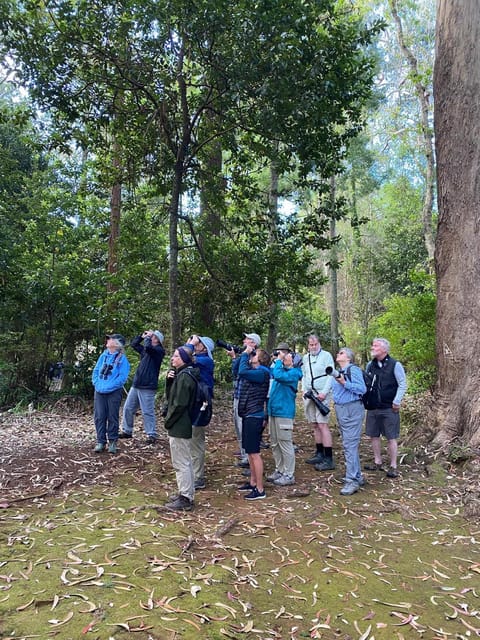
Madeira’s endemic birds are the real prize here, especially the tiny Madeiran Firecrest and the shy Trocaz pigeon. This small-group tour moves between Important Bird Areas, including São Lourenço and the Laurel forest, so you get several chances to watch rather than wait in one spot all morning.
I like the included observation equipment and the chance to walk or sit quietly in different habitats. I also like the practical pickup service from Funchal and Caniço. The catch is simple: wild birds do not follow a schedule, and one recent booking found few species and limited explanation for the price.
Key points at a glance
- Three prized endemic birds: Look for the Madeiran Firecrest, Trocaz pigeon, and Madeiran chaffinch, also called the Madeiran bluefinch in tour feedback.
- Several Important Bird Areas: The route includes São Lourenço peninsula, the Laurel forest, and other land-based birding sites.
- A maximum of eight people: The small vehicle and group make it easier to hear the guide and share viewing equipment.
- Four and a half useful hours: The tour gives you time to visit more than one habitat without taking up a full day.
- Gear and transfers included: Observation material is supplied, with pickup and drop-off available in Funchal and Caniço.
- Best for patient nature watchers: You need comfortable clothing, closed shoes, water, and a willingness to wait quietly for birds.
Why Madeira’s endemic birds are worth your morning
A birdwatching trip here is less about collecting a long species list and more about meeting birds found in Madeira. The main targets are the Madeiran Firecrest, the Trocaz pigeon, and the endemic Madeiran chaffinch.
The Firecrest is the bird most likely to give you a satisfying close look. It is small and active, so your viewing time may come in short bursts. Bring patience. A few seconds of clear sighting can be more rewarding than a long list of common birds seen at a distance.
The Trocaz pigeon, also known as the Laurel pigeon, is the more elusive prize. Its connection with Madeira’s Laurel forest gives the forest stop real purpose. You may not see it at once, but visiting the right habitat with someone who knows where to watch gives you better odds than simply walking a forest trail on your own.
The Madeiran chaffinch adds another target to the morning. One particularly successful outing recorded all three of these endemic species at separate locations, along with other birds. That is a strong result, but it should not be treated as a promise. Weather, bird movement, and quiet observation all affect the day.
A few more birdwatching trips around Portugal worth a look
- Faro: Eco-Friendly Ria Formosa Bird Watching in Solar Boat
★ 4.7 · 359 reviews - Dolphin – Whale – Turtle – Bird Watching
★ 5.0 · 350 reviews - Faro: Ria Formosa Natural Park Segway Tour & Birdwatching
★ 4.9 · 180 reviews
Starting in Funchal and heading into the countryside
Pickup is available in Funchal and Caniço, which makes this easier to fit into a Madeira stay. You should confirm the pickup point when booking, especially if you are staying outside those areas. Transfers beyond Funchal and Caniço are not automatically included, though an alternative meeting point may be possible by arrangement.
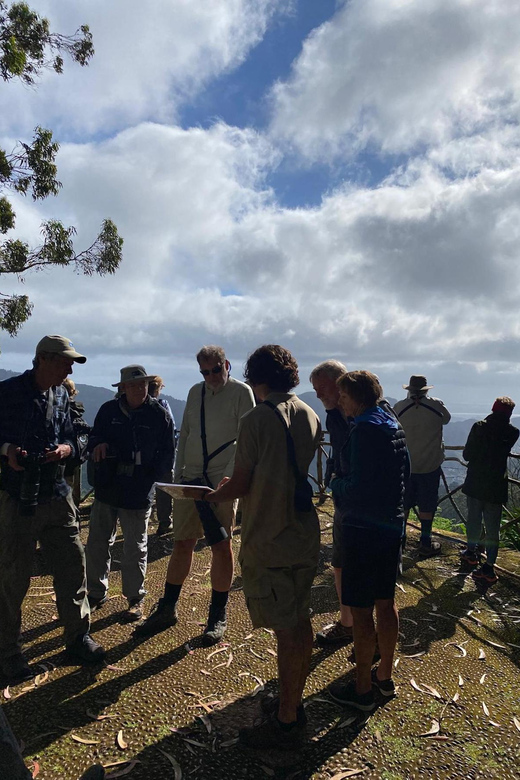
The group is limited to eight people. That matters on a birding trip. A large crowd can make it harder to keep quiet, share a sightline, or hear a soft explanation from the guide. With fewer people, you have a better chance of moving carefully between viewing spots without turning the outing into a noisy walk.
The tour lasts 4.5 hours and returns to Funchal. That is a good middle ground. You get a serious morning of birding, but you still have much of the day left for a levada walk, a meal, or another part of the island.
Guide Alex is praised for his handling of the trip, while another booking names Alexandre. The supplied information suggests that Alex or Alexandre may lead the outing, so confirm the guide name if that matters to you. The guiding is offered in English and Portuguese.
São Lourenço gives the tour a different kind of birding
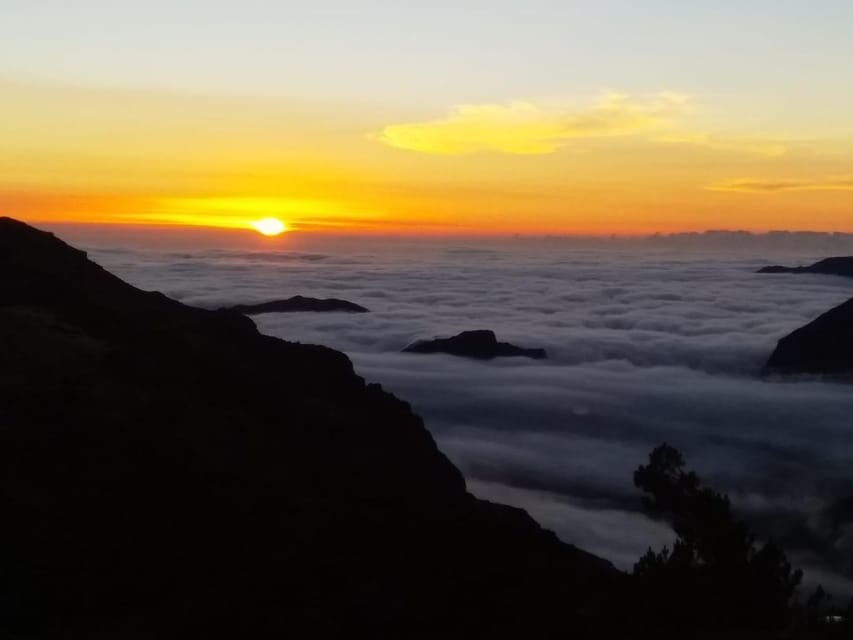
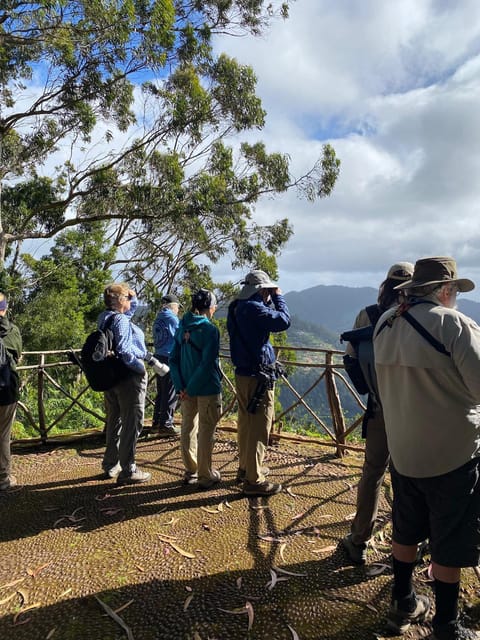
São Lourenço peninsula is one of the named Important Bird Areas on the route. Its open setting gives you a change from the thicker cover of the Laurel forest. Several stops are used during the tour, and at each one you may either walk through the area or sit still and watch.
That choice is useful. Active walking helps you cover more ground and learn how the habitat changes. Sitting quietly gives birds time to return to the area after the group arrives. You should expect both approaches during the morning rather than a nonstop hike.
The tour information does not give a fixed order or exact stopping times, so the route can respond to the day’s conditions. That is helpful for birding, but it also means you should not expect a rigid sightseeing schedule with a guaranteed stop length at every place.
São Lourenço is one of the places where the value comes from having several possible habitats in one half-day. If one area is quiet, the guide can continue to another location. Still, a site may produce only a few birds. You are paying for access, transport, equipment, and informed searching, not for a guaranteed parade of species.
The Laurel forest and a quiet levada walk
The Laurel forest is the tour’s most atmospheric stop, but the important point is its bird habitat rather than scenery alone. The forest is linked with the Laurel pigeon, and the shaded setting gives you a chance to look for one of Madeira’s best-known endemic birds.
One outing included a walk beside a levada with many flowers and frequent Firecrest sightings. That detail gives you a useful idea of how the morning can feel: part gentle nature walk, part careful search through branches and cover. The walk may be a highlight if you enjoy noticing plants and small movements as much as spotting large birds.
Do not expect a birding version of a zoo visit. The guide can point out likely places, calls, and signs, but the bird still decides when to appear. The Laurel pigeon is specifically described as elusive, so you should treat a sighting as a bonus rather than an entitlement.
The walk also explains why proper footwear matters. You are asked to bring comfortable shoes, closed-toe shoes, and clothes that can get dirty. You should also carry water. The instructions do not describe the route as difficult, but they clearly point to outdoor walking rather than a vehicle-only outing.
Same place, a different morning in the field:
- Ria Formosa Natural Park Birdwatching Segway Tour from Faro
★ 5.0 · 164 reviews - Lisbon: Tagus Estuary Nature Reserve Birdwatching Boat Tour
★ 4.9 · 117 reviews - 2-hour Bird Watching Guided Boat Trip in Ria Formosa from Faro Algarve
★ 4.5 · 75 reviews - Faro: Ria Formosa Eco Birdwatching Boat Tour
★ 4.6 · 73 reviews
The birds you are most likely hoping to meet
The Madeiran Firecrest receives the most encouraging attention in the supplied feedback. One outing reported seeing many of them along a levada. Even so, the bird is small and quick, so binoculars or the supplied observation material will make a real difference.
The Trocaz pigeon is a different sort of target. It is famous, endemic to Madeira, and elusive. A pair was seen at one of the other sites on a successful outing. If you want this bird, listen closely to the guide and stay ready when the group pauses. The best moment may be brief.
The Madeiran chaffinch is the third key species. It is sometimes referred to as the Madeiran bluefinch in the tour feedback, but the activity description calls it the Madeiran chaffinch. You can ask the guide about the local naming during the trip.
You may also see other birds. The exact mix is not stated, and one booking found that the same few birds appeared repeatedly. That is an important warning for anyone expecting a broad species count. The tour is built around Madeira’s special birds, not a guaranteed catalogue of every bird on the island.
What the guide adds to the experience
The strongest part of the guiding appears to be the connection between birds, plants, and Madeira’s natural setting. Alex is described as a great guide, and Alexandre is praised for explaining both birds and flora during the drive and walk.
That broader context improves the outing. You are not just stopping at a viewpoint, pointing binoculars at a tree, and moving on. You can ask why a certain habitat matters, how the birds relate to the Laurel forest, and what makes Madeira different from a mainland birding destination.
The quality of explanation may vary with the guide and the group. One booking reported that explanations were sparse, while several others found the guide highly informed and said they learned a great deal about Madeira’s nature. I would book this expecting useful interpretation, but I would also prepare a few questions of your own so you get the level of detail you want.
The guide also drives between sites, giving you a chance to see more of the island outside the main birding stops. During one outing, the drive helped put Madeira’s changing scenery and older natural character into context. It is not simply dead time between sightings.
How the four and a half hours are likely to feel
The tour begins with pickup, then uses several land sites rather than concentrating on one trail. The exact order is not fixed in the provided details, but the named areas include São Lourenço and the Laurel forest.
You may walk at one location, sit and watch at another, and spend part of the morning driving between habitats. That variety helps prevent one quiet site from ruining the entire outing. It also means you should wear clothes that work for both still observation and light walking.
A four-and-a-half-hour tour is long enough to settle into birdwatching. The first few minutes at a site may produce nothing. If you are comfortable waiting, listening, and scanning branches, the slower pace becomes part of the pleasure. If you want constant activity, you may find the morning frustrating.
Observation material is included for everyone, though you can bring your own. The activity details do not specify the exact equipment supplied, so serious birders may still prefer to carry familiar binoculars or other personal gear. The supplied material is useful for keeping the price down and helping first-time birdwatchers take part.
Price, group size, and what you are really paying for
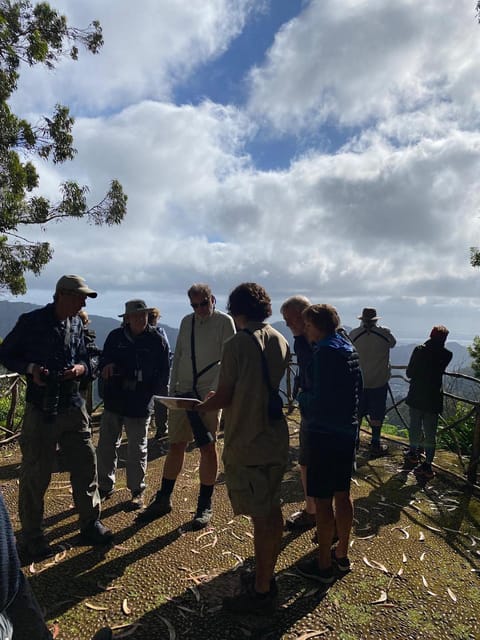
At $64 per person, this is not the cheapest way to spend a morning in Madeira. You could walk outdoors for free, and you might see some of the same common birds without a guide.
The value comes from the combination of transport, several birding sites, local guiding, observation material, and a small group. You are also paying for someone to select places connected with Madeira’s endemic birds. That is more useful than wandering randomly if the Firecrest, Trocaz pigeon, and chaffinch are your main goals.
The price is easier to justify if you care about identification and habitat, not just scenery. It is less appealing if your main aim is a guaranteed high species count. One critical booking felt the cost was too high because few birds were seen and the explanations were limited. That concern is fair, since wildlife tours always carry some uncertainty.
The eight-person limit is a clear advantage. You will not get a private tour, but you should have a more manageable group than on a large coach excursion. Ask at booking who will guide your date and what observation equipment is supplied if those details affect your decision.
Who should book this birdwatching tour
I would recommend this for a visitor who wants a focused introduction to Madeira’s birdlife without giving up an entire day. It suits couples, solo nature lovers, and small groups who are happy to share quiet viewing spots.
It is especially good for you if:
- You want to look for Madeira-only birds rather than just admire general scenery.
- You enjoy gentle walking, quiet pauses, and learning about plants as well as birds.
- You prefer a small group to a large bus tour.
- You need pickup from Funchal or Caniço.
- You are comfortable with wildlife being unpredictable.
I would think twice if you need constant action, dislike waiting, or expect a long list of rare species. Children under five are not accepted, and the tour is not designed as a general family outing for very young children. Everyone should bring water, comfortable clothes, closed-toe shoes, and clothing that can get dirty. Alcohol and drugs are not allowed.
Free cancellation is available up to 24 hours before the tour for a full refund. You can also reserve now and pay later, which helps if your Madeira plans are still shifting.
My booking advice
Book this tour if seeing Madeira’s endemic birds is a priority and you value a guide who can connect the birds with the forest, flowers, and wider natural setting. The best result may be three special species, as one outing achieved, but you should regard that as a successful possibility rather than a guarantee.
For the best experience, arrive ready for changing outdoor conditions, keep your voice low at viewing spots, and bring your own binoculars if you have them. If the booking confirmation lists Alex or Alexandre as your guide, you can reasonably expect a nature-focused morning, but ask questions if you want detailed explanations.
Skip it if you simply want a scenic drive or a sure-fire wildlife show. Choose it if you are willing to slow down for a small bird in a tree. At $64, the tour earns its price when the guiding and access matter as much to you as the birds themselves.
FAQ
Where does the birdwatching tour start?
Pickup is available in Funchal, with pickup and drop-off also available in the Caniço area.
Can I arrange pickup outside Funchal or Caniço?
Transfers outside Funchal and Caniço are not included as standard. You should contact the provider to ask about a possible alternative pickup location.
How long does the tour last?
The guided birdwatching experience lasts 4.5 hours.
Which birds does the tour focus on?
The main targets are the Madeiran Firecrest, the Laurel pigeon or Trocaz pigeon, and the endemic Madeiran chaffinch.
Which places does the tour visit?
The tour visits several land-based birding sites, including Important Bird Areas such as the São Lourenço peninsula and the Laurel forest.
Is birdwatching equipment provided?
Observation material is included. You may also bring your own equipment.
What languages are available?
The live guide speaks English and Portuguese.
How large is the group?
The tour is limited to eight participants.
What should I bring?
Bring comfortable closed-toe shoes, water, comfortable clothes, and clothing that can get dirty. Alcohol and drugs are not allowed.
Just added around Portugal
- Visit to Madeira Bird Island★ 4.6 · 22 reviews
- Vila Franca do Campo: Marine Life & Bird Watching & Islet Tour★ 4.4 · 9 reviews
- Azores Marine Birdwatching Expedition w/ Biologist Guide★ 4.5 · 19 reviews
- Birdwatching Private Tour at Fascinating Salgados Lagoon★ 5.0 · 6 reviews
- Private Birdwatching from Porto★ 5.0 · 33 reviews
- Bird Watching in Albufeira Lagoon★ 5.0 · 2 reviews
- Birdwatching day around Sagres★ 5.0 · 3 reviews
- Birdwatching at Ria de Alvor★ 5.0 · 2 reviews
Portugal Birdwatching Tours, compared.
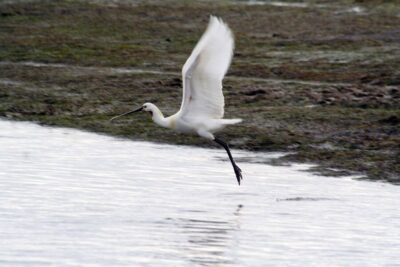
Faro: Eco-Friendly Ria Formosa Bird Watching in Solar Boat
Read our review →
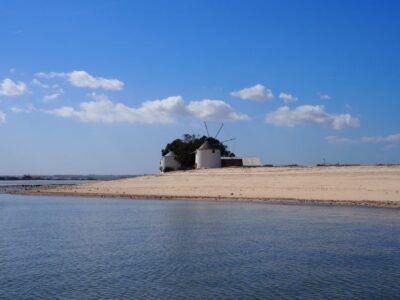
Tagus Estuary Nature Reserve Birdwatching Boat Tour
Read our review →
2-hour Bird Watching Guided Boat Trip in Ria Formosa from Faro Algarve
Read our review →
From Faro: 2-Hour Guided Bird Watching Boat Trip
Read our review →
Birdwatching in Ria Formosa – Eco Boat Tour from Faro
Read our review →
Stork Transfers – Private Transfer From Albufeira to Faro Airport (up to 4 pax)
Read our review →Browse the lists this tour appears in