
Review · PORTUGAL BIRDWATCHING TOURS
Azores Marine Birdwatching Expedition w/ Biologist Guide
The best part of this São Miguel outing is the chance to reach pelagic seabirds that are almost impossible to see from land. A fast Zodiac RIB carries you from Vila Franca do Campo along the coast and out to sea, where lookouts and radio reports help the crew search for active bird colonies.
I like the small group of up to nine and the useful 8×42 Opticron binoculars included in the price. I also like that the guide collects field images and data, so the trip has a conservation purpose beyond taking photographs. The trade-off is simple: wild birds choose the schedule, not the boat, and species sightings cannot be promised.
Key points at a glance
- Offshore birding from a Zodiac: The boat can cover open water quickly and approach colonies carefully.
- Vila Franca do Campo is the launch point: You visit the coast and islet before heading farther offshore.
- A short, focused morning: The outing begins at 8:00 a.m. and returns around 11:00 a.m.
- Binoculars are provided: Opticron 8×42 binoculars are included, though a camera with zoom is still useful.
- Built around conservation: Your guide follows environmental rules and gathers imagery and data during the trip.
- Weather matters: Poor conditions can lead to a new date or a full refund.
Why this boat trip is different from land-based birding
São Miguel gives you many fine views from shore, but most of the birds on this expedition live or feed over open water. Cory’s Shearwaters, Barolo Shearwaters, Bulwer’s Petrels, storm-petrels, and Great Shearwaters are not birds you can reliably find by simply walking along the coast.
That is why the Zodiac matters. It can move at speed while the crew searches, then slow down for a careful approach once birds are located. You are not sitting in one fixed viewing spot and waiting for luck. The boat works a broad stretch of water, guided by local reports from people watching inland and sharing directions over VHF radio.
The trip is run by Azores Whale Watching TERRA AZUL. A wildlife guide travels with an experienced skipper, and the group receives a short briefing before boarding. The briefing covers birds you may see and basic safety, which is especially useful if this is your first ride in a rigid inflatable boat.
This is an active, open-water outing, not a quiet hide with a guaranteed checklist. The RIB is described as zippy, which helps with searching but also means you should expect movement, wind, and spray. Bring warm clothing even on a pleasant morning.
More Birdwatching Boat Trips in Portugal
- Lisbon: Tagus Estuary Nature Reserve Birdwatching Boat Tour
★ 4.9 · 117 reviews - Faro: Ria Formosa Eco Birdwatching Boat Tour
★ 4.6 · 73 reviews - From Faro: 2-Hour Guided Bird Watching Boat Trip
★ 4.6 · 71 reviews
Starting at Vila Franca do Campo at 8:00 a.m.
You meet at Azores Whale Watching TERRA AZUL, at Marina de Vila Franca do Campo. Pickup may be available, but it depends on availability and must be arranged in advance. If you use pickup, confirm the exact time because collections begin before the stated start time.
The formal start is 8:00 a.m. You first receive the safety and birding briefing, then follow the guide and skipper to your assigned boat. Each Zodiac carries up to nine people, keeping the group small enough for the guide to speak with everyone and point out birds without a crowd pressing around the rail.
The morning ends back at the marina at about 11:00 a.m. That three-hour window is well chosen for a holiday schedule. You can go birding early, then still have most of the day for São Miguel’s other sights. The early departure does require some planning, particularly if you are staying away from Vila Franca do Campo.
Eat lightly before boarding. Bring your own water, sunscreen, lip balm, and warm layers. Light food is allowed, but personal water is not included. Cameras and other equipment should be protected from spray, and a zoom lens is more practical than trying to photograph distant birds with a phone.
The Islet of Vila Franca do Campo comes first
The first main stop is the Islet of Vila Franca do Campo, a volcanic islet just off the coast. From the boat, you look for colonies, shorebirds, and other wildlife around the islet and nearby shoreline.
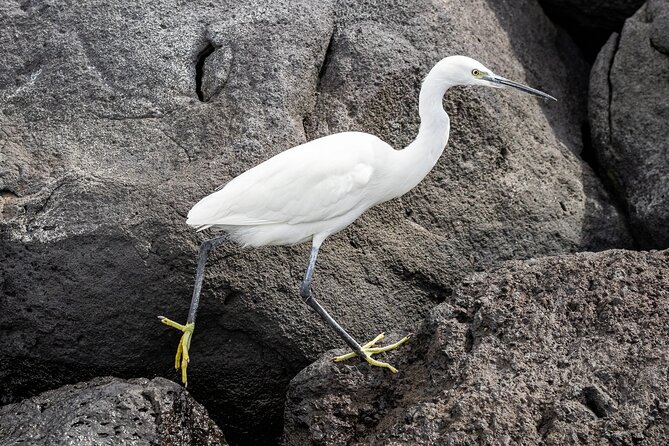
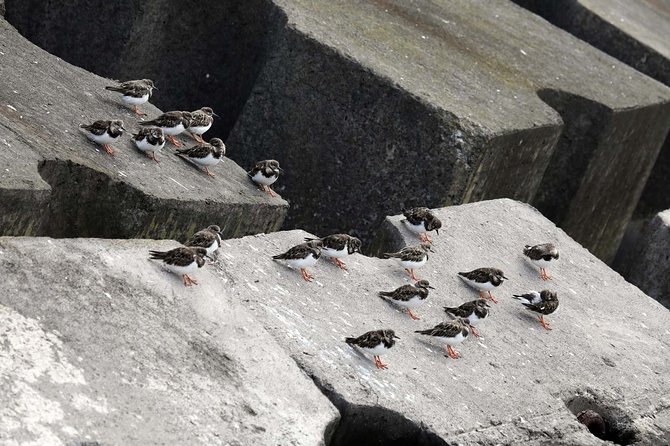
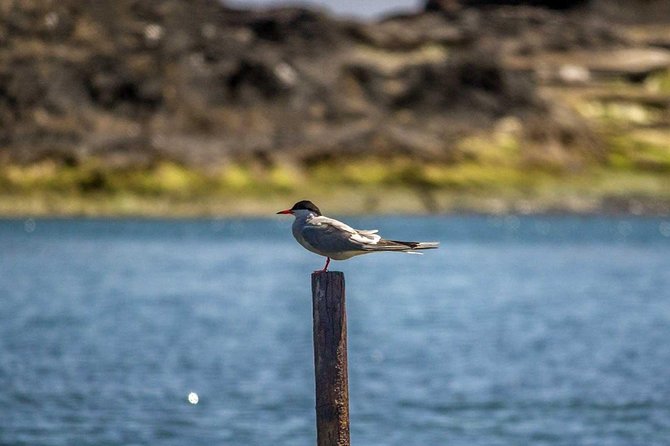
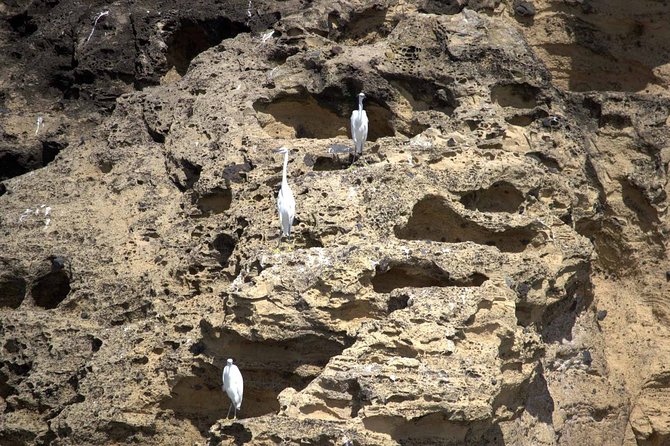
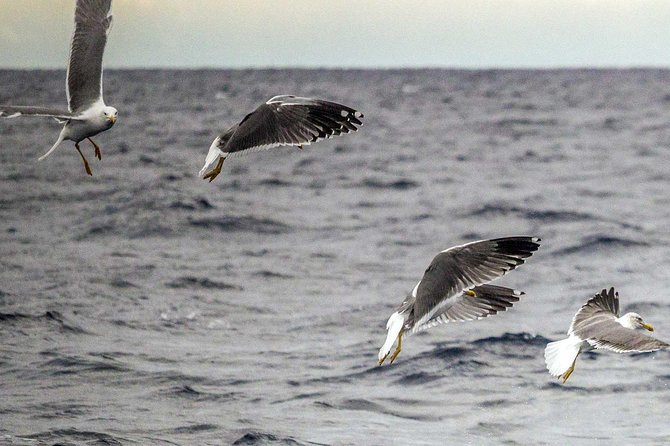
This opening section gives you a gentle introduction to the pace of the outing. Your guide can explain what you are seeing while the boat remains closer to land, then the crew can decide how to move farther out. You might find Yellow-legged Gulls, Little Egrets, Turnstones, Sanderlings, or Whimbrels in this coastal zone.
The islet is also a useful contrast to the offshore search. Coastal birds are often easier to spot because they may rest on rock or feed along the edge. Pelagic birds are less predictable. They may pass quickly, sit low on the water, or appear as small shapes against a large stretch of sea.
Do not treat this stop as a promise of a set list. The guide can take you to places where birds are known to occur, but the animals remain wild. That uncertainty is part of the outing, though it can frustrate anyone expecting a guaranteed sighting of a Roseate Tern or a Northern Gannet.
Searching offshore for shearwaters and petrels
After the coastal section, the boat heads out to sea. This is where the expedition earns its name. The crew searches for birds that spend much of their lives offshore, using local information to guide the route.
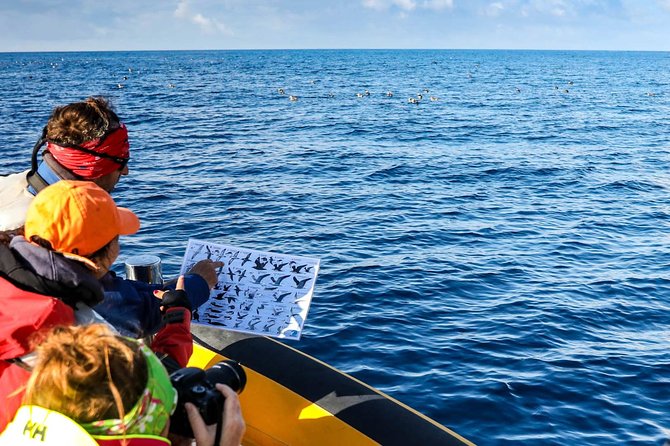
Potential sightings include Cory’s and Barolo Shearwaters, Manx and Sooty Shearwaters, Great Shearwaters, Bulwer’s Petrels, Wilson’s Storm-petrels, Madeiran Storm-petrels, and Leach’s Storm-petrels. You may also see Common, Roseate, Bridled, or Sooty Terns, along with Northern Gannets and Arctic Skuas.
The guide keeps you informed as the boat approaches. The aim is to get close enough for a good view without disturbing the colony or changing animal behavior. That balance matters. This is described as a high conservation-risk activity, so a qualified guide remains present to keep the outing within proper environmental standards.
The guide also collects field imagery and data for research. For you, that means the trip has a useful purpose beyond a morning at sea. It also means the guide may be focused on recording behavior and location, not only pointing out birds for a photograph.
The provided Opticron 8×42 binoculars are a strong practical touch. Eight-power magnification is manageable on a moving boat, and the 42-millimeter objective lenses should help gather enough light in changing conditions. If you already own binoculars, you can bring them, but you do not need to purchase a pair for this trip.
A camera with zoom is recommended. Keep it protected when the boat is moving quickly, then have it ready when the guide spots a bird. Pelagic birds can disappear before you have time to adjust settings, so watching first and photographing second is often the wiser approach.
Same place, a different morning in the field:
- Faro: Eco-Friendly Ria Formosa Bird Watching in Solar Boat
★ 4.7 · 359 reviews - Dolphin – Whale – Turtle – Bird Watching
★ 5.0 · 350 reviews - Faro: Ria Formosa Natural Park Segway Tour & Birdwatching
★ 4.9 · 180 reviews - Ria Formosa Natural Park Birdwatching Segway Tour from Faro
★ 5.0 · 164 reviews
What the wildlife guide adds
A good marine birding guide does more than name a species. The guide helps you scan the correct part of the water, read flight patterns, and understand why the boat changes direction. In a small group, those explanations are easier to hear and follow.
The strongest feedback about this experience points to the guide’s friendly manner, ability to answer questions, and clear knowledge of birds such as Cory’s Shearwater. One outing also included a minor species identification error, a useful reminder that marine birding is difficult even for an experienced observer. Birds may be seen only briefly, in poor light, or at a distance.
I would not let that small concern put off a beginner. You are going to sea because these birds are hard to identify and observe from land. If you already keep a detailed life list and need exact identification of every sighting, you may want to treat the guide’s calls as informed field judgments rather than absolute proof.
The team is multinational. English is the official language, and the crew will try to accommodate another preferred language, though that cannot be guaranteed. Most people can take part, but children under four are not accepted. Service animals are allowed.
The ride itself: quick, exposed, and weather dependent
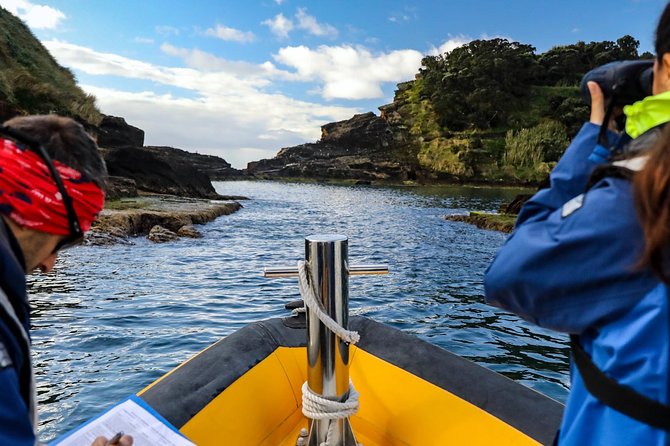
A Zodiac RIB offers a direct feel for the sea. It is smaller and more agile than a conventional sightseeing boat, which helps the skipper approach bird colonies and reposition quickly. The same design leaves you more exposed to wind, spray, and motion.
You receive an impermeable top and a life vest. Still, bring warm layers and protect your phone, camera, and other personal equipment. Sunscreen and lip balm are worth packing because the combination of sun, wind, and salt can be hard on your skin.
Weather can change the whole character of the trip. Calm conditions make it easier to scan the water and hold binoculars steady. Rough weather can make the ride less comfortable and reduce the chance of useful sightings. The operator can cancel for poor weather, offering another date or a full refund.
This is not an outing I would choose for someone who dislikes small boats or gets seasick easily. The supplied information does not promise a smooth ride, and the search may involve stretches of faster travel before the boat slows near birds. Eat lightly, follow the safety briefing, and bring only equipment you can protect.
Is $58.81 a fair price?
At $58.81 per person, the price is reasonable for a three-hour small-group expedition, especially because it includes the Zodiac, skipper, wildlife guide, life vest, impermeable top, binoculars, and insurance. You are not paying only for transport. You are paying for a crew that knows where colonies may be found and can interpret what you see.
The group limit of nine improves the value. On a crowded boat, a distant seabird may be visible to only a few people at a time. Here, the guide has a better chance of directing everyone toward the same bird, and you spend less time waiting for a clear view.
The price is less compelling if your main aim is a guaranteed list of species. Wild birding has no fixed return. You might see several excellent species, or you might spend much of the morning searching and catch only brief views. The cost makes the most sense if you value the chance, the setting, and the guide’s field work as much as the final count.
The tour is booked, on average, 21 days ahead. That suggests you should reserve early if your dates are fixed, particularly since the experience needs a minimum number of participants and suitable weather. Free cancellation is available until 24 hours before the start. Changes or cancellations inside that window are not accepted for a refund.
Who will enjoy this São Miguel expedition?
This outing fits you best if you already enjoy birds, wildlife photography, or short boat trips and want access to species rarely seen from shore. It also works well for a curious beginner who likes learning in the field and does not need every sighting to be guaranteed.
You should bring realistic expectations. The boat can reach likely colony areas, but no guide can control bird behavior or promise a particular species at a particular time. The short duration makes the risk easier to accept than on a full-day expedition, and the return to the marina around 11:00 a.m. leaves room for other plans.
Families with children four and older can participate, provided everyone is comfortable on an exposed RIB. People with limited comfort in open water should think carefully before booking. The available information says most people can take part, but it does not describe special seating or mobility arrangements.
My booking advice
Book this experience if you want a focused morning on the water, appreciate expert searching rather than a fixed sightseeing route, and are happy to trade certainty for the chance of seeing rare seabirds. The small boat, included binoculars, and conservation work give the trip real value at $58.81.
Skip it if you need guaranteed sightings, dislike wind and spray, or want a slow, sheltered cruise. For everyone else, this is a practical way to reach São Miguel’s marine birdlife, with enough structure to help a beginner and enough variety to keep an experienced birder alert.
FAQ
Where does the marine birdwatching expedition start?
It starts at Azores Whale Watching TERRA AZUL, Marina de Vila Franca do Campo 4, 9680-187 Vila Franca do Campo, Portugal.
What time does the experience begin?
The stated start time is 8:00 a.m. Pickup, when available, begins before that time and must be confirmed with the operator.
How long does the activity last?
The expedition lasts about three hours and is scheduled to return around 11:00 a.m.
Where does the boat go?
The boat travels along the coast, visits the Islet of Vila Franca do Campo, and then heads offshore to search for seabirds and wildlife.
How many people can join?
The maximum is nine people on the activity. The Zodiac boats are listed as carrying up to nine people each.
Are binoculars included?
Yes. Opticron 8×42 binoculars are provided.
What should I bring?
Bring your own water, sunscreen, lip balm, warm clothing, and a camera with zoom if you want photographs. Protect personal equipment from water and spray. Light food is permitted.
Is the activity available in languages other than English?
English is the official language. The multinational team will try to accommodate another preferred language, but this is not guaranteed.
Can young children join?
Children under four are not accepted. Most other people can participate, according to the stated requirements.
What happens if the weather is poor?
If poor weather causes cancellation, you can choose another date or receive a full refund. The same options apply if the minimum number of participants is not reached.
Just added around Portugal
- Visit to Madeira Bird Island★ 4.6 · 22 reviews
- Vila Franca do Campo: Marine Life & Bird Watching & Islet Tour★ 4.4 · 9 reviews
- Birdwatching Private Tour at Fascinating Salgados Lagoon★ 5.0 · 6 reviews
- Private Birdwatching from Porto★ 5.0 · 33 reviews
- Bird Watching in Albufeira Lagoon★ 5.0 · 2 reviews
- Birdwatching at Ria de Alvor★ 5.0 · 2 reviews
- Birdwatching day around Sagres★ 5.0 · 3 reviews
- Half-day birdwatching around Faro★ 5.0 · 2 reviews
Portugal Birdwatching Tours, compared.
Faro: Eco-Friendly Ria Formosa Bird Watching in Solar Boat
Read our review →
Tagus Estuary Nature Reserve Birdwatching Boat Tour
Read our review →
2-hour Bird Watching Guided Boat Trip in Ria Formosa from Faro Algarve
Read our review →
From Faro: 2-Hour Guided Bird Watching Boat Trip
Read our review →
Birdwatching in Ria Formosa – Eco Boat Tour from Faro
Read our review →
Stork Transfers – Private Transfer From Albufeira to Faro Airport (up to 4 pax)
Read our review →Browse the lists this tour appears in