
Review · PORTUGAL BIRDWATCHING TOURS
From Faro: 2-Hour Guided Bird Watching Boat Trip
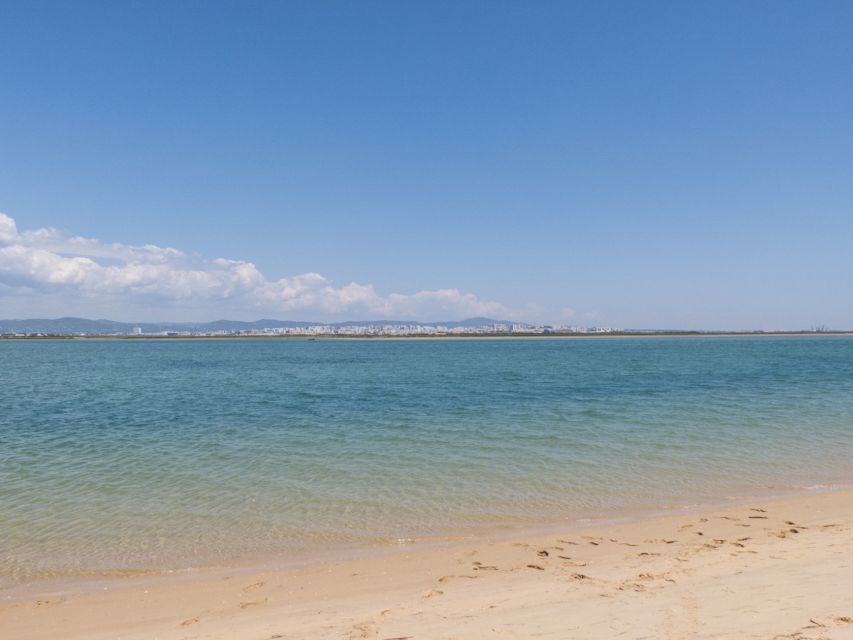
The best part of this Ria Formosa bird-watching boat trip is the setting. You glide through calm channels, pass oyster and clam farms, and reach the point where the lagoon meets the sea. It is a gentle way to see why this wetland was named one of Portugal’s 7 Natural Wonders.
I like the use of binoculars and live commentary, since you are not left guessing at every distant shape. I also like the 15 to 20-minute beach stop, which breaks up the bird watching with a chance to walk on an empty stretch of sand. The main caution is timing: birds vary by season, and weather, tides, or a small number of bookings can change the plan.
- Birds change with the season: Winter brings more waders, with flamingos and Sandwich terns also possible.
- The route includes working shellfish farms: Oyster and clam cultivation gives the trip a useful local angle.
- A 15 to 20-minute beach stop is included: You get time away from the boat at the lagoon’s meeting point with the sea.
- Guide Piedro received special praise: His friendly manner and bird knowledge were singled out on one September outing.
- The boat returns to Faro: No separate transport is included, so the central meeting point matters.
- The tour is wheelchair accessible: Check the exact departure conditions when booking, since tides and weather can alter operations.
Why the Ria Formosa makes a good bird-watching trip
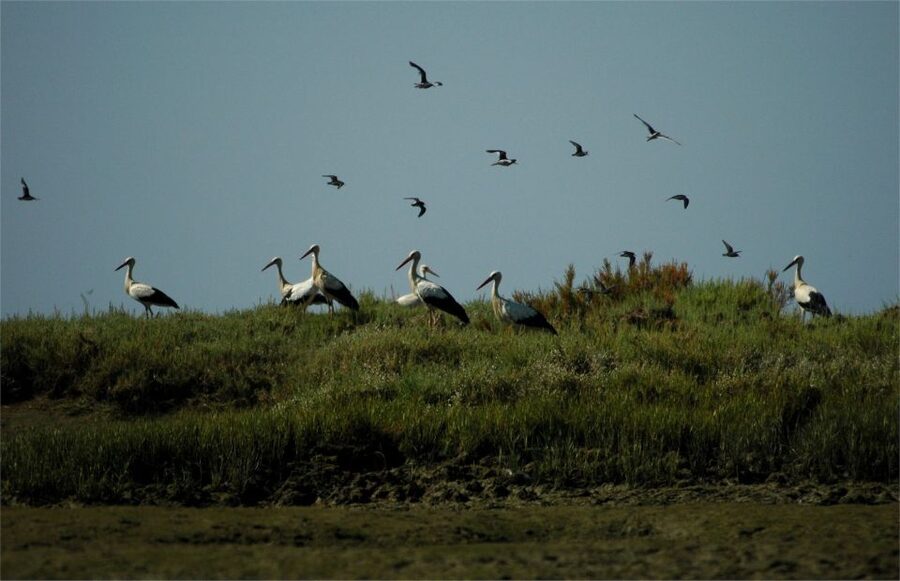
The Ria Formosa is not simply a pretty stretch of water. It is one of Portugal’s most important wetland areas for aquatic birds, with shallow channels, mudflats, islands, and coastal sand. That mix gives different birds places to feed and rest.
You will not be looking at one fixed habitat for two hours. The boat moves through several parts of the natural park, so the birds can change as quickly as the scenery. A white stork or little egret may appear near the channels, while waders gather in quieter areas farther toward the islands.
I like this kind of outing for a first look at the Algarve’s natural side. It is calm, short, and tied closely to the place. You are not spending half a day on a large cruise boat. You are using the waterways to understand how the wetland works.
The experience costs about $47 per person. That is not the cheapest boat ride in Faro, but the price includes a local guide, live explanations, binoculars, life vests, and a full two-hour route. If you care about identifying birds rather than simply taking a scenic cruise, those inclusions make the price easier to justify.
Starting at Faro’s Nautical Club
The meeting point is the Formosamar office at the Boat Tours Store, on the ground floor of the Ginásio Clube Naval de Faro, also called the Nautical Club of Faro. Plan to arrive 10 minutes before departure for check-in.
This location is useful if you are already in Faro, but hotel pickup is not included. You must arrange your own way to the nautical club, and the tour does not provide transport to or from other attractions. Bring water with you, since food and drinks are also not included.
Before departure, expect a safety briefing and time to get settled on the boat. Life vests are provided. The tour is wheelchair accessible, which makes it a practical choice for more people than many small boat excursions, though the exact conditions of boarding can still depend on the day’s boat and water conditions.
The guide commentary is available in English, Portuguese, Spanish, and French. That matters here because bird watching becomes much more rewarding when the guide explains what you are seeing, where to look, and why the species use a certain part of the wetland.
More Birdwatching Boat Trips in Portugal
- Lisbon: Tagus Estuary Nature Reserve Birdwatching Boat Tour
★ 4.9 · 117 reviews - Faro: Ria Formosa Eco Birdwatching Boat Tour
★ 4.6 · 73 reviews - Lisbon : Birdwatching Boat Tour – Tagus Estuary
★ 5.0 · 20 reviews
Following the channels through the natural park
Once the boat leaves Faro, the route follows the channels of the Ria Formosa Natural Park. The pace is intentionally easy. This is not a fast sightseeing ride built around dramatic turns. The slower movement gives you a better chance to scan the water and banks with the provided binoculars.
The first part focuses on the wetland and its aquatic birds. White storks, little egrets, and spoonbills are among the species you may see. These birds do not appear on demand, so keep your eyes moving and listen closely when the guide points something out.
The most reliable birds depend on the season. Waders are especially abundant in winter. Whimbrels, turnstones, and grey plovers can be present throughout the year, so even a warmer-season trip still has good bird-watching potential.
This is where expectations matter. You may see many birds, but the exact list cannot be guaranteed. The species named for the trip change according to the time of year, water conditions, and the animals’ own movements. A patient attitude will serve you better than a fixed checklist.
A positive feature is that the guide does not need to fill the whole ride with a constant stream of facts. Quiet stretches are part of watching wildlife. Still, one poorly handled shortened outing showed why communication matters. A passenger who expected the two-hour bird-watching trip instead received a one-hour alternative after being told on arrival that only one person had booked the longer option. The shortened route offered little bird identification and left the passenger feeling overlooked.
That appears to be an exception, but it gives you a useful booking tip: confirm the departure and duration if the trip is central to your day. The operator can change schedules because of safety, weather, tides, or other conditions, but early notice is especially important if you have limited time in Faro.
Passing oyster and clam farms
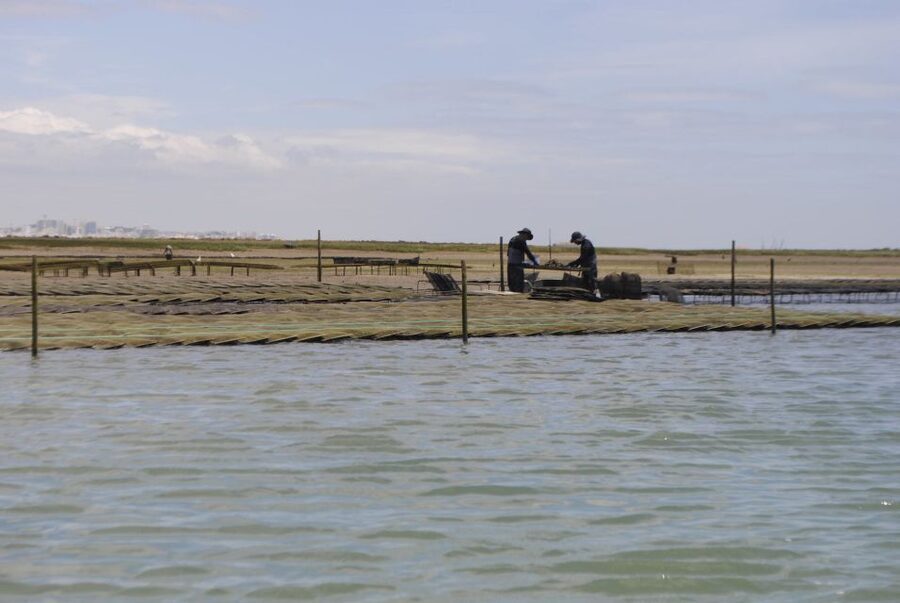
The route continues toward the islands through oyster and clam farms. These are not just scenic details. Shellfish farming is an important local economic activity in the Algarve, and seeing it from the water adds a human side to the natural park.
I appreciate this part because it keeps the tour from becoming a simple bird list. The Ria Formosa supports wildlife and local work at the same time. The channels are part of a living coastal system, not a display arranged for visitors.
As you pass the farms, the guide can help you connect the shallow water, tidal movement, and shellfish beds with the wider wetland. You may also spot black-tailed godwits and oystercatchers in this area, along with other birds that use the shoreline to feed.
Oystercatchers are particularly fitting here, given the connection between the bird and the shellfish-rich coast. Black-tailed godwits bring a different shape and profile to your binocular view. You will get more from this section if you watch for movement along the edges rather than staring only at open water.
Reaching the islands and the open sea
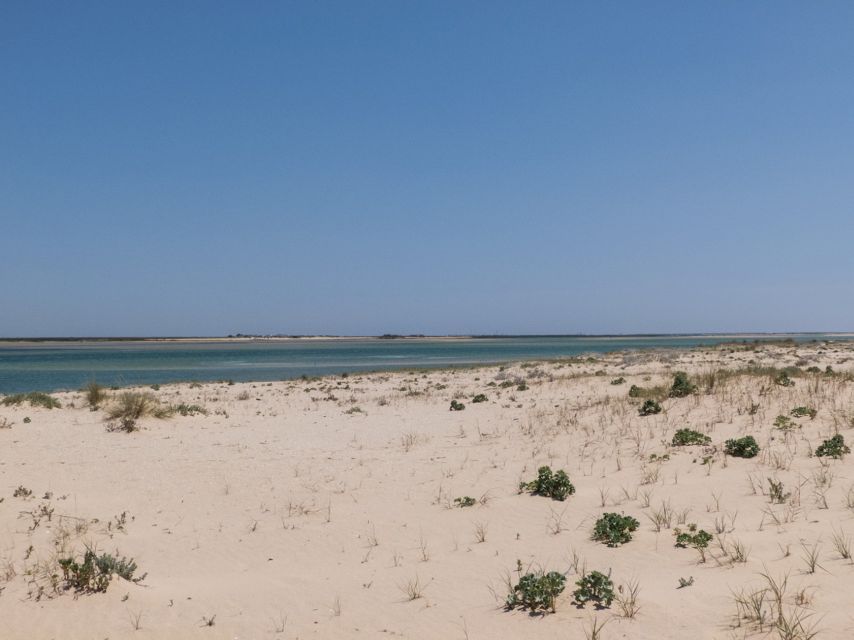
The boat heads toward the islands of the natural park and the point where the lagoon meets the sea. This is the scenic high point of the outing. The protected channels give way to a wider coastal view, and the sense of space increases as you approach the sea.
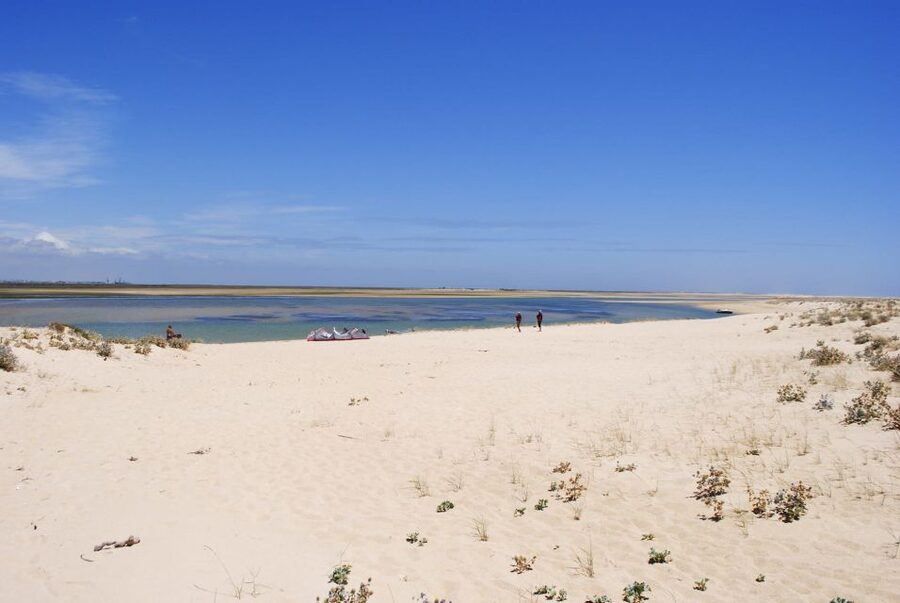
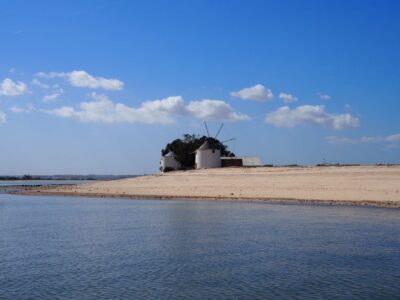
A stop of about 15 to 20 minutes takes place at a deserted beach. This is a welcome change of pace. You can step away from the boat, enjoy the sand, and take in the quiet edge of the coast before returning to the channels.
Do not think of the beach stop as a separate beach excursion with services. Food and drinks are not supplied, and the description does not promise facilities or organized beach activities. Bring water, wear comfortable shoes, and use sun protection in spring and summer.
The stop also helps the two-hour trip feel less repetitive. Bird watching requires time, but sitting on a boat for the entire outing may not suit everyone. A short walk gives you a chance to stretch and enjoy the coast without turning the excursion into a long, tiring day.
In winter, this part of the route may bring sightings of Sandwich terns and greater flamingos. Flamingos are one of the more memorable possibilities, though you should treat them as a seasonal chance rather than a promise. A September outing produced reports of flamingos and even an eagle, showing how varied the day’s sightings can be, but wildlife remains unpredictable.
Same place, a different morning in the field:
- Faro: Eco-Friendly Ria Formosa Bird Watching in Solar Boat
★ 4.7 · 359 reviews - Dolphin – Whale – Turtle – Bird Watching
★ 5.0 · 350 reviews - Faro: Ria Formosa Natural Park Segway Tour & Birdwatching
★ 4.9 · 180 reviews - Ria Formosa Natural Park Birdwatching Segway Tour from Faro
★ 5.0 · 164 reviews
The return through Faro’s waterways
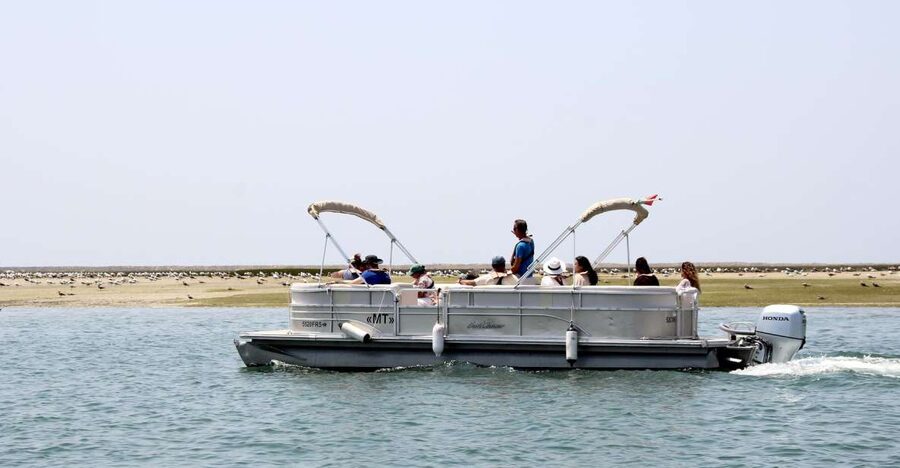
The return journey follows the park’s channels back toward Faro. This is not simply dead time after the main stop. Birds may look different from the opposite direction, and the lower pace gives you more chances to spot species missed earlier.
The guide’s role becomes especially important on the way back. A good bird guide can help you compare species, repeat names, and point out birds that blend into the muddy banks or pale shoreline. The strongest outings have been praised for an informative guide and a wide variety of birds, with Piedro mentioned by name as a friendly and very bird-focused guide.
The quality of the commentary can shape your experience. One hour-long replacement trip received a poor assessment because very few birds were identified and the guide did not engage equally with the passenger. If you book this experience, ask questions when you can, especially if a bird is pointed out too quickly. The guide may be handling the boat, watching the route, and helping several people at once.
Back at the Nautical Club, the trip ends where it began. The full route takes two hours, including the beach stop, though departure times, arrival times, and the itinerary can change for safety reasons.
The birds you might see by season
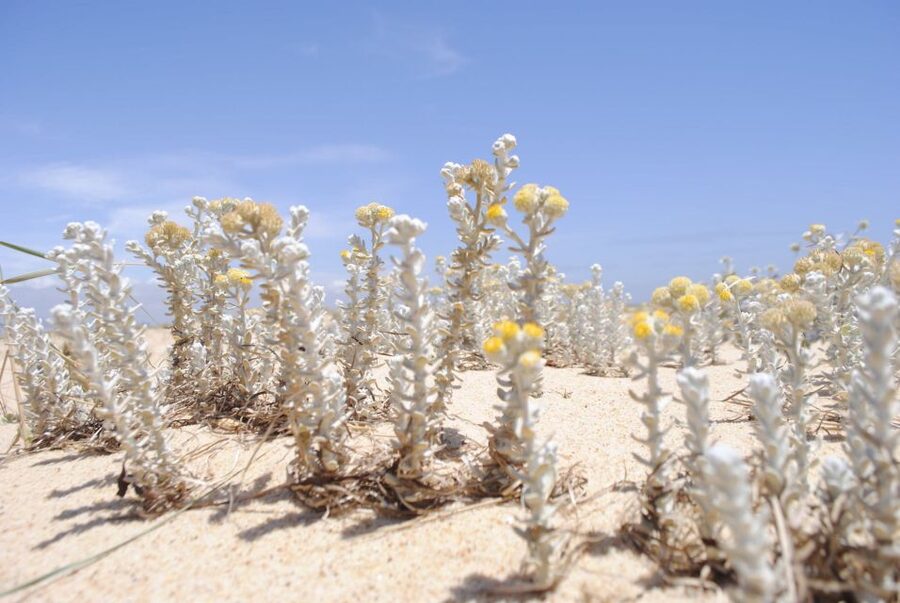
The Ria Formosa gives you different rewards at different times of year. Winter is the strongest period for waders, when species such as whimbrels, turnstones, and grey plovers are especially likely to be present in larger numbers.
Greater flamingos and Sandwich terns are also associated with winter sightings on this route. If these are high on your wish list, a winter departure may give you a better chance, but no season guarantees a specific bird.
In warmer months, little egrets, white storks, spoonbills, oystercatchers, and other species remain possible. September sightings included flamingos and an eagle, along with a good range of other birds. The exact mix changes from day to day.
Binoculars are included, which is a real advantage. Birds often sit too far away for comfortable viewing with the naked eye, and sharing equipment is one less thing to pack. You may still bring your own binoculars if bird watching is a serious interest, but the supplied pair means beginners can join without special gear.
Weather, clothes, and comfort on the water
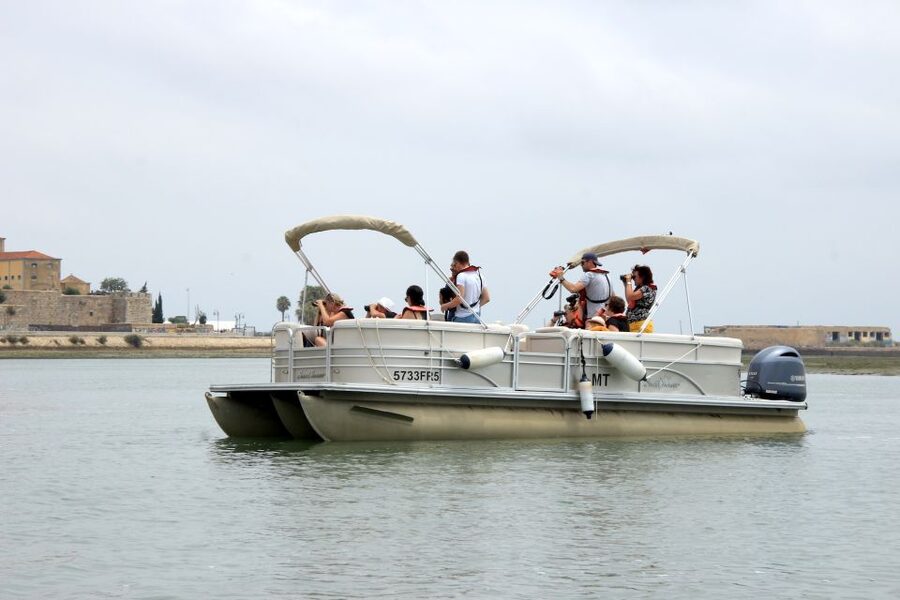
Wear comfortable clothing and footwear. A hat and sunscreen make sense in spring and summer, when the sun can feel strong on open water. In autumn and winter, waterproof clothing is recommended.
Bring water for the two-hour outing. There is no food or drink included, and the beach stop is not presented as a place to buy refreshments.
The boat route depends on weather and tides. Conditions can affect safety, the schedule, the duration, and the exact itinerary. This is normal for a shallow coastal wetland, but it means you should avoid booking the trip immediately before an important fixed appointment.
The tour is wheelchair accessible, which is useful information for anyone planning around mobility needs. Since boats and pontoons can vary, it is still sensible to confirm the practical boarding arrangements at the time of booking.
Who will get the most from this two-hour trip
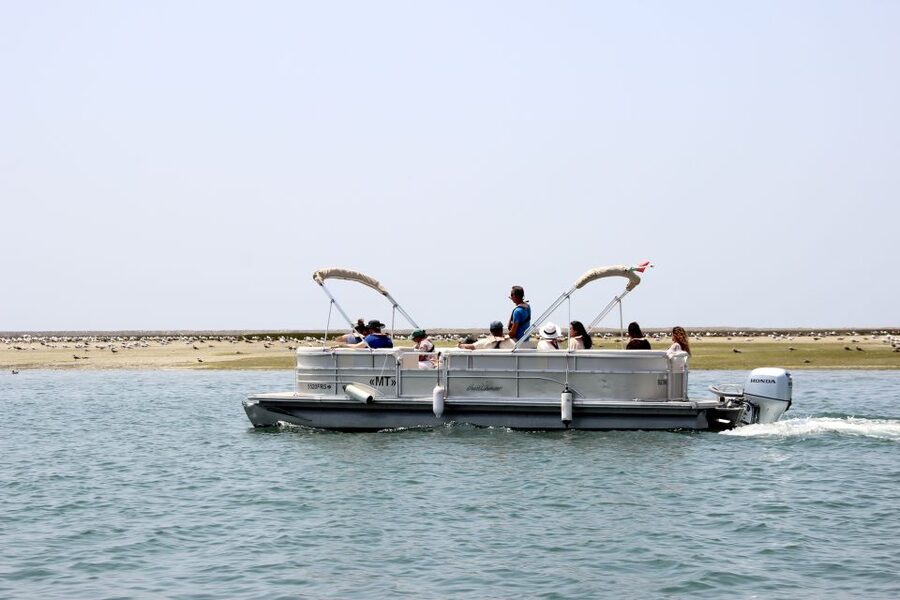
I would recommend this outing to anyone who wants a short, nature-focused break from Faro’s streets. It suits beginners because the guide provides commentary and binoculars, but it also gives experienced bird watchers a chance to see a mix of waders, coastal birds, and wetland species.
Families may like the limited two-hour length and the beach stop. The trip offers enough movement to keep the experience varied without requiring a full-day commitment. It also suits photographers who enjoy birds, water, and open coastal views, though the boat’s motion and the distance to wildlife can make sharp bird photographs difficult.
This is less suitable if you need a guaranteed list of species or a rigid schedule. It is also not ideal if your main goal is swimming, food, or a long beach visit. The beach stop is short, and the purpose of the trip remains bird watching.
The experience works best when you accept that nature sets the timetable. You may see spoonbills and flamingos. You may instead spend more time watching egrets, waders, shellfish farms, and the changing channels. Both are valid ways to experience the Ria Formosa.
Is the $47 price worthwhile?
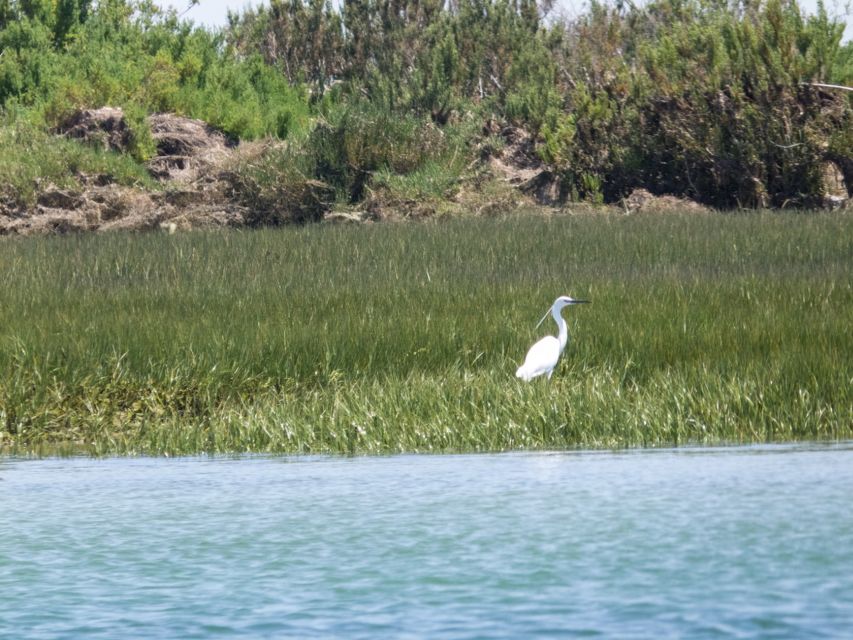
At $47 per person, this is fair value if you want interpretation as well as transport. A basic boat ride might show you the same water, but it would not necessarily include binoculars, bird identification, or context about shellfish farming and the wetland’s role.
The two-hour duration is another point in its favor. You get a proper route through the natural park, a beach stop, and a return through the channels without giving up an entire day. You also avoid paying separately for a guide or equipment.
The value drops if the tour is shortened without good notice or if you receive little bird commentary. Confirm the planned duration before setting aside your day, especially if you have only one free day in Faro. The operator offers free cancellation up to 24 hours before departure and a reserve-now, pay-later option, which gives you some flexibility while making plans.
Should you book the Ria Formosa bird trip?
Book it if you want a calm, informative boat trip with real chances to see wetland birds and a short stop at a quiet beach. The best reasons are the local guide, included binoculars, varied route, and access to a part of the Algarve that is easy to miss from land.
Choose your timing carefully. Winter is strongest for waders, while flamingos and Sandwich terns are possible at that time. Pack water, sun protection or waterproof layers according to the season, and confirm the two-hour departure if your schedule is tight.
I would skip it only if you need guaranteed wildlife sightings, a long beach stay, or a completely fixed itinerary. For most nature-minded visitors based in Faro, $47 buys a worthwhile introduction to the Ria Formosa, provided you arrive ready for wildlife rather than a scripted show.
FAQ
Where does the bird-watching boat trip begin?
It begins at the Formosamar office in the Boat Tours Store, on the ground floor of the Ginásio Clube Naval de Faro, also known as the Nautical Club of Faro.
How long does the activity last?
The planned boat trip lasts two hours and includes a 15 to 20-minute stop at a deserted beach.
What birds might I see?
Possible species include white storks, little egrets, spoonbills, whimbrels, turnstones, grey plovers, black-tailed godwits, oystercatchers, Sandwich terns, and greater flamingos. Species vary by season.
Are binoculars provided?
Yes. Binoculars, life vests, a local guide, and live commentary are included.
Which languages are available?
Live guiding is available in English, Portuguese, Spanish, and French.
What should I bring?
Bring comfortable clothing and footwear, water, and a hat with sunscreen in spring and summer. Waterproof clothing is recommended for autumn and winter.
More 2-Hour Experiences in Portugal
- 2-hour Bird Watching Guided Boat Trip in Ria Formosa from Faro Algarve
★ 4.5 · 75 reviews - 2 Hours Guided Whale and Bird Boat Tour in Bay Bulls
★ 5.0 · 557 reviews - Marco Island 2 hour Dolphin, Birding and Shelling tour
★ 5.0 · 503 reviews - 2 Hour Dolphin, Birding and Shelling Tour
★ 5.0 · 247 reviews
Just added around Portugal
- Visit to Madeira Bird Island★ 4.6 · 22 reviews
- Vila Franca do Campo: Marine Life & Bird Watching & Islet Tour★ 4.4 · 9 reviews
- Azores Marine Birdwatching Expedition w/ Biologist Guide★ 4.5 · 19 reviews
- Birdwatching Private Tour at Fascinating Salgados Lagoon★ 5.0 · 6 reviews
- Private Birdwatching from Porto★ 5.0 · 33 reviews
- Bird Watching in Albufeira Lagoon★ 5.0 · 2 reviews
- Birdwatching day around Sagres★ 5.0 · 3 reviews
- Birdwatching at Ria de Alvor★ 5.0 · 2 reviews
Portugal Birdwatching Tours, compared.
Faro: Eco-Friendly Ria Formosa Bird Watching in Solar Boat
Read our review →
Tagus Estuary Nature Reserve Birdwatching Boat Tour
Read our review →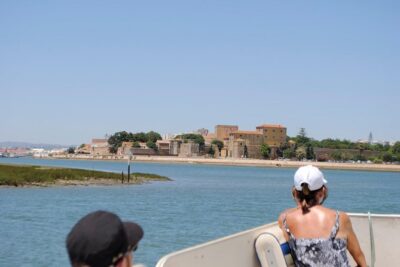
2-hour Bird Watching Guided Boat Trip in Ria Formosa from Faro Algarve
Read our review →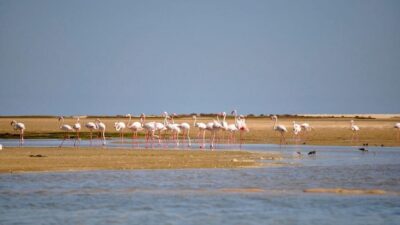
Birdwatching in Ria Formosa – Eco Boat Tour from Faro
Read our review →
Stork Transfers – Private Transfer From Albufeira to Faro Airport (up to 4 pax)
Read our review →
Boat Tour – Bird Observation in the Tejo Nature Reserve
Read our review →Browse the lists this tour appears in