

Review · NEW ZEALAND BIRDWATCHING TOURS
Napier: Cape Kidnappers Gannet, Nature & Sightseeing Tour
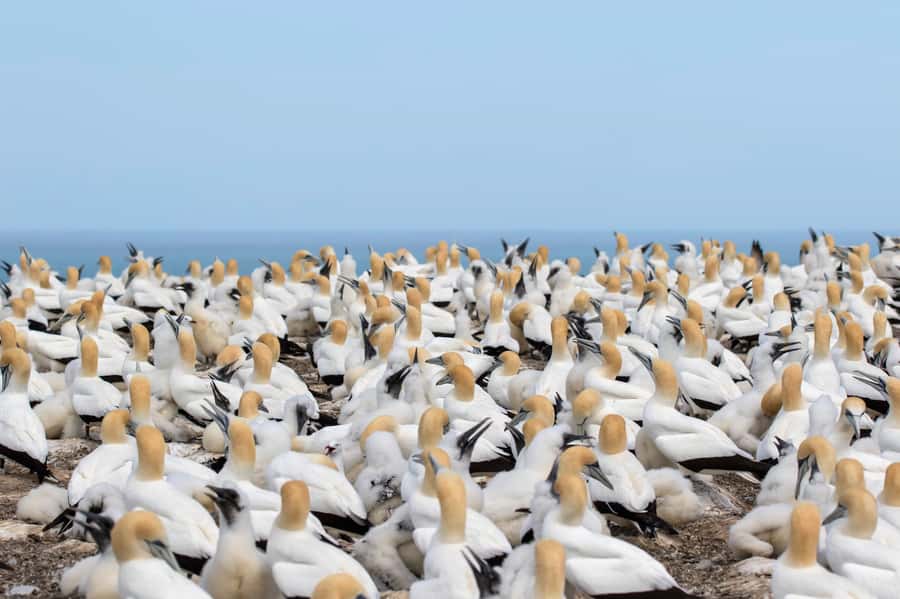
Cape Kidnappers gives you something rare: thousands of wild gannets only a few feet away, nesting in tight rows above the sea. The birds swoop overhead, preen, call, and perform their recognition dance while guides explain what you are seeing.
I like the easy access and the strong local commentary. You ride in an air-conditioned 4×4 instead of hiking across rough private land, and guides such as Jan, Marcus, Trevor, and Marty add stories about Maori legends, farming, wildlife, and conservation. The main drawback is the ride itself: parts can be bumpy, seats may feel cramped, and the bus can get warm.
Key points
- 20,000 gannets at close range: See adults and chicks from just a few feet away at the world’s largest mainland gannet colony.
- A ride through private Cape Kidnappers land: The route gives you access to scenery and bird habitat that you could not reach on your own.
- Strong local guiding: Guides including Jan, Marcus, Trevor, Garth, and Marty are praised for clear facts, humor, local stories, and care for the birds.
- Little or no walking required: The vehicle takes you directly to the colony, making this a good choice if steep tracks are a concern.
- Best from September to early April: December and January bring the most visible young chicks, while September shows the colony preparing for the breeding season.
- A small but useful refreshment stop: Light refreshments, including hot drinks and biscuits, are included.
Why Cape Kidnappers Is Worth Your Morning
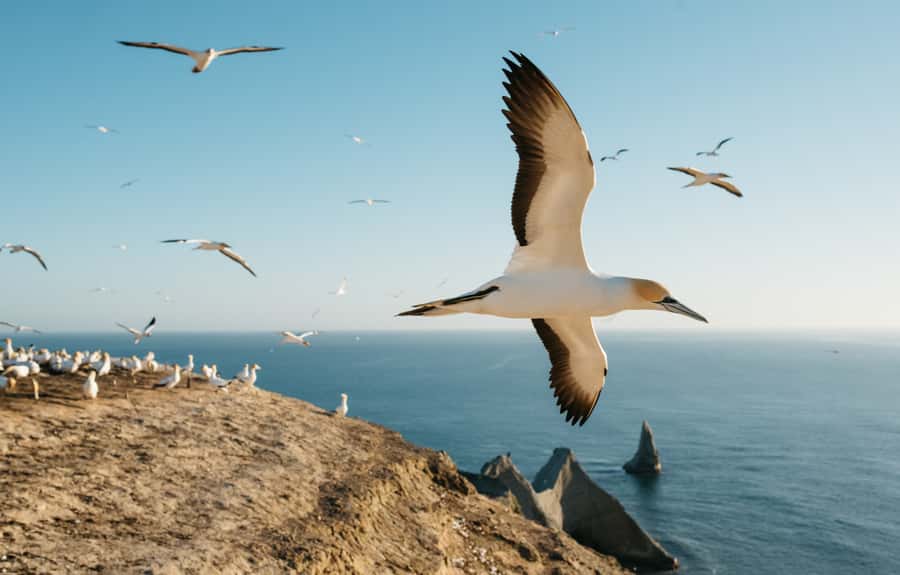
The real prize here is not simply seeing a gannet. It is seeing a whole working colony at close range. Around 20,000 birds gather at Cape Kidnappers, arranged in dense rows on the clifftop. Adults return with fish, pairs greet each other with ritual movements, and chicks wait for food.
Gannets are part of the booby family. Their pale gold crowns and black eye markings make them easy to pick out, even when the colony is crowded. Their wingspan reaches about 6 feet, or 2 metres, so a bird flying over your head feels much larger than you might expect.
I especially like the fact that you do not need to rely on binoculars. You can watch the birds’ faces, feathers, courtship gestures, and feeding routines from only a few feet away. That closeness also makes the visit more memorable for children, photographers, and anyone who usually finds birdwatching a bit distant.
There is a catch. A large colony is not a quiet place, and it is not a sweet-smelling place. Gannets are impressive but noisy and, as one practical visitor put it, rather smelly. Bring your curiosity, but do not expect a peaceful garden stroll.
More Seabird Tours in New Zealand
- Gannet Safaris Overland tour to Cape Kidnappers Gannet Colony
★ 5.0 · 942 reviews - Albatross, seals, and sea birds-Wildlife Cruise
★ 5.0 · 189 reviews - Dunedin Wildlife Cruise-Albatross, seals and harbour
★ 5.0 · 115 reviews
The Three-Hour Ride Across Cape Kidnappers
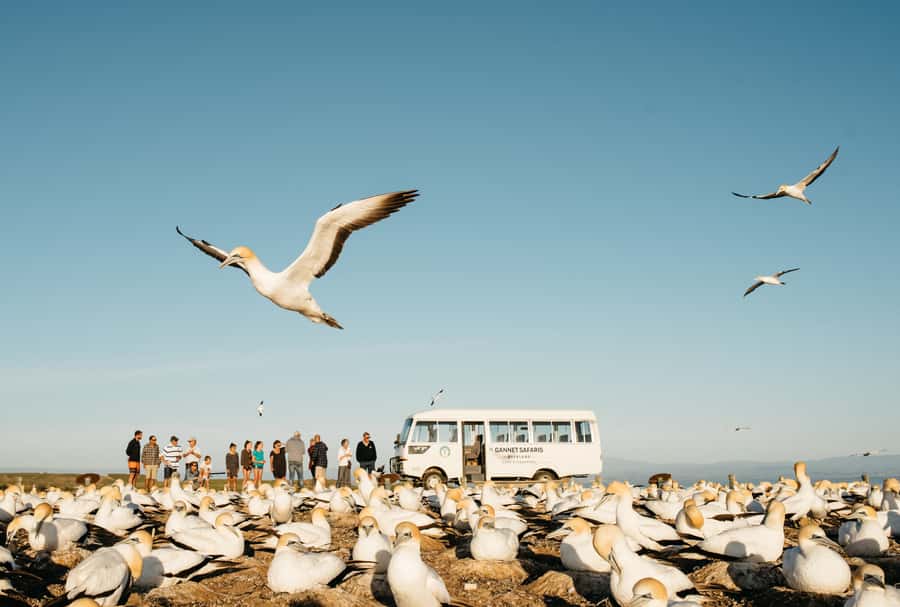
The tour begins at Gannet Safaris Overland, 396 Clifton Road, Te Awanga 4172. Look for the Gannet Safaris sign beside the road. Hotel pickup is not included, so you need to make your own way to the meeting point unless you book a direct transfer through the operator’s website.
From there, you travel in a comfortable, air-conditioned 4×4 coach. The drive is part of the outing, not just a way to reach the birds. You pass through the Cape Kidnappers area, with views of dramatic geological formations, farmland, forest, and open country.
This route matters because the gannet colony sits on private land. You cannot simply wander there independently. The vehicle gives you access to a part of Cape Kidnappers that would otherwise be difficult to reach, and it removes the need for a long walk or steep climb.
The ride can be uneven. Several people have found the road bumpy, and the back row can be less comfortable or make it harder to hear the commentary. If you are sensitive to motion or want the clearest view of the guide, ask about sitting nearer the front when you arrive.
The bus has air conditioning, but one outing found it warm when the system was switched off. A jacket is still worth bringing because the cape can be windy and chilly, especially once you step out near the colony. You may need both layers and patience with changing conditions.
Stories, Maori Legends, and Local Knowledge on the Way
The guide makes a major difference here. The commentary covers the gannets, but it also reaches into Maori legends, local history, farming, pest control, and the story of the land around the cape.
Jan is a local guide who grew up on a farm and is especially good at connecting the present-day visit with older stories about the area. Marcus is known for lively, funny commentary, while Trevor combines information with an easy conversational manner. Other guides named in the tour feedback include Tom, Garth, Marty, Mick, and Anne.
You should expect the exact guide and style to vary. Some guides speak quickly, and accents or poor sound from the back row can make parts harder to follow. Still, the consistent strength is the amount of context you receive while riding. The journey becomes more than a transfer because you learn why this area matters and how the bird colony is protected.
One useful point to listen for is the work behind the wildlife experience. The route includes a view of a predator-proof reserve, and the commentary explains conservation efforts that help native species survive. The outing is not only about taking photographs. It also shows how pest control and protected areas support New Zealand’s birdlife.
Forest, Reserve, and Views Before the Colony
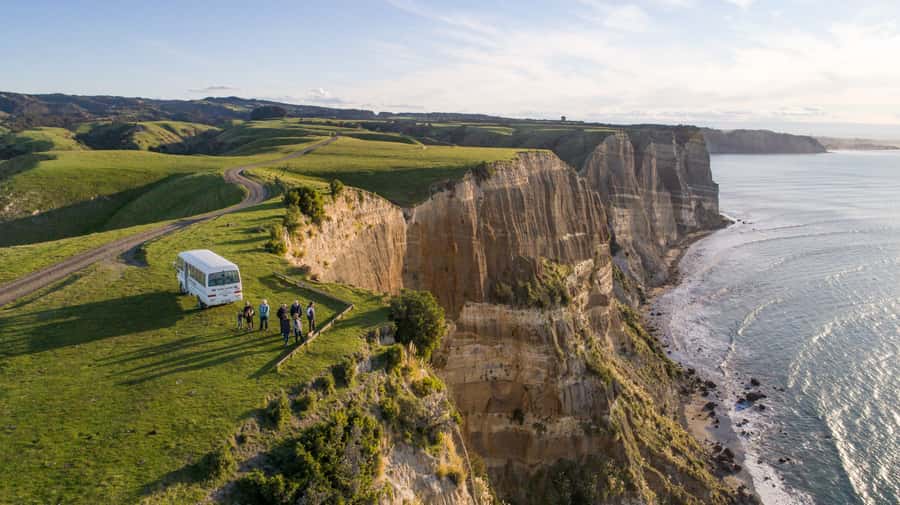
Before reaching the gannets, the route includes a native New Zealand forest and a production forest. These stops broaden the tour beyond one bird colony and give you a look at different ways the land is used.
The native forest is important because New Zealand’s bird species evolved in an environment with few land predators. Introduced pests have changed that balance, which is why predator-proof areas are such a key part of modern conservation. The tour lets you see that effort in place rather than hearing about it as an abstract idea.
The predator-proof reserve adds another useful layer. You get a view of a protected area and hear how conservation supports species beyond the gannets. One particularly enthusiastic birdwatcher also saw kaka, tui, rifleman, and saddleback during the wider outing, though you should not treat those sightings as guaranteed.
There are also stops for views across the striking coastal country. The scenery is a strong part of the value, especially since the route crosses land that is not generally open for casual public access. The cliffs and exposed coastal setting help explain why this is such a fitting home for seabirds.
Some visitors have found sections of the track steep or daunting, even though the vehicle handled them well. You do not need to walk the route if you do not want to, but the ride itself can feel adventurous. If you prefer smooth roads, this is not that kind of tour.
Same place, a different morning in the field:
- Oamaru: Penguins Evening Viewing Ticket
★ 4.5 · 682 reviews - Guided Evening Penguin Viewing Otago Peninsula, Dunedin, New Zealand
★ 5.0 · 471 reviews - Dunedin: Wildlife and Penguin Tour
★ 4.6 · 239 reviews - Otago Peninsula In-Depth Tour & Blue Penguins Pukekura Experience
★ 5.0 · 163 reviews
Meeting the Gannets at the Clifftop Colony
Eventually, the vehicle brings you close to the main event. The viewing area is near the colony, so there is no demanding hike to reach the birds. That is one of the tour’s biggest practical advantages.
The gannets are arranged in rows, with adults and young birds carrying on their daily routines. Adults return from the sea carrying fish, then land among the crowded nests. Pairs preen and perform their recognition ritual, a striking display in which they identify and greet each other.
Above you, birds with 2-metre wingspans sweep and glide. Below, chicks and adults fill the nesting area. The scale is impressive, but the close range is what turns the scene into a real wildlife encounter rather than a distant view through binoculars.
Bring a camera, but do not spend every second looking through it. The birds move constantly, and the best moments can pass quickly. You will have time for photographs, yet it is worth putting the camera down long enough to watch the colony’s rhythm.
The guides also keep safety and bird welfare in mind. You are brought close, but this is not a hands-on animal experience. The proper pleasure comes from observing the birds behaving naturally while you remain in the designated viewing area.
When to Go for Adults, Chicks, and Clearer Bird Activity
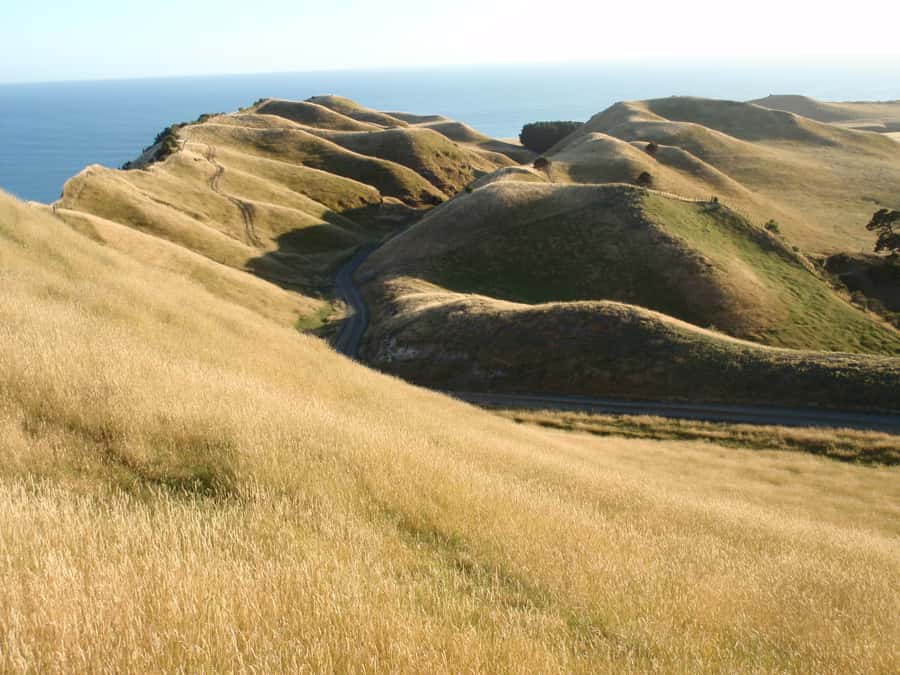
The colony can be seen from September through early April. Each part of that season offers something different.
In September, the gannets return from their winter migration to warmer climates. They begin preparing nests, so this is a good period if you want to see the colony starting its breeding cycle.
December and January are especially appealing if you want to see chicks. Young birds are present in large numbers, and the adults are busy feeding them. January is often described as a strong month for the full family scene, though the colony is active throughout the season.
By late April, the young birds leave for warmer regions as part of their annual cycle. The tour information gives early April as the end of the regular viewing season, so check the available dates before planning around the colony.
The weather can change the feel of the visit. A sunny day gives you more comfortable viewing and better conditions for photographs, but the cape can still be windy. Bring a jacket or jumper in every season.
What the $59 Price Really Gets You
At $59 per person, this is a good-value half-day outing if you want close wildlife access without arranging transport, route finding, or private-land permission yourself.
The fee covers the three-hour tour, experienced driver-guide, air-conditioned transport, gannet viewing, and light refreshments. You also receive commentary on local stories, conservation, forests, and the area’s natural features. That combination is more useful than a simple ride to a viewpoint.
The value is strongest for visitors without their own suitable vehicle. The route is rough in places, and the colony is not an easy independent stop. You are paying for access, transport, interpretation, and the chance to get close to the birds in a controlled way.
Food is not included, so eat before the tour or bring something suitable. Light refreshments are provided, and a hot drink with a biscuit can be welcome after sitting in the wind, but it is not a meal.
The tour is not available as a cruise-ship passenger excursion through the usual booking arrangement. Cruise passengers need to book the dedicated excursion directly through the operator’s website. This is an important detail if your visit to Napier is tied to a ship schedule.
Who Will Enjoy This Tour Most
I would recommend this outing to bird lovers, photographers, families, older visitors, and anyone who wants a major wildlife experience without a long hike. The vehicle access makes it much more approachable than the cliff setting might suggest.
It also works well for people who enjoy a guide-led view of a place. You receive more than bird facts. The Maori stories, farming connections, local history, forest visit, and predator control information help you understand the wider area.
You should think twice if you dislike bumpy roads, cramped seating, wind, bird noise, or strong natural smells. The ride can be warm, and commentary may be harder to hear from the back. These are manageable issues, but they are part of the experience.
The tour suits a three-hour window. You get a focused wildlife outing rather than a full-day excursion, and the time at the colony is long enough for photographs and observation. If you want to search for a wider range of endangered species, the operator offers other experiences, but this particular trip focuses on Cape Kidnappers and its gannets.
Practical Tips for a Better Visit
Wear comfortable shoes even though walking is not required. You may want them for short movements around viewing areas, and they are more useful than sandals on uneven ground.
Bring a warm jacket. The cape can be windy, and several visits found extra layers helpful. A camera with a useful zoom is ideal, but the birds are close enough that you can still enjoy the sight without specialist equipment.
If you are prone to motion sickness, prepare for a rough ride. The track is part of the access route, and a seat toward the front may make the journey easier and help you hear the guide.
Arrive at the correct meeting point, Gannet Safaris Overland at 396 Clifton Road in Te Awanga. Hotel pickup is not included unless arranged through a direct booking with the operator.
The tour is conducted in English. Free cancellation is available up to 24 hours before departure, and you can reserve now and pay later under the stated booking terms.
Should You Book the Cape Kidnappers Gannet Tour?
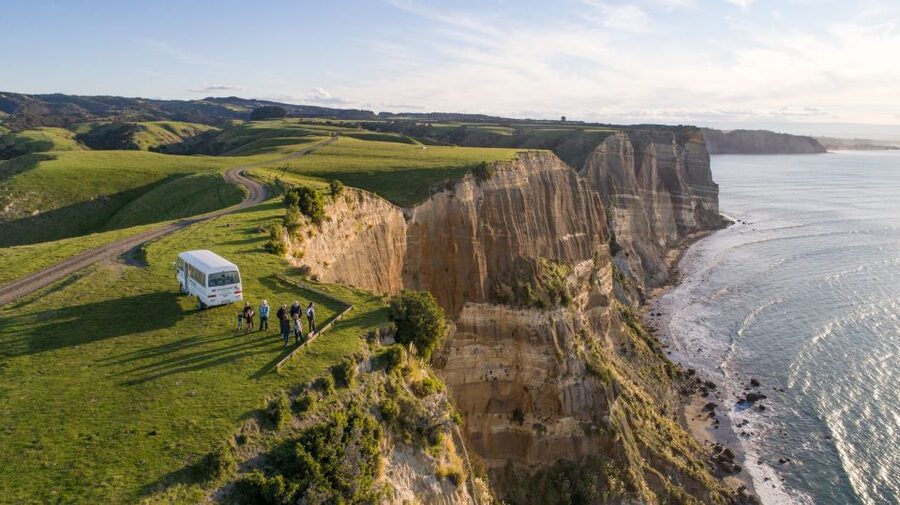
Yes, if you want close access to a major New Zealand bird colony and prefer a guided ride to a demanding independent outing. The combination of 20,000 gannets, private-land access, striking cliffs, local stories, and conservation stops gives the $59 price real substance.
I would choose a date between December and January if chicks are your priority. Pick September if you would rather see the colony beginning its breeding season, and bring warm layers at any time.
Skip it only if a bumpy road, crowded vehicle, wind, noise, or bird smell will spoil the experience for you. For most nature-minded visitors, the chance to stand a few feet from thousands of gannets is the kind of morning that earns its place in a Hawke’s Bay itinerary.
FAQ
Where does the Cape Kidnappers gannet tour meet?
The meeting point is Gannet Safaris Overland Ltd, 396 Clifton Road, Te Awanga 4172, New Zealand. Look for the Gannet Safaris sign beside the road.
How long is the tour?
The tour lasts three hours.
How much does the tour cost?
The listed price is $59 per person.
Is hotel pickup included?
Hotel pickup and drop-off are not included. Transfers are available only with direct bookings through the operator’s website.
Is walking required?
No. Walking is not required if you do not want to walk. The 4×4 vehicle takes you close to the gannet colony.
What should I bring?
Bring comfortable shoes and a jacket or jumper. The cape can be windy and chilly.
When can I see the gannets?
The gannets can be seen from September to early April.
When is the best time to see chicks?
Chicks arrive during December and January, so this period offers a strong chance to see young gannets in the colony.
Is the tour suitable for cruise-ship passengers?
This tour is not available for cruise-ship passengers through the standard arrangement. A dedicated cruise-ship excursion is available directly through the operator’s website.
Is the tour offered in English?
Yes. The tour has a live English-speaking guide.
Just added around New Zealand
- One Day Birding Adventure★ 5.0 · 7 reviews
- Harbour, Albatross and Wildlife Cruise on Otago Harbour★ 4.5 · 22 reviews
- Iconic Wildlife Tour with Yellow Eyed Penguins & Royal Albatross★ 4.5 · 33 reviews
- Clearwater Private Penguin & Wildlife Tour from Port Otago (5hrs)★ 5.0 · 7 reviews
- Motuara Island Bird Sanctuary and Ship Cove Cruise from Picton★ 4.0 · 36 reviews
- Private tour to Cape Kidnappers Gannet Colony★ 5.0 · 10 reviews
- Dunedin City Highlights, Otago Peninsula Scenery & Albatross Guided Tour★ 5.0 · 41 reviews
- Wildlife and Penguin Tour★ 5.0 · 27 reviews
New Zealand Birdwatching Tours, compared.
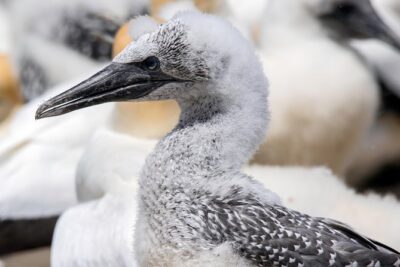
Gannet Safaris Overland tour to Cape Kidnappers Gannet Colony
Read our review →
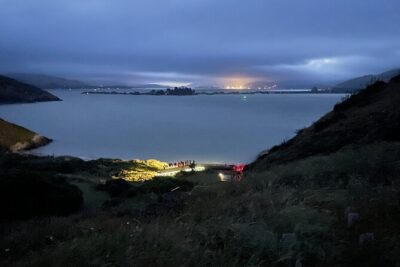
Guided Evening Penguin Viewing Otago Peninsula, Dunedin, New Zealand
Read our review →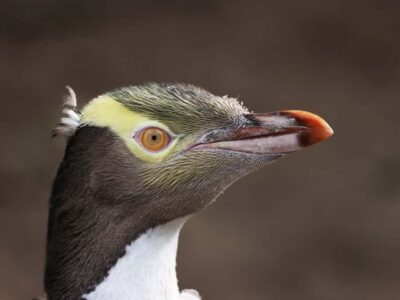
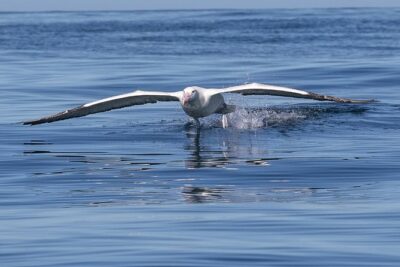
Albatross, seals, and sea birds-Wildlife Cruise
Read our review →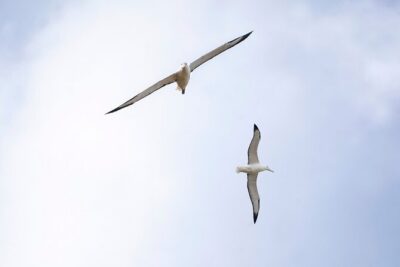
Otago Peninsula In-Depth Tour & Blue Penguins Pukekura Experience
Read our review →
Akaroa: Pohatu Penguins Scenic Nature 2-Hour or 4-Hour Tour
Read our review →
Akaroa: Pohatu Little Penguins 3-Hour Evening Experience
Read our review →Browse the lists this tour appears in