
Review · PERU BIRDWATCHING TOURS
Tambopata Macaw Clay Lick 3 days/2 nights
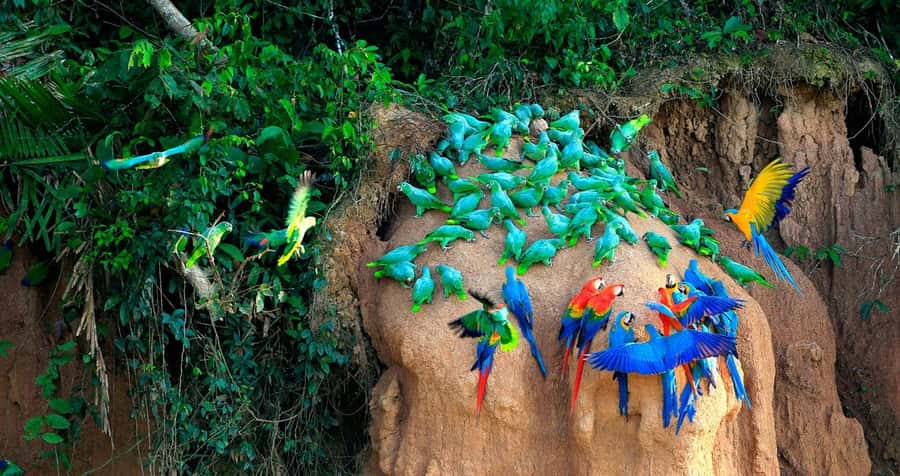
The main event comes early on day two: a boat ride to El Chuncho, the world’s largest macaw clay lick. Hundreds of parrots and colorful macaws may gather on the riverbank to eat mineral-rich clay, creating one of the great bird spectacles in the Peruvian rainforest.
I like the small-group limit of 10, which makes boat rides and guided walks more manageable. I also like the range of activities packed into three days, from wildlife walks and piranha fishing to kayaking and a botanical garden visit. The drawback is the early start and long transfers, plus the $30 Tambopata National Reserve entrance fee is extra.
Key points to know before booking
- El Chuncho begins with a 4:30 am wake-up: The early start gives you the best chance of reaching the clay lick during its main morning activity.
- The route is part of the adventure: You travel about two hours by wheeled truck, then continue by boat along the Tambopata River.
- Wildlife sightings are never guaranteed: Capybaras, tapirs, monkeys, and even jaguars may appear, but the forest makes no promises.
- You get more than a bird-watching trip: The schedule includes a rainforest walk, botanical garden, piranha fishing, kayaking, and a possible night walk.
- The lodge is simple but well placed: Hacienda Tambopata Lodge gives you a base inside the rainforest rather than a city hotel.
- Budget for the reserve fee: The tour costs $335 per person, but entrance to Tambopata National Reserve costs another $30.
Why the macaw clay lick is worth the early alarm
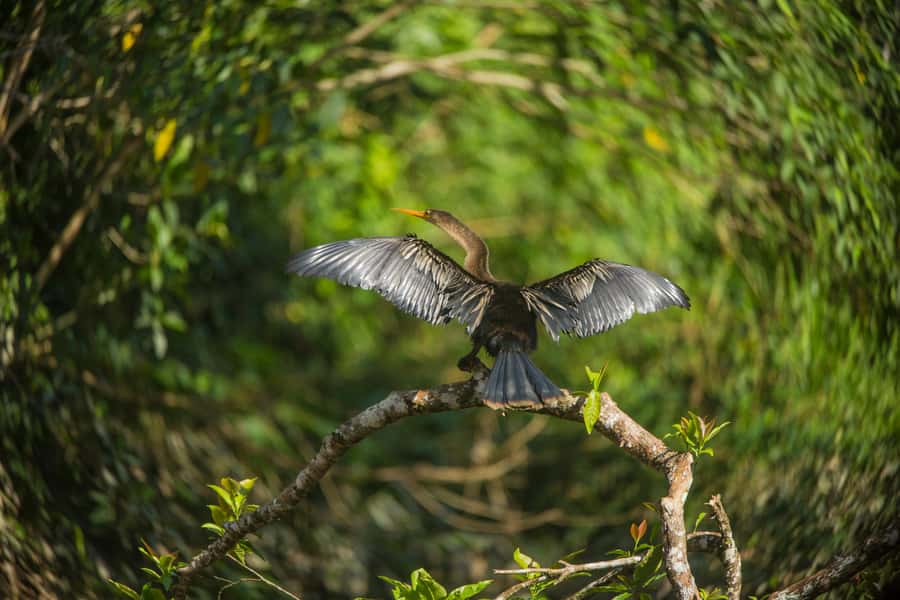
At 4:30 am, you leave the lodge by boat for a roughly 90-minute ride to El Chuncho. This is not a quick roadside stop. The boat trip is a major part of the experience, taking you through the Tambopata region while your guide watches for riverbank wildlife.
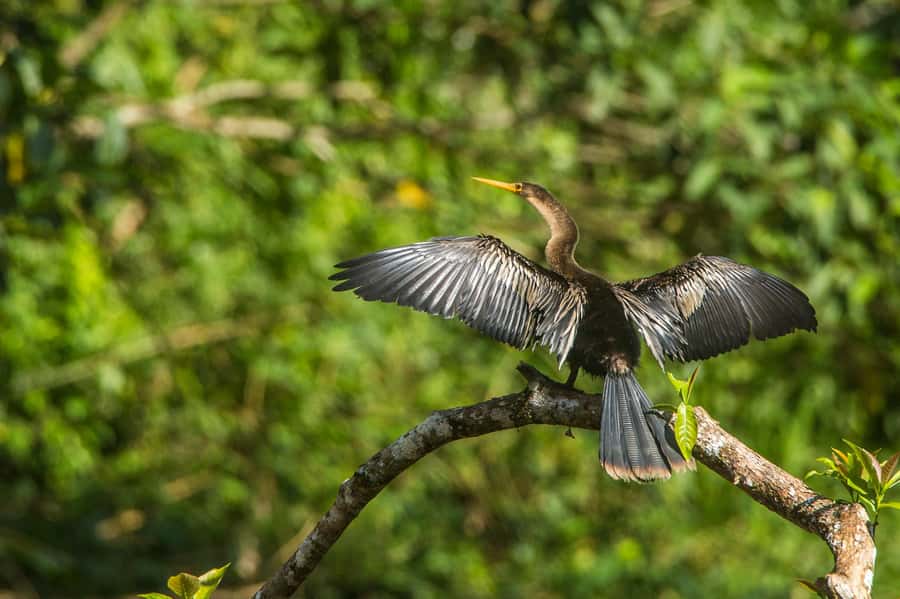
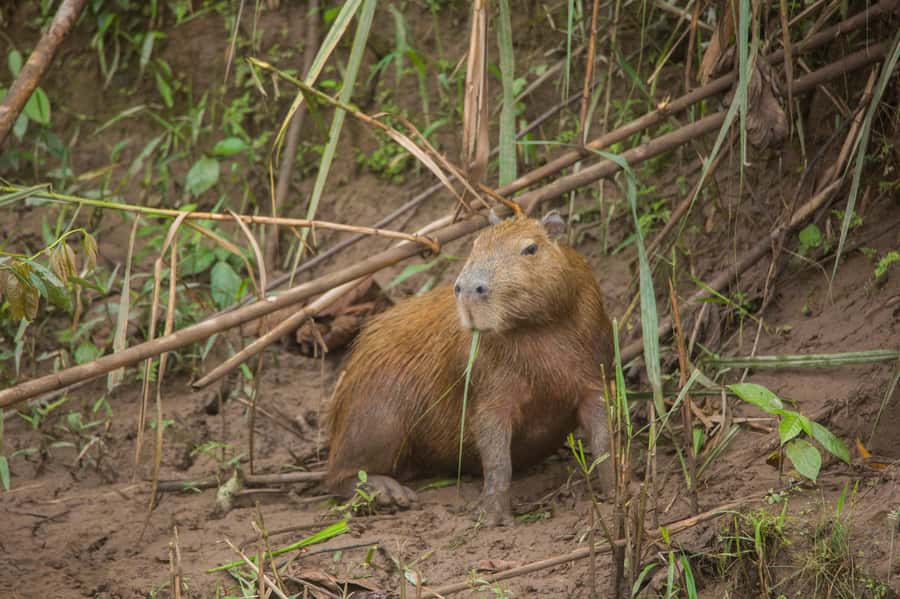
Capybaras are possible along the route. These are the world’s largest rodents, and they often sit near the water in family groups. Tapirs and monkeys may also appear. The most exciting possibility is a jaguar, although you should treat that as a lucky bonus, not part of the promised schedule.
Once you reach the clay lick, you take a seat and wait. The timing matters. Parrots usually arrive first, followed by macaws. Up to 11 species of parrots may gather, along with three colorful macaw species, including red and green birds and blue and yellow birds.
The birds eat clay from the riverbank wall as part of their daily diet. The clay helps supply minerals and may help them handle toxins from the fruit and plants they consume. For you, the result is a remarkable natural show: flocks gather, scatter, and circle above the river.
Bring patience. Bird activity depends on weather and natural conditions, so a quiet morning is possible. You are watching wild animals, not a scheduled performance. Still, the chance to see hundreds of parrots and macaws in one place gives this short tour its real value.
A few more birdwatching trips around the world worth a look
- Sandoval Lake & Parrot Clay lick 3 Days/2 Nights
★ 4.1 · 37 reviews - 3 Day Combo: Great Ocean Road, Penguin Parade and FREE City Tour
★ 5.0 · 36 reviews - 3 Days Private Tour: Cape of Good Hope, Penguins, Table Mountain & Robben Island
★ 5.0 · 19 reviews
Getting from Puerto Maldonado to the lodge
The trip begins with pickup at the airport, bus station, or a hotel inside the city. A sign with your name is used for the pickup, which helps when you are arriving in an unfamiliar city.
Before leaving, you have a final briefing at the Hacienda Tambopata Lodge office. If you have large luggage, repack first. The advice is practical: take only what you need for three days and store the rest.
The first road transfer uses a wheeled truck and takes about two hours to reach the Tambopata River. From there, you switch to a boat for the ride to Hacienda Tambopata Lodge.
That change in transport tells you what kind of trip this is. You are not simply driving to a comfortable resort. The road ends, the river becomes your route, and the lodge is reached by water. Expect the journey to feel physical and somewhat basic, but also more connected to the forest than a standard hotel stay.
The arrival meal depends on your arrival time. You may receive breakfast or lunch before settling in. Since flight and bus arrival times can vary, your first day may feel more like a transfer day than a full sightseeing day.
Day one: first steps into the rainforest
After arrival and a meal, the first guided walk introduces you to the forest. The focus is on spotting animals in their natural setting, including amphibians, mammals, reptiles, and insects.
This walk is valuable because it changes how you look at the forest. Small sounds and movement become important. A guide can point out creatures you would likely walk past on your own, especially insects and small reptiles.
Do not expect a long list of guaranteed sightings. The tour description names several animal groups but does not promise specific species. Your experience depends on weather, time, and the guide’s ability to find signs of activity.
The walk also gives you a useful first taste of the rainforest before the early departure the next morning. I would use this time to ask your guide about footwear, clothing, wake-up arrangements, and the expected clay lick conditions.
Guiding is offered in English and Spanish. The small group limit is up to 10 participants, which should make it easier to hear explanations and stay together on the trail.
Day two: birds, plants, piranhas, and the river
The clay lick takes up the morning, but the day continues after lunch. You visit the lodge’s botanical garden with your guide, seeing fruit, timber, and medicinal plant species found in the area.
This stop adds useful context to the wildlife walks. The rainforest is not just scenery filled with animals. Plants provide food, shelter, medicine, and building materials. A guided garden visit can help you connect those uses to the forest around the lodge.
Next comes piranha fishing. The activity gives you a different view of the river and its inhabitants. It is also a hands-on change after a morning spent sitting quietly at the clay lick.
The details of the fishing setup are not specified, so you should think of it as a guided activity rather than a guaranteed catch. The value is in learning how people interact with the river and seeing another part of Tambopata’s wildlife.
Later, you kayak on the Tambopata River. Kayaking lets you move quietly, and the description points to this as a way to improve your chances of seeing larger animals. You may find that the river feels calmer and more personal from a kayak than from a motorboat.
At night, you can rest or possibly join another night walk. The night walk is listed as an option, not a guaranteed part of the fixed schedule. If it operates during your stay, it may reveal a different side of the forest, especially nocturnal insects and other creatures.
Day two is busy. After a 4:30 am start, the clay lick, boat return, lunch, garden, fishing, and kayaking can leave you tired. I would treat the night walk as optional and keep some energy for the morning rather than trying to do everything.
Same place, a different morning in the field:
- Penguin Parade, & Wildlife Encounters Eco Tour from Melbourne
★ 5.0 · 3,774 reviews - Cape Town: Cape of Good Hope & Penguins Day Tour with Pickup
★ 4.7 · 3,362 reviews - Cape Point and Boulder’s Penguins Full Day Tour
★ 5.0 · 3,118 reviews - Cape of Good Hope & Boulder Penguins Full-Day Tour from Cape Town
★ 5.0 · 2,347 reviews
What staying at Hacienda Tambopata Lodge is like
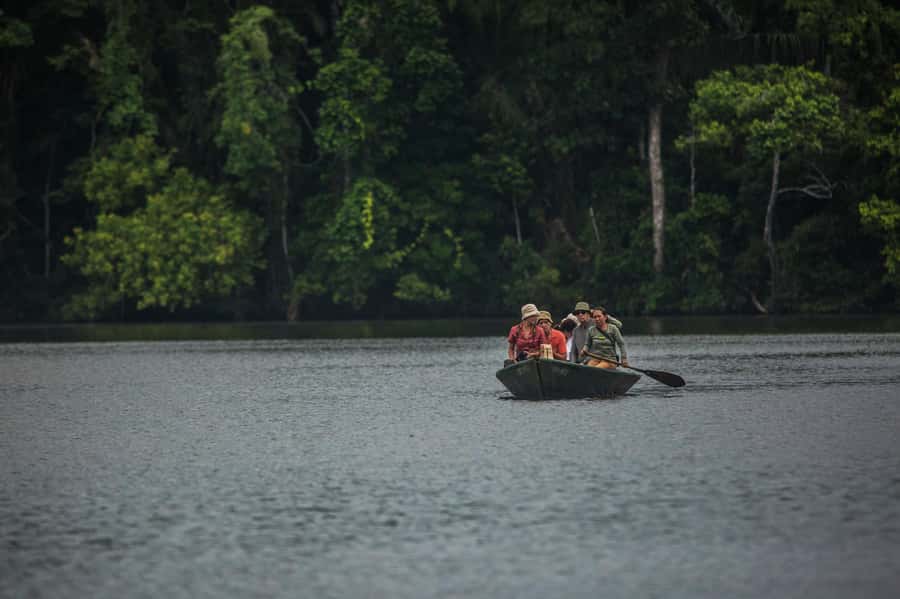
The lodge gives you a rainforest base for two nights. Meals and lodging are included, along with guiding. The strongest practical advantage is location: you are already near the river route to El Chuncho instead of commuting from the city each morning.
Food quality may be one of the better surprises. Vegetarian and vegan meals can be accommodated, and one stay included food that was described as very good, with vegan dining handled without trouble.
At the same time, another experience connected to this operator had complaints about repetitive meals, including chicken and rice, and a lunch with only one course. That account involved a different lodge section of a combined program, so it may not describe Hacienda Tambopata Lodge directly. Still, it is wise to tell the office about dietary needs before departure and keep expectations closer to lodge food than restaurant dining.
The lodge itself has been described as clean, maintained, and served by friendly staff. A pool is also associated with the lodges used in the broader program, though the supplied details do not clearly confirm every facility for this exact three-day package.
A single room costs extra. If you are traveling alone and want privacy, ask for the supplement before booking. If you are comfortable sharing, the standard price is easier to justify.
The value of $335 per person
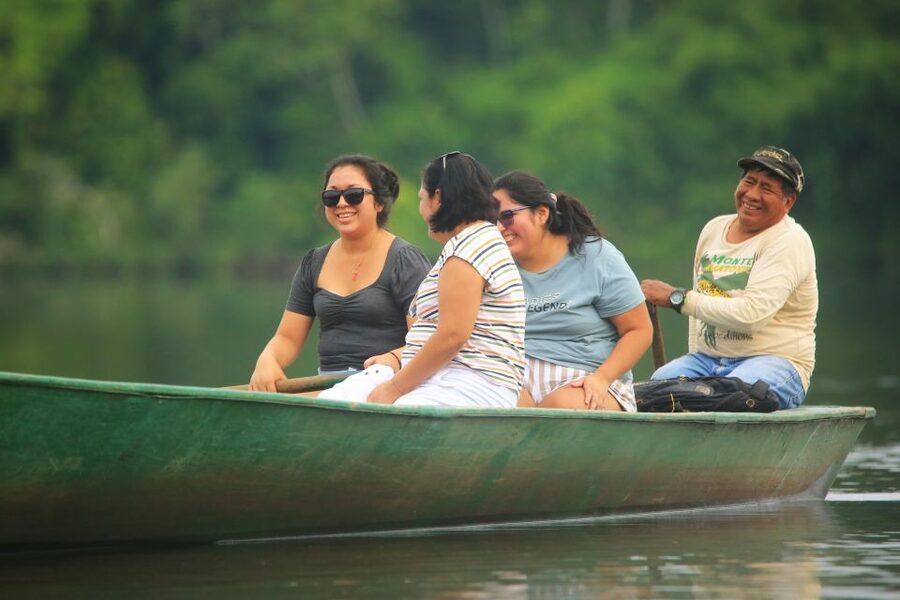
At $335 per person, this is not a budget day trip. You are paying for three days, two nights, road and river transfers, meals, lodging, a guide, and a concentrated schedule of rainforest activities.
The price makes the most sense if El Chuncho is your priority. Reaching the clay lick requires an early boat departure and an overnight stay near the river. Trying to fit the same experience into a city-based schedule would mean a much longer and more tiring day.
The included transfers also matter. Airport, bus station, and city hotel pickup and drop-off remove several local transport decisions. For a first visit to the area, that can be worth real money and time.
You must add the $30 Tambopata National Reserve entrance fee. Alcoholic drinks are not included, and a single room costs extra. Ask about any other personal spending before you leave the office, especially if you plan to buy drinks or arrange additional activities.
The rating of 4.1 from five recorded ratings suggests a generally positive but not flawless experience. The most consistent strengths are the clay lick, friendly guides, organized transfers, and clean lodge setting. The main caution is that food and activity handling may vary between guides and lodge sections.
One serious complaint described a guide stopping an island visit because of light rain while another group continued, leaving the first group waiting 45 minutes for the shared boat. That problem concerned an activity outside the core schedule described here, but it gives you a useful question to ask: how does the operator handle shared boats and weather changes?
Who should choose this three-day trip
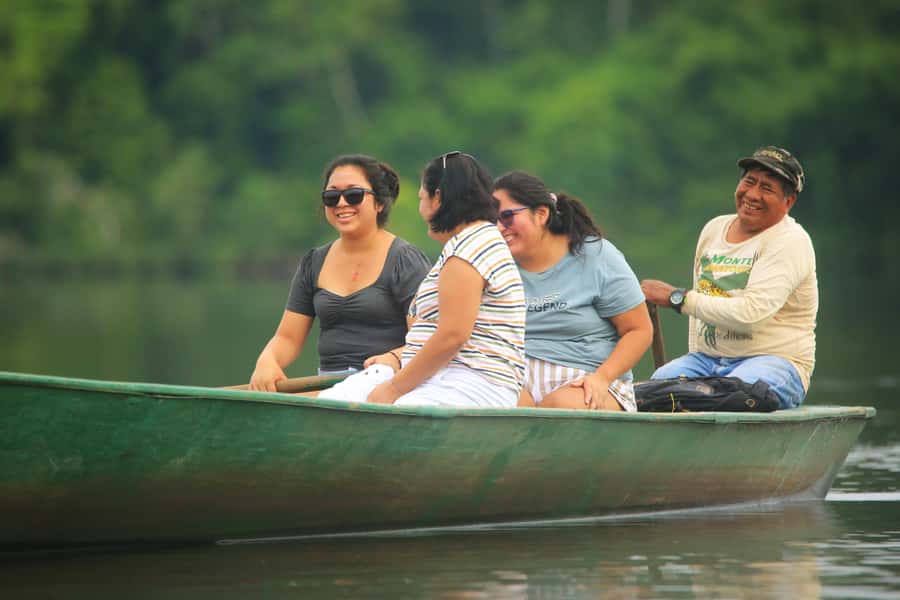
This trip suits you if you want a compact first taste of Tambopata and care most about the clay lick. You get a real rainforest stay without committing to a long expedition.
It is also a good fit if you like variety. The schedule moves from wildlife watching to plants, fishing, and kayaking. You are not spending all three days on one trail or in one boat.
You should be comfortable with early mornings, basic logistics, and changing transport. The day two start is very early, and the first and third days include substantial travel by road and boat.
Families with babies under one year and children under three are not accepted. The tour is wheelchair accessible, according to the supplied information, but you should still discuss the road, boat transfers, and lodge access before booking if mobility support is important.
The small group size suits you if you want a quieter trip than a large lodge program. It does not guarantee private guiding, but a maximum of 10 people is modest for rainforest transport and walking.
Practical ways to prepare
Pack light and leave unneeded luggage in the city storage arrangement suggested by the operator. Carry enough clothing and personal items for two nights rather than taking a full suitcase downriver.
Bring clothing suited to warm, wet conditions, though the exact packing list is not provided. Your guide can give more precise advice at the first briefing. Keep valuables protected from water during the boat rides.
Plan for an early night on day one. The clay lick departure is at 4:30 am, and the ride lasts about 90 minutes each way. A rested morning will make it easier to wait quietly for the birds.
If you use a camera, bring enough battery power and memory. The clay lick can be very active, and you may want to photograph birds in flight. Do not count on a close approach, since the birds remain wild and activity changes from day to day.
Tell the operator about dietary needs before departure. Vegan food has been handled successfully, but food quality and variety may not be identical at every lodge or during every combined program.
Free cancellation is available up to 24 hours before the activity, and you can reserve while paying later. Pickup is included, with availability depending on the starting time you choose.
Should you book the Tambopata Macaw Clay Lick trip?
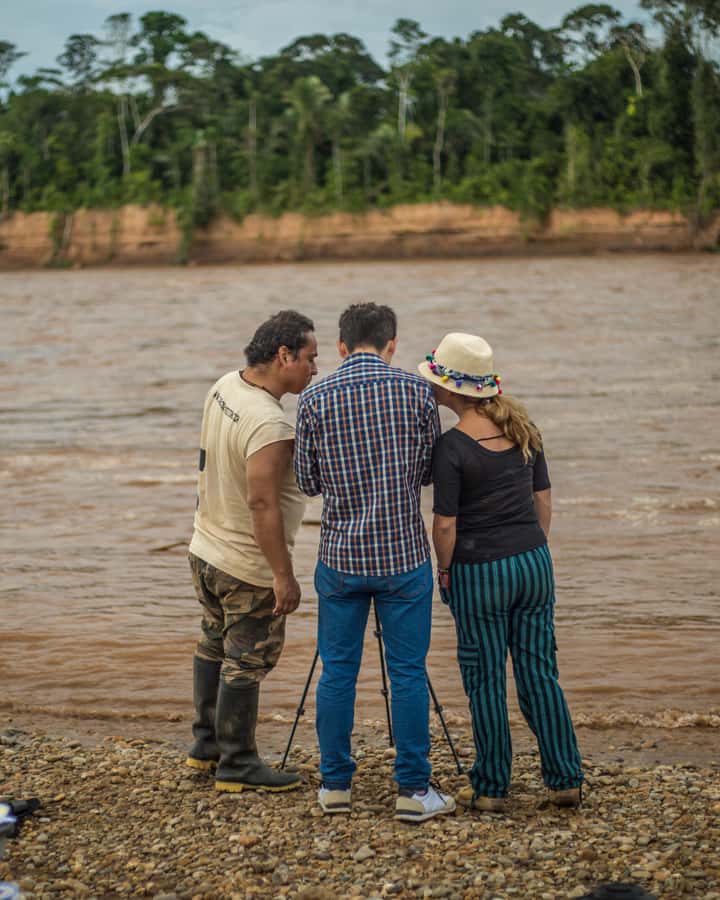
Book it if you want El Chuncho to be the center of your Tambopata visit and you value a small group, included transport, and a packed three-day plan. The macaw clay lick is the clear reason to choose this package, and the rainforest stay makes that early morning journey practical.
Think twice if you dislike basic lodge meals, long transfers, or dawn departures. The extra $30 reserve fee, single-room supplement, and possible variation in food and activity management also affect the final value.
For most people, I would choose this tour over a city-based wildlife day trip if the goal is to experience Tambopata itself. Just arrive with realistic expectations: the forest controls the schedule, sightings are not guaranteed, and the best morning begins before sunrise.
FAQ
How long is the Tambopata Macaw Clay Lick tour?
The tour lasts three days and includes two nights at Hacienda Tambopata Lodge.
What time does the clay lick trip begin?
You wake at 4:30 am on day two for the boat trip to El Chuncho. The boat journey takes about 90 minutes.
How much does the tour cost?
The listed price is $335 per person. The $30 entrance fee to Tambopata National Reserve is not included.
Is transportation included?
Yes. Pickup and drop-off are included from the airport, bus station, or a hotel inside the city. The route uses a wheeled truck and a boat.
Are meals included?
Yes, food is included. Alcoholic beverages are not included. Vegan meals can be accommodated, but you should notify the operator in advance.
What languages are available for guiding?
Guiding is available in English and Spanish.
How many people are in the group?
The group is limited to 10 participants.
Can children join the tour?
Children under three years old and babies under one year old cannot join this activity.
Just added around the world
- Walvis Bay: Pelican Point Seal and Sandwich Harbour Tour★ 4.8 · 15 reviews
- Walvis Bay Shore Excursion: Flamingos, Dune 7, Swakopmund★ 5.0 · 3 reviews
- Victoria Falls: Private Birdwatching Safari near the town★ 5.0 · 2 reviews
- Vila Franca do Campo: Marine Life & Bird Watching & Islet Tour★ 4.4 · 9 reviews
- VIP falconry taster session★ 5.0 · 2 reviews
- Victoria Falls: Private Zambezi River Birdwatching Safari★ 4.7 · 14 reviews
- Vestmannaeyjar: Puffin, Island, and Volcano Boat Tour★ 4.4 · 7 reviews
- USHUAIA | Navigation: Sea Lions, Birds and Lighthouse★ 3.3 · 4 reviews
Peru Birdwatching Tours, compared.
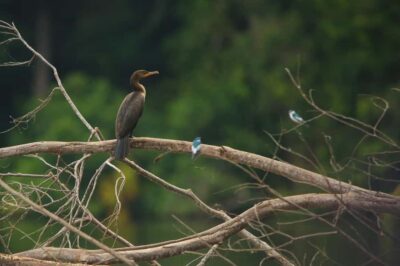
Sandoval Lake & Parrot Clay lick 3 Days/2 Nights
Read our review →
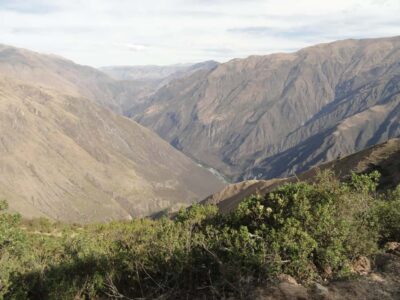
Cusco: Chonta Canyon and Condor Flight Tour with Lunch
Read our review →
From Arequipa: Colca Canyon and Condor Watching Day Trip
Read our review →
Browse the lists this tour appears in