
Review · USA BIRDWATCHING TOURS
Everglades: Birding, Wildlife, and Photography Expedition
This small-boat expedition takes you into the shallow Gulf waters of Everglades National Park, where mangrove islands, open water, birds, and marine life replace roads and boardwalks. The boat holds no more than six people, so your guide can slow down for photography and adjust the outing to the weather and wildlife.
I like the steady boat, which gives you a far better platform for a large camera and tripod than a quick, rocking skiff. I also like the two-part design: you get a quiet cruise through the 10,000-island area, then a walk on an uninhabited barrier island with time to inspect shells, plants, and traces of earlier human use.
The main consideration is the price: $172 per person is a serious spend for 210 minutes. Wildlife sightings depend on the day, wind, and water conditions, and the remote meeting point in Chokoloskee is about an hour from Naples.
Key points at a glance
- A six-person boat built for photography: The broad, stable platform has comfortable seating and room for a tripod and large telephoto lens.
- Two distinct ways to see the Everglades: Cruise among shallow-water islands, then walk an uninhabited barrier island with your guide.
- Strong birding potential: Look for roseate spoonbills, ospreys, ibises, herons, egrets, shorebirds, bald eagles, pelicans, and cormorants.
- Marine life is part of the fun: Dolphins, sea turtles, manatees, and other saltwater animals may appear along the route.
- Guiding is a major part of the value: Guides such as Don, Dan, Seth, and Eddie have led these outings, explaining local plants, animals, culture, and the area’s past.
- Morning is the smart choice from June through October: Summer weather can turn rough, so an early start gives you a better chance at calmer conditions.
Why this Everglades trip feels different
Many Everglades visits keep you on a road, a boardwalk, or a short airboat ride. This outing moves into the Gulf coast portion of the park, where the water threads through thousands of low mangrove islands. You are not simply looking at the Everglades from an observation point. You are moving through the watery maze that defines this corner of south Florida.
The setting is quiet and open. The islands are uninhabited, and access is limited to boats, kayaks, fishermen, and a small number of guided outings. That remoteness gives the trip its character, but it also means you should come prepared for sun, wind, and changing conditions.
I particularly like the focus on slow observation. The boat is not presented as a thrill ride. Your captain can ease off the speed when a bird is perched nearby or when dolphins appear in the wake. That matters if you want a clear photograph rather than a quick glimpse.
The guide also gives the scenery a useful frame. You learn how mangroves shape the coast, how shallow water affects boat travel, and how people have used this area over time. Guides including Captain Dan and Don have been praised for making the outing personal, relaxed, and attentive to nature.
More Wildlife Tours in the USA:
- Everglades Birding, Dolphin and Wildlife Boat Tour (2 hours)
★ 4.5 · 99 reviews - Ketchikan Shore Excursion: Eagle Sanctuary and Rainforest Wildlife Center
★ 3.5 · 9 reviews - Penguin Parade, & Wildlife Encounters Eco Tour from Melbourne
★ 5.0 · 3,774 reviews
Starting at Parkway Marina in Chokoloskee
The meeting point is Parkway Marina at 1180 Chokoloskee Drive in Chokoloskee. Plan to arrive 10 to 15 minutes early. You will need time to park, find the restrooms across from the Marina Store, and walk down to the docks. Boarding takes place five minutes before departure, and there are no refunds if you miss the tour.
At the marina, park on the right-hand side in the marked parking spaces. Then meet your captain down by the docks. The instructions are simple, but Chokoloskee is at the end of the road, so do not treat the drive as a last-minute transfer from Naples or another nearby base.
The remote location is part of the appeal. Chokoloskee has limited facilities and a small population, which helps explain why the surrounding waters still feel largely wild. It also means you should bring anything you need for the three-and-a-half-hour outing, including water, snacks, sun protection, and camera supplies.
Food and drinks are not included. Dress for the weather, and consider a hat, sunglasses, sunscreen, and clothing that can handle sun and spray. The supplied information does not promise a cooler, refreshments, or protective gear, so plan as if you need to bring your own.
The boat ride through the 10,000 islands
The first part of the outing is a leisurely boat trip through the coastal section of Everglades National Park. This is where the stable boat earns its keep. With only six passengers, you have room to sit comfortably, shift sides when needed, and set up a tripod without crowding everyone around you.
That is a real advantage for serious photographers. A large telephoto lens can be awkward on a small, unstable craft. Here, the boat is designed as a steady working platform, and there is specific space for a tripod. Bring the camera equipment you normally avoid on a cramped wildlife boat.
The pace also suits birding. Your guide searches the channels and island edges for birds, then helps you identify what you are seeing. Possible sightings include roseate spoonbills, ospreys, ibises, great blue herons, tricolored herons, snowy egrets, shorebirds, and bald eagles.
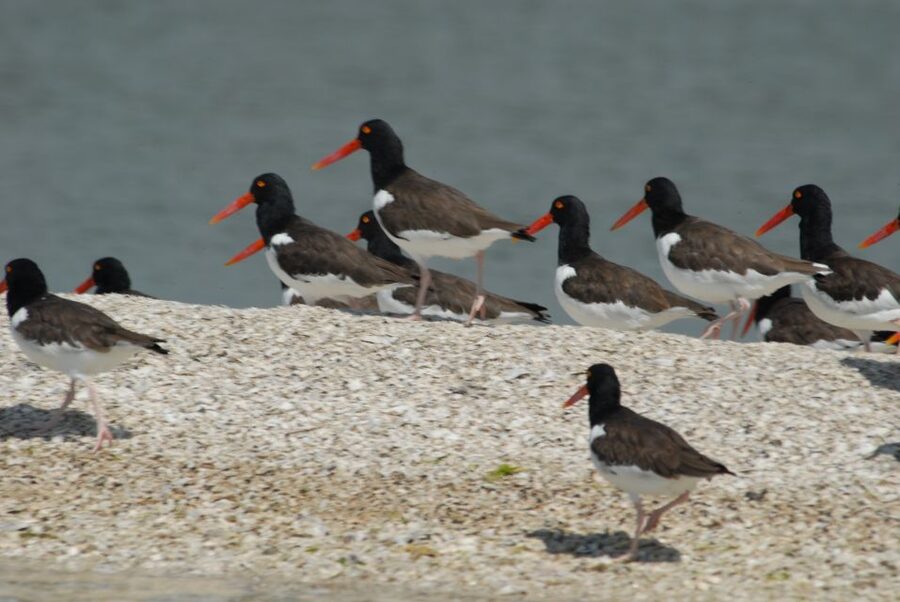
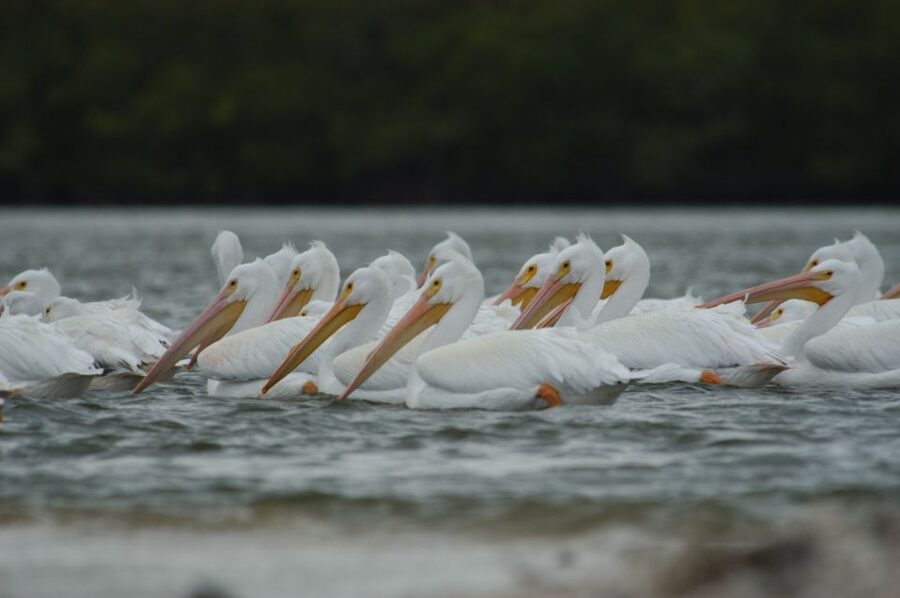
Other trips have included cormorants, royal terns, American oystercatchers, little blue herons, white pelicans, plovers, and even a great horned owl. That list shows the range of habitats you pass through, but it is not a guarantee. The naturalist may find different birds on your day, and some animals may stay out of sight.
Dolphins can be a highlight. One outing had bottlenose dolphins jumping and playing in the boat’s wake, while another found dolphins, sea turtles, and white pelicans. Manatees are also possible, along with other saltwater creatures. Keep your camera ready, but do not spend the whole ride staring through a viewfinder. Wildlife often appears suddenly, and the place itself deserves your attention.
The shallow water limits where larger boats can go. That is useful to understand before booking. You are exploring a coastal maze of small islands and channels, not cruising in open deep water. Wind can affect the route and the ride, as one outing did on a breezy day. A good captain may adapt the plan rather than force a fixed path.
Stepping ashore on an uninhabited barrier island
The boat eventually beaches on one of the park’s uninhabited barrier islands. This second section changes the feel of the trip. From the boat, you see the Everglades as a broad pattern of water and mangroves. On foot, you can examine the details at ground level.
Your Florida-certified Master Naturalist guide leads the walk and points out plants, shells, signs of animals, and other features of the island environment. One past outing included a look at local shellfish and traces connected with the area’s Indigenous inhabitants. The walk is not just a photo stop. It helps you understand how the coast works as a living system.
The island also gives photographers a different set of subjects. Instead of only tracking birds at a distance, you can look for textures, shoreline details, plant life, shells, and close views of the beach environment. The exact walk and available subjects will depend on tides, wind, and conditions, so keep your expectations flexible.
You should also remember that this is an uninhabited island, not a developed park beach. There are no stated facilities on the island, and the tour does not include food or drinks. Wear practical footwear and clothing for a shore walk, though the supplied information does not specify the exact terrain or walking distance.
More Photography Sessions in the USA:
- Snorkel & Explore Pelican Rock by Glass Boat + Photos
★ 5.0 · 201 reviews - Jaco Birdwatching and Photography with Sergio
★ 5.0 · 65 reviews - Birding & Photography Day Trip to Doñana from Seville
★ 5.0 · 61 reviews - Guided Birding Photography Experience
★ 5.0 · 47 reviews
The guide makes or breaks the experience
The strongest part of this tour is the guide’s ability to connect separate sightings into a larger picture. You learn about birds, mangroves, marine animals, local culture, and the area’s past while the boat moves through the islands.
Guides named in past outings include Don, Dan, Seth, and Eddie. Captain Dan, in particular, has been praised for combining natural history with a friendly, calm manner. Don has also been singled out for his passion and attention to the group. Seth and Eddie have led outings noted for their relaxed approach and strong wildlife spotting.
You should not book this expecting a formal lecture from start to finish. The best moments come when the guide responds to what appears in front of you: slowing for a bird, finding a place to watch dolphins, or explaining why a mangrove-lined channel looks different from an exposed island shore.
The small group helps here. With a maximum of six people, it is easier to ask questions, request a slower approach for photographs, or tell the captain what kind of wildlife interests you most. One outing was adjusted for a group that wanted to photograph nesting birds, including cormorants, great egrets, royal terns, spoonbills, ospreys, and little blue herons.
That flexibility is a meaningful benefit over a large sightseeing boat. It does not guarantee a private tour, but the group size is small enough to feel personal.
Photography: what the boat setup really offers
This is one of the better Everglades choices for photographers who carry more than a phone. The boat is described as large and stable, with room for a tripod and long telephoto lenses. You can bring substantial equipment without having to balance it on your lap in a crowded craft.
A long lens is especially important if your main goal is wildlife photography. One visitor made the practical point plainly: bring a long telephoto lens if you want strong wildlife images. Birds and marine animals may remain at a distance, and the boat cannot always approach closely.
You will want to keep your camera ready during the ride, but also protect it from sun and possible spray. The provided details do not promise dry storage or camera covers, so use the protection you normally carry for a boat outing. Bring spare batteries and memory cards if you have them, since a three-and-a-half-hour trip can produce many opportunities.
If photography is not your main interest, the boat still works well. The stable platform makes it easier to watch birds and animals without the constant rocking of a smaller skiff. You can enjoy the trip with binoculars or simply sit back and observe.
When to go and how weather affects the day
The best general season for this kind of outing is not stated as a guarantee, but the timing advice is clear: from June through October, choose a morning departure if possible. Summer weather can change quickly, and early conditions are often more comfortable for a long boat ride.
The season also affects what you see. Wildlife is never scheduled, and the guide cannot promise a particular bird or mammal. Wind may alter the route, reduce visibility, or make the water less comfortable. That is why the flexible attitude matters more here than a checklist of species.
A good way to approach the outing is to treat the listed animals as possibilities rather than promises. You might see spoonbills, bald eagles, dolphins, sea turtles, or manatees. You might instead have a day centered on herons, ospreys, pelicans, shorebirds, mangroves, and the quiet movement between islands.
Is $172 a fair price?
At $172 per person, this is not a budget boat ride. The price makes more sense if you value three things: a six-person maximum, an experienced naturalist guide, and a boat that can handle serious photography equipment.
A larger group tour may cost less, but you are likely to have less room for a tripod and less say in the pace. This trip gives you 210 minutes, a boat exploration, a shore walk, and instruction about the Everglades ecosystem. For a couple, family, or small group that would otherwise book a private outing, the limited capacity may offer solid value.
The value is weaker if you only want a quick look at the Everglades or if you are uncomfortable paying for wildlife that cannot be guaranteed. You are paying for access, time, guiding, and a specialized boat, not a fixed list of sightings.
Free cancellation is available up to 24 hours before departure, and you can reserve now and pay later. Those policies make planning easier, but they do not change the need to arrive early. Missing the boat means no refund.
Who should book this Chokoloskee expedition?
I would recommend it to birders, wildlife photographers, nature lovers, and anyone who wants to see the Gulf coast side of Everglades National Park from the water. It is also a good fit if you prefer a calm, small-group outing over a loud, crowded attraction.
Photographers should pay close attention to the boat details. The tripod space and stable platform are not minor extras. They are the reason this trip may suit you better than a basic sightseeing cruise.
You should think twice if you dislike sun, wind, boats, or flexible plans. The remote setting has few comforts, and wildlife may not appear on schedule. You also need to allow extra driving time to reach Chokoloskee.
Should you book it?
Book this expedition if you want an intimate look at the 10,000-island coast and care about the quality of the guiding and boat setup. The combination of birding, marine wildlife, a barrier-island walk, and a maximum of six passengers gives you much more than a simple ride.
Skip it if your priority is the lowest price, a guaranteed animal sighting, or a short and highly predictable activity. For everyone else, especially anyone carrying a long lens, this is a thoughtful way to experience a quieter and less accessible side of the Everglades.
FAQ
How long does the Everglades expedition last?
The experience lasts 210 minutes, or about three and a half hours.
How many people can join the boat tour?
The group is limited to six participants.
Where does the tour meet?
Meet at Parkway Marina, 1180 Chokoloskee Drive, Chokoloskee, Florida 34138. Find your captain down by the docks.
How early should I arrive?
Plan to arrive 10 to 15 minutes before departure for parking and restrooms. Boarding takes place five minutes before the scheduled departure.
What wildlife might I see?
Possible sightings include roseate spoonbills, ospreys, ibises, great blue herons, tricolored herons, snowy egrets, shorebirds, bald eagles, dolphins, sea turtles, manatees, pelicans, cormorants, and other saltwater animals. Sightings are not guaranteed.
Can I bring a tripod and large camera lens?
Yes. The boat is designed as a stable platform for photography and has space for a tripod and large telephoto lenses.
Are food and drinks included?
No. Food and beverages are not included, so bring your own if needed. Dress for the weather and bring the sun protection you require.
Just added around the USA
- Flamingle Happy Hour Cruise★ 4.5 · 31 reviews
- Blue Heron Bridge Guided Snorkel Tour★ 4.5 · 22 reviews
- Chincoteague and Assateague Birdwatching Boat Tour★ 5.0 · 16 reviews
- Kayak/SUP Tour: Birds, Beavers, Turtles, maybe even Cliff Jumping★ 5.0 · 26 reviews
- Half-Day Private Bird Tour of Fort De Soto Park in St. Petersburg – 2 person max★ 5.0 · 2 reviews
- Chilkat Bald Eagle Preserve Rafting – Skagway Departure★ 4.5 · 30 reviews
- Skagit Valley Birding + Deception Pass Day Tour From Seattle★ 5.0 · 3 reviews
- Sunset, Dolphin/Birding On A Private Guided Savannah Cruise★ 5.0 · 3 reviews
USA Birdwatching Tours, compared.
Marco Island 2 hour Dolphin, Birding and Shelling tour
Read our review →
Colorado Springs Hands-On Falconry Class and Demonstration
Read our review →
Skip the Line: Flamingo Gardens Admission Ticket in Fort Lauderdale
Read our review →
Blue Heron Drift Fishing Family Friendly Charter
Read our review →
Browse the lists this tour appears in