
Review · USA BIRDWATCHING TOURS
Great Salt Lake Birding and Nature Adventure
The Great Salt Lake is the star here, but the real treat is how quickly the scenery and birdlife change. You may begin on the causeway with gulls and shorebirds, then scan Antelope Island for bison and pronghorn before ending where freshwater meets saltwater at Farmington Bay. I especially like the private format and the supplied spotting scope, which saves you from sharing a vehicle or struggling to see distant wildlife. The main drawback is that the tour can take as little as four hours, so sightings and time at each stop will depend on conditions and your pace.
I also like that Pitta Nature Tours treats the lake as more than a quick photo stop. Your guide can explain the unusual story behind Utah’s California Gull and help you look for seasonal species, from winter Bald Eagles to summer rails and grebes. At $179 per person, the price makes the most sense if you value a dedicated guide, private transportation, and efficient access to several sites.
Key points to know before you book
- Three different habitats in one outing: Visit open lake water, Antelope Island, and the freshwater wetlands of Farmington Bay.
- A private group experience: Only your party participates, making it easier to set the pace and ask questions.
- A spotting scope is included: The 30x to 60x scope brings distant birds and animals much closer.
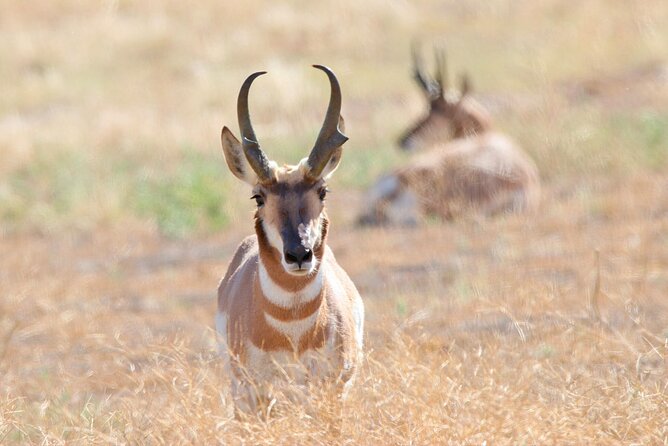
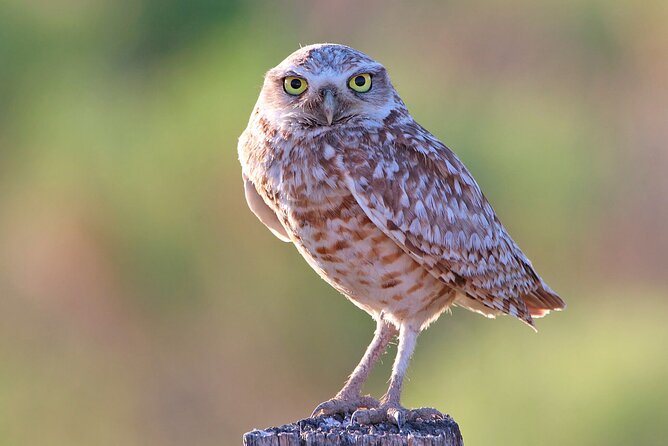
- Antelope Island adds mammals: Bison, pronghorn, coyotes, and owls are all possible along with birds.
- Season changes the bird list: Winter brings Bald Eagles and waterfowl, while migration can produce 50 to 60 species in a short time.
- Pack your own birding kit: Binoculars, cameras, snacks, meals, soda, and alcoholic drinks are not provided.
Why the Great Salt Lake is worth your morning
The Great Salt Lake is not just a big body of water beside Salt Lake City. It is the largest remaining portion of prehistoric Lake Bonneville, which once covered much of western Utah. Today, it is the largest lake in the United States outside the Great Lakes system.
That scale matters when you are birding. The lake supports broad feeding areas, muddy edges, open water, and nearby wetlands. Birds gather here because the water and marshes provide food during migration and at other times of year.
The tour uses several locations because no single viewpoint tells the whole story. The lake itself can look stark and open, while Farmington Bay shows you the freshwater side of the system. Antelope Island adds dry ground, hills, wildlife, and the chance to see the California Gull in its home state.
You should also keep expectations sensible. The Great Salt Lake is affected by changing water levels, and recent years have brought record lows. That does not remove the value of the visit, but it can change the look of the shore and the location of birds. A guide who knows the area can help you make better use of the conditions on the day.
A few more birdwatching trips around the USA worth a look
- Birding By Boat on the Osprey
★ 5.0 · 787 reviews - Marco Island 2 hour Dolphin, Birding and Shelling tour
★ 5.0 · 503 reviews - Piff the Magic Dragon at the Flamingo Las Vegas
★ 4.5 · 501 reviews
Crossing the Antelope Island Causeway
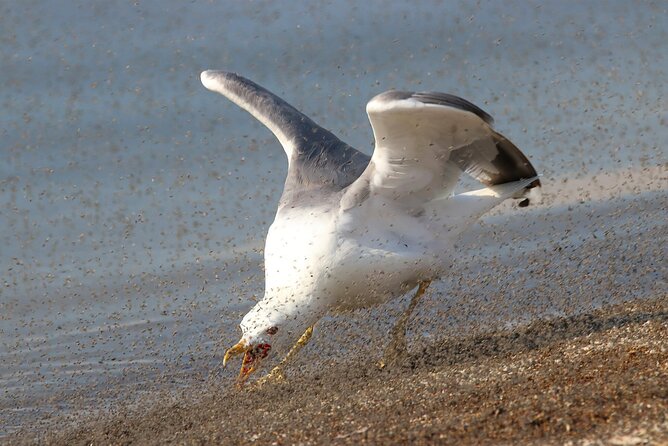
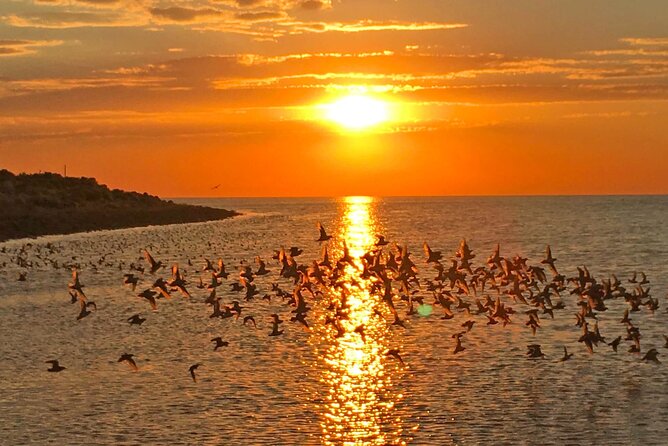
The causeway is a strong opening because you begin seeing the lake before reaching the island itself. At this point, your guide can help you scan the water and shoreline for birds. The California Gull is present year-round and serves as a useful introduction to the area.
This bird is Utah’s state bird, and its story is unusual enough to ask about. The California Gull is tied to the well-known account of gulls helping early settlers by eating insects that threatened crops. Your guide can provide the local context while you watch the birds in a setting that makes the story feel less abstract.
The causeway also gives you a sense of distance. You are not peering at a decorative pond from a city park. You are moving through a large, exposed water system where birds can sit far from the road. That is where the spotting scope becomes important.
The supplied scope has 30x to 60x magnification. You still need patience and a steady position, but a distant bird can become identifiable through the scope in a way it may not be with the naked eye. Since binoculars are not supplied, bring your own if you have them. The scope and binoculars serve different purposes, and both are useful.
Antelope Island for bison, pronghorn, and owls
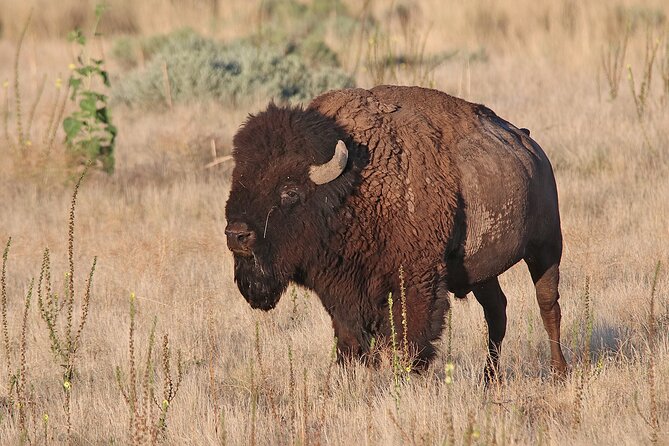
Once you reach Antelope Island, the outing shifts from lake watching to a broader search for wildlife. American Bison and pronghorn are among the possible sightings, along with coyotes and birds such as Burrowing Owls and Great Horned Owls.
These animals are not guaranteed, and wildlife always has its own schedule. Still, Antelope Island gives the tour more range than a bird-only stop beside the water. If birds are quiet for a spell, you may have a chance to look for large mammals or scan open areas for raptors and owls.
The two-hour allotment here is useful because this is not a one-look stop. Your guide may need to check several areas, and you will want time to watch rather than simply record a sighting and move on. The private setting helps. You can ask to spend longer with a bird or animal that interests you instead of following a fixed public group.
The island is also a good place to notice how sharply the environment changes around the lake. You move from open water and causeway views to dry ground and animal habitat. That mix is one of the tour’s strongest features, especially if someone in your group enjoys wildlife but is not a dedicated birder.
Farmington Bay where fresh and salt water meet
Farmington Bay Waterfowl Management Area is the shortest listed stop, at about one hour, but it may offer some of the best bird variety. This is where freshwater meets saltwater, creating brackish conditions and a strong food supply.
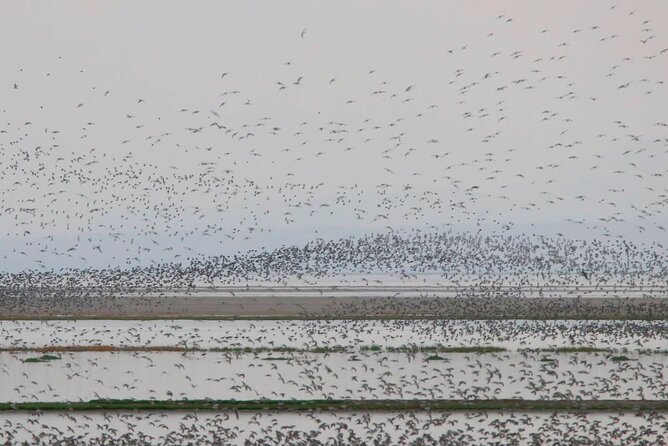
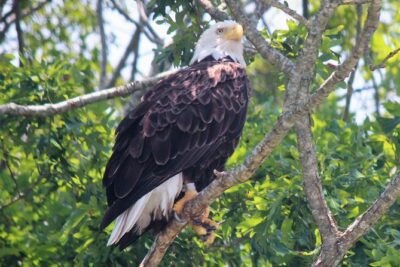
The bird list changes with the calendar. In winter, Bald Eagles, gulls, and many kinds of waterfowl may gather here. During spring and fall migration, you could see waterbirds, shorebirds, waders, divers, and waterfowl moving through the area. The range can reach 50 to 60 species in a short period.
Summer brings a different set of possibilities. Clark’s Grebe, Western Grebe, Sandhill Crane, Common Yellowthroat, and Virginia Rail are among the species that may be present. You should not treat that list as a promise, but it gives you a clear idea of why the stop matters.
Farmington Bay is particularly useful if you have limited time in the Salt Lake City area. It provides a compact sample of what the Great Salt Lake region can offer without asking you to spend a full day on the road. The tradeoff is that one hour may feel brief if the birds are active or if your group wants to study several species closely.
Same place, a different morning in the field:
- Early-Bird Tasting Tour of Pike Place Market
★ 5.0 · 1,154 reviews - Colorado Springs Hands-On Falconry Class and Demonstration
★ 5.0 · 293 reviews - 2 Hour Dolphin, Birding and Shelling Tour
★ 5.0 · 247 reviews - Skip the Line: Flamingo Gardens Admission Ticket in Fort Lauderdale
★ 4.5 · 223 reviews
What a private guide adds
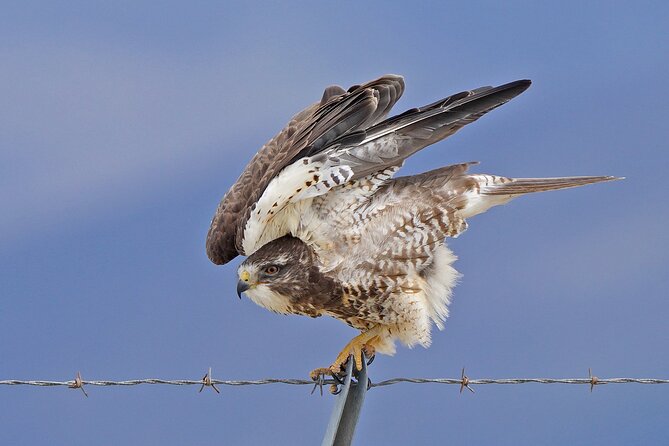
This is a private tour, so only your group participates. That is a meaningful advantage for birding. You can ask questions as they arise, spend extra time on a difficult identification, or move on when the group has had enough of one location.
Pitta Nature Tours uses guides including Quinn and Tim. Quinn has led outings for both experienced birders and first-time participants. On one six-hour outing, a participant added 22 new species in half a day. On a separate two-day program with an evening owl outing, a mixed group recorded 131 species.
Those numbers are not a guarantee for this shorter experience, and bird counts depend heavily on season, weather, water levels, and luck. They do show what a focused guide can add. You are not simply being driven to a viewpoint and handed a map. You have someone helping you notice, identify, and understand what is in front of you.
That matters most if you are new to birding. You do not need to arrive with a long species list. A good guide can explain where to look, how to use the scope, and which features separate similar birds. If you already bird regularly, you can use the time to target species and improve your local list.
How the $179 price measures up
The cost is $179 per person. That includes private transportation, bottled water, all fees and taxes, and use of the spotting scope. Pickup is offered, which is valuable if you do not have a car or prefer not to manage the route yourself.
The price is easier to justify for two or more people who want a private outing. You are paying for the vehicle, guide time, local knowledge, park access, and equipment, not just admission to the lake. Group discounts may also be available, so it is worth checking the final price if you are booking for several people.
The value is less clear if you already have transportation, binoculars, a spotting scope, and strong knowledge of the local birding sites. In that case, you may prefer to visit independently. You would lose the convenience and personal guidance, but you would gain full control over timing.
For most visitors who have only one morning or half-day, the tour saves planning time. It links three distinct areas and handles transportation between them. That efficiency is the main reason to consider it.
What to bring for a better outing
Bring binoculars if you own them. The tour supplies a spotting scope, but binoculars are better for quickly locating a bird, following movement, or scanning a wide area before asking to use the scope.
A camera is also your responsibility. No camera is supplied, and the scope is meant for viewing rather than replacing your own photo equipment. If you hope to photograph wildlife, bring the gear you need and remember that distant animals may not fill the frame.
Pack snacks and a meal if your timing requires them. Bottled water is included, but snacks, soda, alcoholic drinks, and meals are not. The overall outing lasts about four to six hours, and the listed stops total roughly six hours, so a small supply of food is sensible.
Dress for time outdoors and bring whatever personal items help you stay comfortable. The supplied details do not specify a dress code or weather plan, so check the forecast before you leave and ask the operator if conditions look uncertain.
Who will enjoy this experience most
This outing suits a first-time visitor who wants a clear introduction to the Great Salt Lake. You get the main lake, Antelope Island, and Farmington Bay without having to build a route from scratch.
It also works well for mixed groups. A serious birder can look for seasonal species, while someone less interested in birds can watch for bison, pronghorn, coyotes, and owls. The private format makes that balance easier than a large group tour.
Families and casual nature fans may appreciate the variety, though the experience still requires patience. Birds may be distant, and wildlife sightings are not scheduled performances. You should be comfortable spending time looking through a scope and waiting for a good view.
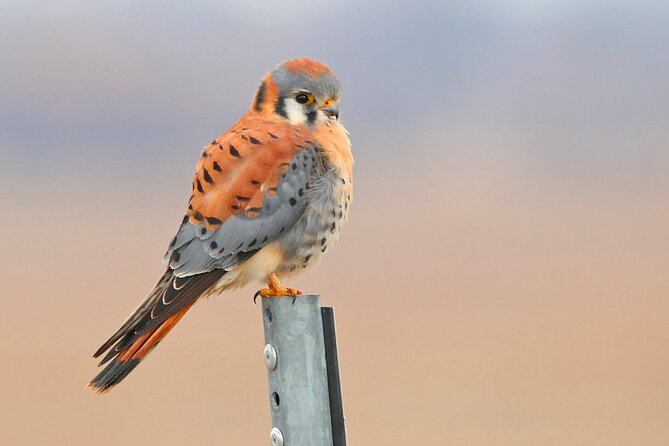
Dedicated birders will get the most from the tour in migration season, when Farmington Bay can produce a wide mix of species. Winter offers Bald Eagles and waterfowl, while summer brings breeding birds such as grebes, cranes, rails, and yellowthroats. If you have a target species, tell the guide before setting out, but keep your list flexible.
Timing, pickup, and cancellation details
The experience lasts approximately four to six hours and is offered in English. Pickup is available, and the tour is near public transportation. Confirmation is sent within 48 hours of booking, subject to availability.
You can cancel for a full refund if you do so at least 24 hours before the start time. Cancellations or changes made less than 24 hours before the start time are not accepted for a refund.
The tour is usually booked about 16 days ahead. That is useful planning information if your Salt Lake City visit falls during a popular travel period or if you need a certain date. The activity is open to most participants, but the operator should be asked directly about any specific mobility concern.
Should you book the Great Salt Lake birding tour?
Book it if you want a private, guided introduction to the lake and its surrounding habitats, especially if you do not have a car or birding equipment. The included scope, transportation, access fees, and guide time make the $179 price reasonable for visitors who want several sites in one half-day.
Think twice if you prefer complete independence or already know Antelope Island and Farmington Bay well. You will also need to bring binoculars, a camera, and food, and you should accept that species counts and wildlife sightings vary.
For most first-time visitors, this is a practical way to see the Great Salt Lake without reducing it to a roadside photo stop. The combination of birds, bison, open water, and wetlands gives you a fuller picture of the area, while a private guide helps you make the most of a limited morning.
FAQ
How long does the Great Salt Lake birding tour last?
The experience lasts approximately four to six hours. The listed visits include about three hours at the Great Salt Lake, two hours at Antelope Island State Park, and one hour at Farmington Bay Waterfowl Management Area.
What locations are included?
The tour visits the Great Salt Lake, Antelope Island State Park via the causeway, and Farmington Bay Waterfowl Management Area.
Is transportation provided?
Yes. Private transportation is included, and pickup is offered.
Is this a private tour?
Yes. Only your group participates in the activity.
Are park admission fees included?
Yes. All fees and taxes are included, and admission is included for the Great Salt Lake and Antelope Island State Park. Farmington Bay has no admission fee.
Are binoculars provided?
No. Binoculars are not provided. A spotting scope with 30x to 60x magnification is provided for viewing birds and animals.
Is food included?
No. Bottled water is included, but snacks, soda, alcoholic drinks, and meals are not provided.
What wildlife might I see?
Possible sightings include California Gulls, Bald Eagles, waterfowl, shorebirds, grebes, Sandhill Cranes, Common Yellowthroats, Virginia Rails, American Bison, pronghorn, coyotes, Burrowing Owls, and Great Horned Owls. Species vary by season and conditions.
Can I cancel for a full refund?
Yes. You must cancel at least 24 hours before the experience start time for a full refund. Changes or cancellations made less than 24 hours before the start time are not accepted for a refund.
Just added around the USA
- Flamingle Happy Hour Cruise★ 4.5 · 31 reviews
- Blue Heron Bridge Guided Snorkel Tour★ 4.5 · 22 reviews
- Chincoteague and Assateague Birdwatching Boat Tour★ 5.0 · 16 reviews
- Kayak/SUP Tour: Birds, Beavers, Turtles, maybe even Cliff Jumping★ 5.0 · 26 reviews
- Half-Day Private Bird Tour of Fort De Soto Park in St. Petersburg – 2 person max★ 5.0 · 2 reviews
- Chilkat Bald Eagle Preserve Rafting – Skagway Departure★ 4.5 · 30 reviews
- Skagit Valley Birding + Deception Pass Day Tour From Seattle★ 5.0 · 3 reviews
- Sunset, Dolphin/Birding On A Private Guided Savannah Cruise★ 5.0 · 3 reviews
USA Birdwatching Tours, compared.
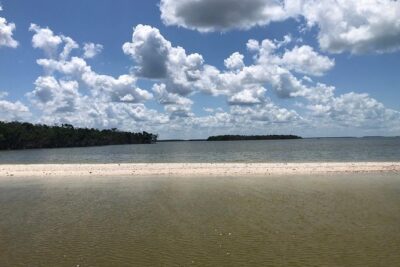
Marco Island 2 hour Dolphin, Birding and Shelling tour
Read our review →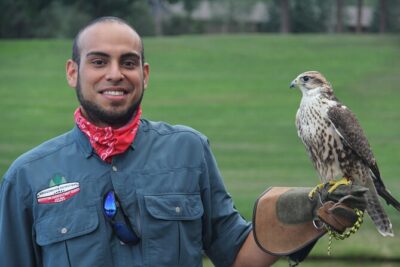
Colorado Springs Hands-On Falconry Class and Demonstration
Read our review →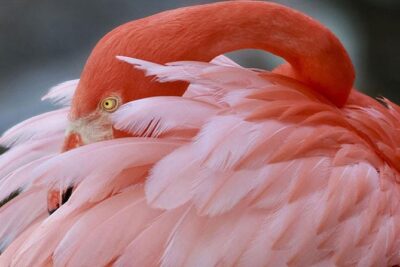
Skip the Line: Flamingo Gardens Admission Ticket in Fort Lauderdale
Read our review →
Blue Heron Drift Fishing Family Friendly Charter
Read our review →
Browse the lists this tour appears in