

Review · BIRDWATCHING
1-Day Tour Old bridge, Monastery,water falls Wildlife,Birds,
Debre Libanos gives this day trip its real character. You leave Addis Ababa behind, cross Mount Entoto, and reach a 13th-century monastery linked to Saint Tekle Haymanot, who is said to have prayed while standing on one leg for seven years. Below, the Portuguese Bridge and Jemma Gorge add a strong outdoor finish.
I like the mix of sacred places and open mountain views. I also like that the price covers lunch, entrance fees, bottled water, WiFi, an air-conditioned vehicle, and a traditional coffee ceremony. The main drawback is the road time. This is a full day built around a long drive, not a quick outing just beyond the city.
Key things to know before you book
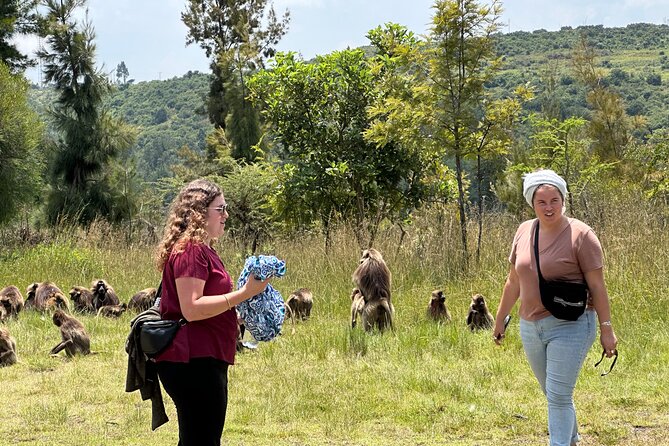
- Saint Tekle Haymanot’s cave: Visit the nearby cave and holy spring connected with the monastery’s founder.
- Portuguese Bridge: See the narrow stone bridge and the waterfall below it, especially impressive during the rainy season.
- Jemma Gorge views: Look into the broad gorge where the Jemma River runs toward the Blue Nile.
- Small-group transport: The tour accepts a maximum of six people and uses an air-conditioned vehicle.
- Included value: Lunch, attraction fees, a local guide, bottled water, WiFi, and Ethiopian coffee are included.
- Guide experience: Yonas handles arrangements, while guides such as Adisu have driven visitors through Addis traffic and the countryside.
Leaving Addis Ababa for Debre Libanos
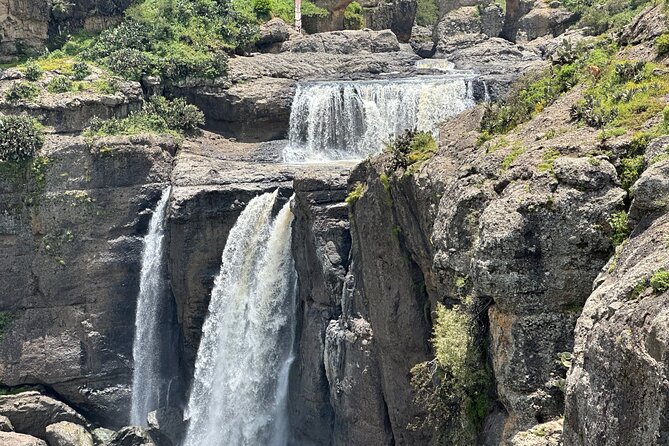
The day begins at Edna Mall on Cameroon Street in Addis Ababa, with pickup offered. The tour then heads north for about 110 kilometers, passing over Mount Entoto and through the countryside toward Debre Libanos.
That distance deserves careful attention. The roads and traffic can make the trip feel longer than the map suggests, and one account of the route describes more than 130 kilometers each way. The advertised duration is about seven hours, but your exact timing can depend on traffic, road conditions, stops, and how much time you spend at the monastery and viewpoints.
I would ask for the exact pickup time before booking. One solo visitor had a 5 a.m. hotel pickup, which made sense for fitting the long route into one day. An early start also gives you more room for photographs and time at the religious sites.
The drive is part of the experience rather than empty transfer time. You pass through highland scenery, villages, and broad views around Mount Entoto and Sululta. You will want a window seat if photography matters to you. The tour is especially appealing if you want to see countryside beyond Addis without arranging a rental car or working out the route yourself.
More Wildlife Tours in the world:
- Penguin Parade, & Wildlife Encounters Eco Tour from Melbourne
★ 5.0 · 3,774 reviews - Phillip Island Penguins & Wildlife Day Tour from Melbourne
★ 5.0 · 867 reviews - Phillip Island: Penguins and Wildlife Full-Day Tour
★ 4.6 · 642 reviews
Understanding Debre Libanos Monastery
Debre Libanos was founded in the 13th century by Saint Tekle Haymanot, one of Ethiopia’s best-known religious figures. According to tradition, he spent 29 years meditating in a cave. The story of his seven years standing on one leg is another part of the tradition surrounding his life.
The monastery sits on a terrace between a cliff and a gorge formed by a tributary of the Abbay River, also called the Blue Nile. Its location gives the visit both religious importance and strong views. You are not simply arriving at an isolated church. The setting explains why this place has attracted worshippers and pilgrims for centuries.
The original monastery buildings no longer survive. The present complex includes the church built over Tekle Haymanot’s tomb, ordered by Emperor Haile Selassie in 1961, along with the somewhat older Church of the Cross. A fragment of the True Cross is said to be kept in that church.
Five religious schools are also part of the complex. These details matter because they show that Debre Libanos remains a working religious center, not only a monument for sightseeing. You should dress and act respectfully, particularly around the churches, tomb, and pilgrims.
The monastery was also connected with the Ichege, the chief abbot who was once the second most powerful official in the Ethiopian Church after the Abuna. A local guide can help place the buildings and traditions in context, which is one reason the included guide adds real value.
The cave and holy spring near the monastery
The cave where Saint Tekle Haymanot is said to have lived is in the nearby cliffs. The walk is described as about five minutes from the monastery, though the ground and exact route may affect the pace.
The cave contains a spring whose water is considered holy. It remains a place of pilgrimage, so approach it as a religious site rather than a casual photo stop. If you have limited mobility, ask the operator about the walking surface before the day begins. The tour says most people can participate, but it does not provide a detailed accessibility description.
This is one of the most meaningful parts of the outing for me because it connects the large monastery complex with a small, personal place of prayer. The church buildings tell you about institutions and rulers. The cave gives you a closer sense of the saint’s religious tradition.
Allow yourself enough time here. A rushed visit can turn the monastery into a checklist stop, especially on a seven-hour schedule. If the cave is important to you, tell your guide early in the day.
Portuguese Bridge and the waterfall below
The Portuguese Bridge is the other major stop. It is commonly described as a 16th-century Portuguese structure, but the bridge near Debre Libanos was actually built by Ethiopians around the turn of the 19th century in an older Portuguese style. That correction makes the site more interesting, not less. It reflects the way architectural forms can travel and be adapted over time.
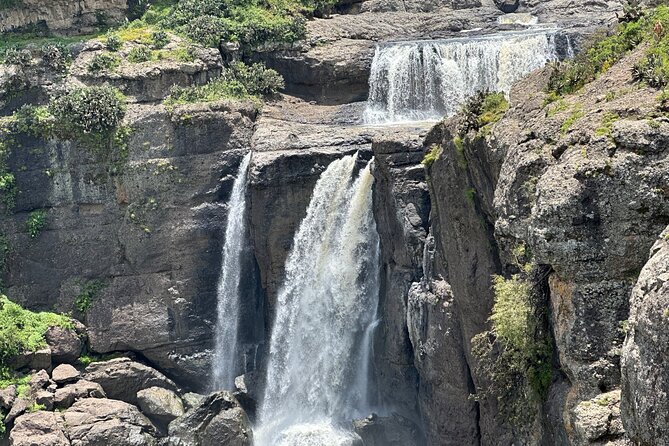
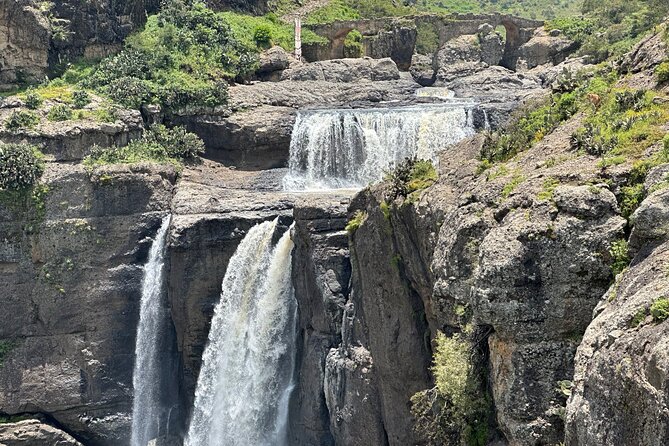
The bridge is narrow and photogenic. Below it, a cascade drops through the gorge. In the rainy season, the waterfall can be especially forceful and impressive. In drier conditions, you may find less water, so the bridge itself and the surrounding gorge become the main attractions.
Give yourself time to look beyond the bridge. The water, stonework, cliffs, and open views work well together in photographs. A photographer will find more here than a single quick snapshot. The tour’s focus on nature makes sense at this stop, though wildlife sightings are never guaranteed.
Take care near the edge and on wet ground. The provided information does not specify railings, trail conditions, or the exact walking distance, so sensible footwear and attention matter. You should also ask your guide where it is safe to stand for photographs.
A few more birdwatching trips around the world worth a look
- Phillip Island Day Trip from Melbourne with Penguin Plus Viewing Platform
★ 5.0 · 383 reviews - Khor Virap, Noravank & Birds’ Cave Day Trip with Wine Tasting
★ 5.0 · 320 reviews - Day Trip From Addis Ababa See Historical Monastery,Stunning Nature,Animals,Birds
★ 5.0 · 303 reviews - Phillip Island Penguin Parade Day Trip with Koalas from Melbourne
★ 4.5 · 253 reviews
Jemma River and the Blue Nile connection
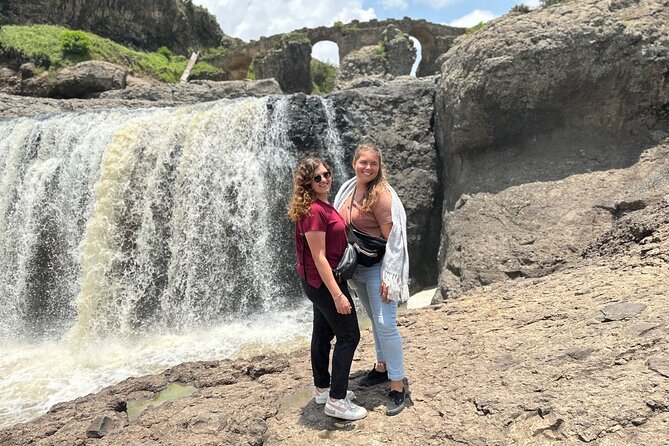
From the bridge area, the tour takes in the Jemma River and the large gorge beside Debre Libanos and Fiche. The Jemma eventually joins the Wenchit River before reaching the Abbay, or Blue Nile, River.
This is a useful geography lesson because it gives the scenery a larger scale. You are looking at a river system that leads toward one of Africa’s major rivers, not just an attractive valley beside a bridge. The gorge also helps explain why the monastery was placed in such a dramatic and secluded setting.
The views are among the strongest reasons to choose this tour. You can expect mountain scenery, cliffs, river valleys, and open countryside. The tour also refers to birds and wildlife, making it a good fit for someone who wants nature alongside history. Still, treat those sightings as a possibility rather than a promise. The experience provides access to the setting, not a dedicated safari or birding guide.
If you carry a camera, bring extra storage and keep it ready between formal stops. The best view may appear from the roadside or a brief overlook. Yonas has been singled out for careful guiding and photography-friendly outings, while Adisu has been praised for handling the drive and guiding duties. You can request one of them when arranging the booking, but availability is not guaranteed.
Lunch, coffee, and what the price covers
The cost is $148.85 per person. That is not a budget walk, but it covers much more than transport. You receive an air-conditioned vehicle, a local guide, entrance fees for Debre Libanos and the Portuguese Bridge, lunch, bottled water, WiFi on board, and an Ethiopian traditional coffee ceremony.
For a solo visitor or a small party, that package can make sense. You avoid paying separate entry fees, finding a driver, planning the route, and negotiating every part of a long countryside day. The group is capped at six, so the vehicle should feel more personal than a large coach, though the exact seating arrangement is not specified.
Lunch includes non-vegan and vegetarian choices. If you follow a vegan diet, confirm the available food before departure because the listed options specifically mention non-vegan and vegetarian meals, not vegan meals.
The coffee ceremony adds a cultural element that a standard roadside lunch would miss. Coffee is central to Ethiopian hospitality, and having it included gives the day a slower, more social pause. Alcoholic drinks are not included, and tips for the driver and local guide are separate.
WiFi on board may be useful for checking messages during the long drive, but I would not book this trip for constant connectivity. The best parts are outside the vehicle, and rural service can vary.
How the small group affects the day
A maximum of six people is a strong feature. It gives you a better chance to ask questions, adjust time at the monastery, and stop for photographs without moving a full busload of people.
It also means the experience may depend more on the guide’s schedule and the group’s interests. If one person wants extra time at the cave while another prefers the waterfall, the guide has to balance both. Tell the guide what matters most to you at the start.
The included local guide is important here. Debre Libanos has religious customs, historical figures, and stories that are easy to miss if you only walk around taking photos. Guides such as Yonas and Adisu have been associated with well-organized outings, and Yonas is also the manager who handles tour arrangements.
The drive itself is another reason a small group helps. You can ask about the route, the monastery, the rivers, and the bridge as the scenery changes. That kind of conversation is more difficult on a large scheduled bus.
Who should book this day trip
I would recommend this experience to you if you want a countryside day from Addis Ababa with three different themes: Ethiopian Orthodox religious history, mountain scenery, and a light nature outing.
It suits photographers particularly well. The bridge, waterfall, gorge, river views, cave, churches, and roadside scenery offer many subjects. The first account of the tour describes it as especially rewarding for photography, and the route provides plenty of visual variety.
It is also a practical choice for a short Addis stopover. A solo visitor who had just arrived in Ethiopia used the trip as an introduction to the country, and another person booked it after a work meeting. Pickup, an air-conditioned vehicle, lunch, and a guide make the planning simple when your time is limited.
I would think twice if you dislike long drives, want a slow monastery visit with no time pressure, or expect guaranteed wildlife and bird sightings. The route is substantial, and the seven-hour estimate leaves less flexibility than a private overnight trip.
The tour is also less suitable if you need detailed accessibility support. Most people can participate, but the available information does not explain steps, trail surfaces, or access around the cave and gorge.
Booking details and practical advice
Confirmation is provided when you book. The meeting point is Edna Mall at XQWP+RMV, Cameroon Street, Addis Ababa, and the activity ends back there.
Free cancellation is available if you cancel at least 24 hours before the start time. Changes or cancellations inside that window are not accepted for a refund. The trip requires good weather. If poor weather causes cancellation, you can take another date or receive a full refund.
Bring comfortable shoes for the monastery and cave area, a light layer for the highland drive, and sun protection for open viewpoints. Carry your camera, but keep your attention on the religious setting and local customs. Bottled water is provided, so you do not need to plan around buying drinks during the day.
The exact start time is worth confirming, especially if you are staying outside the main pickup area or have a flight later that day. A seven-hour tour can also run later if traffic or road conditions slow the return to Addis.
Should you book this tour?
Book it if you want an efficient private or small-group route to Debre Libanos, the Portuguese Bridge, the waterfall, and Jemma Gorge without arranging transport yourself. The strongest value comes from the combination of entrance fees, lunch, coffee, bottled water, WiFi, an air-conditioned vehicle, and a local guide.
Choose it with realistic expectations. This is a long day on the road, the waterfall will vary with the season, and birds or wildlife may not appear. If those limits suit you, the tour gives you a memorable look at Ethiopia beyond Addis Ababa, with Saint Tekle Haymanot’s monastery and the Jemma Gorge providing a strong balance of culture and scenery.
FAQ
Where does the tour start and finish?
The tour starts at Edna Mall, XQWP+RMV, Cameroon Street, Addis Ababa. It ends back at the meeting point.
How long is the experience?
The advertised duration is approximately seven hours. The drive is about 110 kilometers north from Addis Ababa, though road conditions, traffic, and stop times can affect the schedule.
What is included in the price?
The price includes an Ethiopian traditional coffee ceremony, bottled water, WiFi on board, an air-conditioned vehicle, attraction fees, a local guide, admission to Debre Libanos, admission to the Portuguese Bridge, and lunch with non-vegan and vegetarian options.
Is pickup available?
Yes. Pickup is offered, with the listed meeting point at Edna Mall in Addis Ababa.
How many people can join the tour?
The activity has a maximum of six participants.
What is the cancellation policy?
You can cancel up to 24 hours before the experience for a full refund. Cancellations or changes made less than 24 hours before the start time are not accepted for a refund. If poor weather causes the tour to be canceled, you will be offered another date or a full refund.
Just added around the world
- Walvis Bay: Pelican Point Seal and Sandwich Harbour Tour★ 4.8 · 15 reviews
- Walvis Bay Shore Excursion: Flamingos, Dune 7, Swakopmund★ 5.0 · 3 reviews
- Vila Franca do Campo: Marine Life & Bird Watching & Islet Tour★ 4.4 · 9 reviews
- VIP falconry taster session★ 5.0 · 2 reviews
- Victoria Falls: Private Birdwatching Safari near the town★ 5.0 · 2 reviews
- Victoria Falls: Private Zambezi River Birdwatching Safari★ 4.7 · 14 reviews
- Vestmannaeyjar: Puffin, Island, and Volcano Boat Tour★ 4.4 · 7 reviews
- USHUAIA | Navigation: Sea Lions, Birds and Lighthouse★ 3.3 · 4 reviews