
Review · COSTA RICA BIRDWATCHING TOURS
Tamarindo Birdwatching Crocodiles and Monkey Tour
Tamarindo’s best wildlife surprise is not on the beach. It is in the quiet mangrove waterways of Las Baulas National Marine Park, where a sharp-eyed local guide may point out a crocodile under the branches, bats tucked into the forest, or an osprey carrying a fish. I like the small-group feel and the chance to see the estuary from the water instead of from a busy resort road. I also like that guides such as Juan Carlos and Moises explain how the mangroves protect the coast, rather than treating the boat ride as a simple animal hunt.
The main caution is that nature sets the schedule. You may see several crocodiles, monkeys, herons, iguanas, and crabs, or you may get only brief looks at shy animals. A short walk may be added if the monkeys are away from the river, and one poor experience involved a late start and less than two hours on the water. Ask about timing and your guide at the start.
Key points at a glance
- Two hours through Las Baulas mangroves: The boat travels through different branches of the estuary to improve your chances of spotting wildlife.
- Guides make the difference: Juan Carlos, Moises, Luis, Chris, and others have been praised for sharp eyesight, calm boat handling, and clear explanations.
- Wildlife is varied but never guaranteed: Look for American crocodiles, howler monkeys, birds, iguanas, land crabs, raccoons, bats, stingrays, and more.
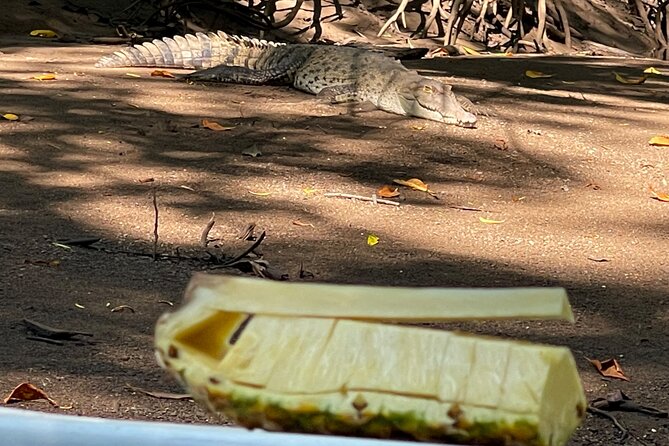
- Fresh pineapple and water are included: The snack is a welcome touch in Tamarindo’s warm morning air.
- Simple meeting point: Meet at Discover Tamarindo Travel Agency near the Tamarindo park station, with free parking at the National Park entrance.
- Good value at $50: This is a fairly priced nature outing if you want an easy half-morning trip with a guide, boat ride, drinks, snacks, and admission included.
Leaving Tamarindo for the mangrove waterways
The tour begins at 9:30 a.m. at the Tamarindo park station, near the entrance to town and the National Park. The listed meeting point is Discover Tamarindo Travel Agency in Tamarindo, Guanacaste. If you are driving, free parking is available onsite, which removes one small but common headache.
The start is practical rather than polished. Boat operations can sometimes feel informal, and one group waited nearly 30 minutes for late arrivals. Another group had trouble because pickup locations supplied through a booking platform were unclear. My advice is simple: if you arrange transportation, confirm the exact meeting point directly and arrive early. The tour itself ends back at the starting point.
Once underway, the boat leaves the more developed side of Tamarindo behind. The estuary opens into a maze of mangrove channels, muddy banks, exposed roots, and low forest. You are not looking at a manicured park. That is part of the appeal. The setting feels like a working wetland, and the guides use the ride to explain how the trees support fish, birds, reptiles, and coastal communities.
The trip is designed for up to 20 people. That is not a private boat, but it is still a manageable size for a two-hour outing. A smaller group can make it easier to hear the guide and share good viewing spots. In the quieter off-season, some departures have been nearly private.
A few more birdwatching trips around Costa Rica worth a look
- Flamingo Family Fun Catamaran Snorkel:Comfortable shaded seating
★ 5.0 · 238 reviews - Birdwatching Tour at Mistico Park
★ 4.5 · 79 reviews - Monteverde Birdwatching Experience
★ 5.0 · 68 reviews
What makes Las Baulas mangroves worth your morning
Mangroves are easy to overlook. From a beach, they may appear to be a wall of tangled greenery. From a boat, their role becomes clearer. Their roots hold the muddy edge together, shelter young aquatic life, and create feeding areas for birds and reptiles. The tour also connects the wetland to Tamarindo’s wider ecology, including the coastal conditions associated with Costa Rica’s Blue Zones.
The waterways are especially useful for wildlife watching because the boat can reach areas that are difficult to access on foot. The route changes through several parts of the estuary, rather than following one straight channel. That gives the captain and guide more chances to search shaded banks, open water, and narrow side passages.
You might find an American crocodile resting near the bank, an iguana above the water, or a land crab clinging to a tree. Guides have also pointed out raccoons, bats, stingrays, termite colonies, medicinal plants, and several types of mangrove. These smaller discoveries matter. They turn the trip from a hunt for one large animal into a lesson in how the wetland works.
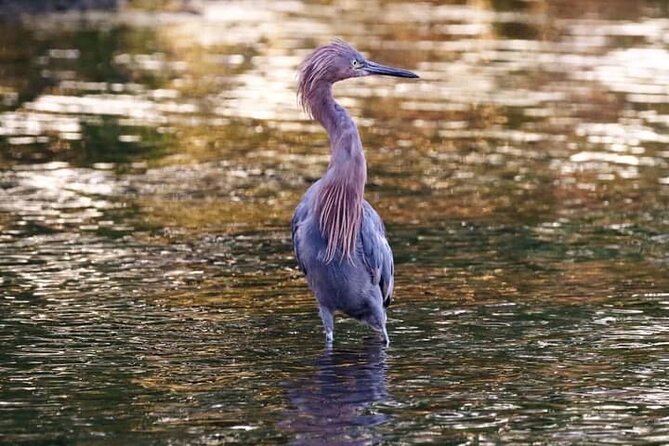
The rare mangrove hummingbird is another special target. It is not guaranteed, but the tour is built around finding birds in this habitat, not simply cruising past it. Birdwatchers have recorded species such as herons, a Muscovy Duck, a Reddish Egret, a Plumbeous Kite, a Black Hawk, and a juvenile Long-tailed Manakin on different outings.
The wildlife search: crocodiles, monkeys, and birds
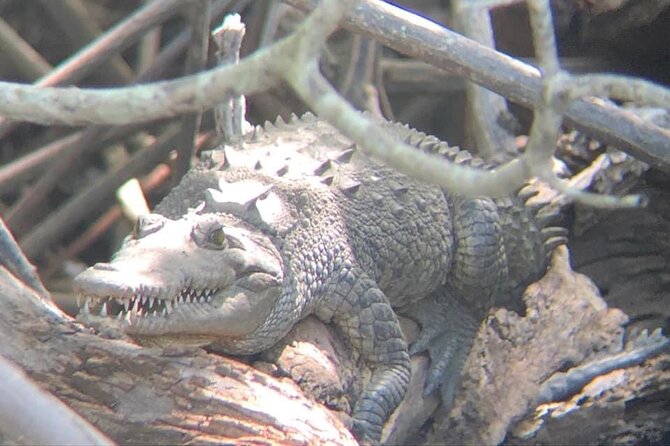
Crocodiles are often the easiest headline attraction. Several outings have produced three or more, while another group saw two crocodiles fighting. That sort of sighting is thrilling, but you should not expect every boat to deliver a dramatic encounter. One outing produced only part of a baby crocodile hiding among the mangroves.
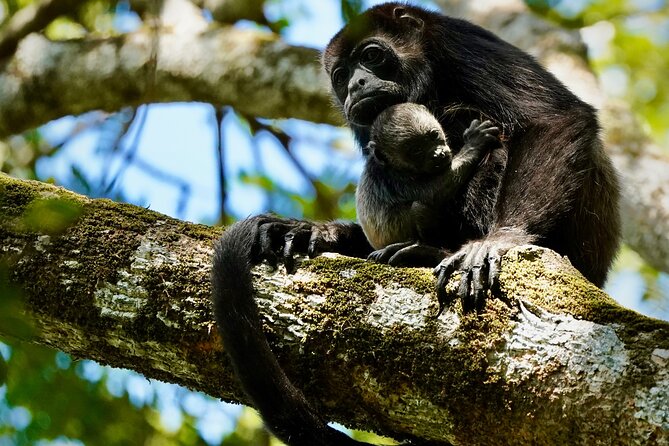
The same goes for monkeys. Howler monkeys may be visible in the trees, sleeping, or simply too far from the water. Guides have found troops of three or more, but you may hear them before you see them. If they are not near the riverside, the guide may offer a small walk to look for them. The activity description makes this possibility clear, so wear shoes that can handle a short walk and do not treat the boat as a guarantee of a water-level monkey sighting.
Birdwatchers should tell the guide what they want early. Juan Carlos has been singled out for finding small birds while also keeping an eye out for monkeys and crocodiles. Luis was praised for spotting birds and small creatures hidden in the forest, while Moises has been credited with identifying many kinds of plants and animals. The guides’ ability to notice movement at a distance is one of the strongest parts of this experience.
The boat is also a good fit for people who are new to tropical wildlife. You do not need a species list or a large camera lens to enjoy it. The guide can point out behavior, explain the ecosystem, and help you understand why a quiet patch of roots may be worth studying.
Still, wildlife watching demands patience. Muddy water can limit what you see, and bright midday conditions may not help with every species. One outing produced fewer birds than hoped, while another found plenty despite unusual water conditions. I would book this for the setting and the guide’s interpretation first, then treat the animals as a welcome bonus.
Why the guides matter so much
This is an interpretation-led tour. The boat ride is pleasant on its own, but the guide turns it into something more useful. Juan Carlos has received especially strong praise for his English, warmth, environmental knowledge, and ability to spot animals. He has identified bats from a distance, explained several types of mangrove, and helped birdwatchers add new species to their lists.
Moises has also been praised for his care for the estuary and his willingness to tailor the outing. During a quiet off-season departure, he took a small group farther into the mangroves and explained the local plants and animals. Luis has been described as attentive to the needs of the group, while Chris was noted for being friendly and well informed.
You may not get to choose among these guides, so I would not book based only on a particular name. But the pattern is clear: the strongest part of the experience is the human interpretation. Ask questions. Tell the guide if you are most interested in birds, reptiles, photography, or plants. That gives the guide a better sense of where to focus.
There has been at least one poor guide match. A group found Christian Jr. argumentative and unhappy with ordinary comments about local prices, and felt that his handling of a boat mix-up spoiled the outing. That appears to be an isolated complaint among many positive experiences, but it is still useful context. The company uses more than one guide, and the quality of the experience can depend on who is leading your boat.
Same place, a different morning in the field:
- Jaco Birdwatching and Photography with Sergio
★ 5.0 · 65 reviews - Night Walk Experience at Natura Eco Park, (frogs snakes mammals insects birds)
★ 4.5 · 57 reviews - ATV Zipline Tour from Tamarindo or Flamingo
★ 4.5 · 55 reviews - 3 Hour ATV Secluded Beach Tour from Tamarindo, Flamingo, Conchal & Grande
★ 4.5 · 54 reviews
The food, water, and comfort level
A bottle of water and snacks are provided. Fresh pineapple is a recurring favorite, and it is a smart choice in the heat. You can expect a relaxed morning rather than a strenuous adventure, though the optional walk means comfortable footwear is wise.
The boat ride itself is described as easy and peaceful. It can be a good choice after a busy day of sightseeing or for anyone who wants a slower outing. You will spend most of the two hours seated and watching the banks, with the guide occasionally stopping or slowing to point out animals.
Bring sun protection and comfortable clothes. The supplied information does not specify shade, so plan for warm conditions. If you use binoculars or a camera, keep them secure around the boat. The trip is near public transportation, service animals are allowed, and most people can participate.
Is $50 a fair price?
At $50 per person, the outing offers reasonable value for a two-hour guided nature trip. The price includes admission, the boat experience, bottled water, snacks, and the services of a local naturalist guide. You are paying for access to the waterways, but also for someone who can identify a bird hidden in the trees or explain why a mangrove bank matters.
The value is strongest if you want an easy, educational excursion close to Tamarindo. It is also useful for families because the wildlife search gives children something to watch for, without requiring a full-day hike. The boat ride keeps the physical demand low, though young children may need help staying patient when animals are hidden.
The value is less certain if your only goal is a guaranteed close look at a crocodile or monkey. No responsible wildlife operator can promise that. You may see several animals, but the experience depends on season, water conditions, animal behavior, and the guide’s luck.
The trip is booked around 12 days ahead on average, so popular dates may fill. Free cancellation is available if you cancel at least 24 hours before the start time. Poor weather or failure to meet the minimum number of participants can lead to a different date, another experience, or a full refund.
Who should book this Tamarindo tour?
I would choose this for a first visit to Tamarindo, especially if you want to add wildlife to a beach holiday without giving up an entire day. It suits families, couples, solo visitors, casual birdwatchers, and anyone curious about mangrove ecology.
It is also a strong choice for people who prefer local explanation over a fast sightseeing circuit. The best guides do more than point at animals. They connect the crocodiles, birds, insects, trees, and waterways into one living system.
I would be more cautious if you need a tightly timed departure or a highly organized transfer service. Confirm the meeting point, arrive early, and allow a little flexibility at the end. I would also avoid booking this as your sole wildlife outing if seeing a specific species is essential.
Should you book it?
Book it if you want a calm two-hour boat trip into Tamarindo’s mangroves, with a real chance of seeing crocodiles, monkeys, birds, iguanas, crabs, and other wildlife. The strongest reasons are the setting, the local guides, the excellent nature interpretation, and the modest $50 price.
Skip it if you dislike waiting, need guaranteed sightings, or want a long birding session at dawn. For most visitors, though, this is a worthwhile change of pace from Tamarindo’s beach scene. Keep your expectations natural, listen closely, and let the mangroves decide what appears.
FAQ
Where does the Tamarindo birdwatching and crocodile tour start?
It starts at Discover Tamarindo Travel Agency in Tamarindo, Guanacaste, near the Tamarindo park station at the entrance to town and the National Park.
What time does the tour start?
The scheduled start time is 9:30 a.m.
How long does the tour last?
The activity lasts about two hours and ends back at the meeting point.
Is parking available?
Yes. Safe, free parking is available onsite at the Tamarindo park station and National Park entrance.
What animals might I see?
Possible sightings include American crocodiles, howler monkeys, hummingbirds, herons and other birds, iguanas, land crabs, raccoons, bats, stingrays, and insects. Wildlife sightings are not guaranteed.
Is a walk included?
The main activity is a boat trip through the estuary. Depending on the season and where the monkeys are, the guide may add a small walk if they are not close to the riverside.
Are water and snacks provided?
Yes. Bottled water and snacks are provided, and fresh pineapple has been served on the tour.
How many people can join the tour?
The maximum group size is 20 people.
Can I cancel for a refund?
Yes. You can cancel at least 24 hours before the start time for a full refund. Cancellations or changes made less than 24 hours before the start time are not accepted, and poor weather or an unmet minimum may result in a new date or a full refund.
Just added around Costa Rica
- ATV Tamarindo to Playa Flamingo★ 4.5 · 32 reviews
- Esquipulas Rainforest – Private Birding – Fully Customizable Tour★ 4.5 · 33 reviews
- Private Sunset Catamaran in Playa Flamingo★ 5.0 · 41 reviews
- All Inclusive Beach Parties & Events on Flamingo Beach/Penca Beach/Concha Beach★ 5.0 · 44 reviews
- ATV and Snorkel from Playa Flamingo★ 5.0 · 36 reviews
- Birdwatching tour at the Cloud Forest -Monteverde Wild-★ 5.0 · 39 reviews
- Slothies and Birds Sightseeing★ 5.0 · 44 reviews
- Birding in the Rainforest★ 5.0 · 38 reviews
Costa Rica Birdwatching Tours, compared.
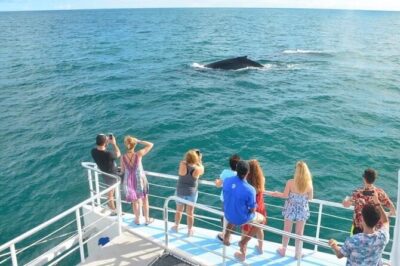
Flamingo Family Fun Catamaran Snorkel:Comfortable shaded seating
Read our review →
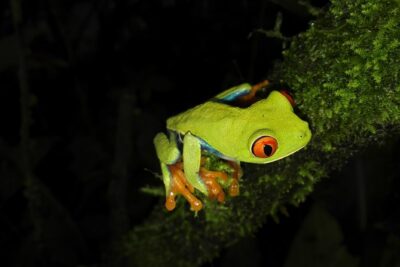
Night Walk Experience at Natura Eco Park, (frogs snakes mammals insects birds)
Read our review →
3 Hour ATV Secluded Beach Tour from Tamarindo, Flamingo, Conchal & Grande
Read our review →
Monteverde Wildlife Walk & Hummingbird Encounter
Read our review →
Private Sailing Tour from Playa Flamingo – Explore Costa Rica’s Gold Coast
Read our review →Browse the lists this tour appears in