
Review · SOUTH AFRICA BIRDWATCHING TOURS
Whale, Dolphin & Penguin Island Cruise
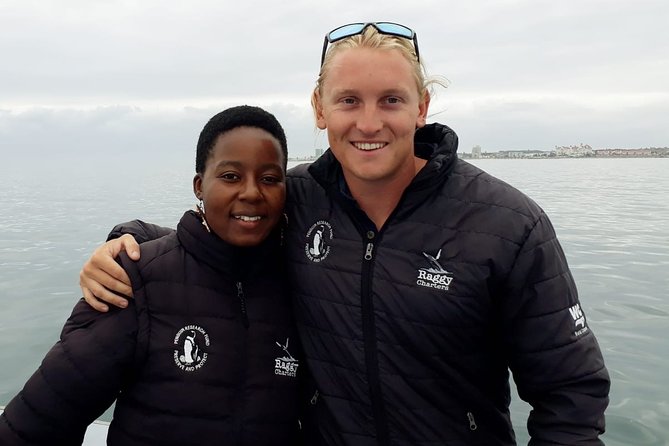
The best part of this Algoa Bay wildlife cruise is its patient pace. Rather than rushing from one sighting to the next, the twin-engine catamaran gives you time to watch dolphins ride the bow waves, scan for whales, and study African penguins around St. Croix Island. The small group, capped at 20 people, makes it easier to hear the crew and ask questions.
I like the strong conservation message, including a tree-planting campaign to balance the cruise’s carbon footprint. I also like the crew’s practical knowledge. Guide Jake and the skippers explain animal behavior as you go, and they work hard to position the boat so everyone gets a fair view. The main drawback is simple: wildlife is wild. You may see dolphins all year, but whales are seasonal, and rough weather can affect the trip.
Key points at a glance
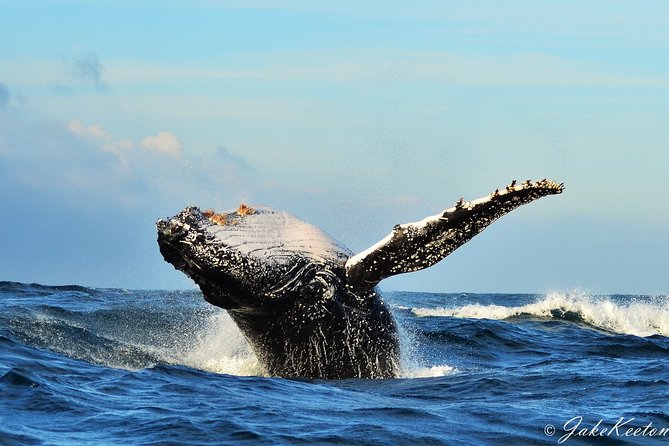
- Whales have a clear season: Humpback whales usually pass through Algoa Bay from June to early December, while southern right whales are most often seen close to shore from July to September.
- Dolphins are the safest bet: Indo-Pacific bottlenose dolphins appear year-round, sometimes in groups of 10 to 400, while common dolphins can gather in groups of 1,000 to 2,000 farther offshore.
- St. Croix Island matters: The island is home to endangered African penguins, with the breeding season at its peak from March to May.
- Small boats make a difference: A maximum of 20 people means less crowding and more room to ask the crew about what you are seeing.
- The cruise is built around conservation: The crew discusses the bay’s ecosystem, threats to wildlife, and efforts to reduce the trip’s carbon impact.
- Plan for changing conditions: You need to be comfortable with a boat ride that can become choppy, and the operator may cancel for poor weather.
Setting out from Port Elizabeth at 8am
You meet at the Nelson Mandela Bay Yacht Club, at Dom Pedro Jetty in Port Elizabeth Harbour, also known as Gqeberha. The start time is 8am, so plan to arrive ready for a short briefing before boarding the twin-engine catamaran.
The four-hour outing begins with a safety talk and an introduction to the bay. That briefing matters here. Algoa Bay is not simply a scenic stretch of water. It is a feeding ground, migration route, breeding area, and refuge for many species, and the crew uses the ride to explain how those parts fit together.
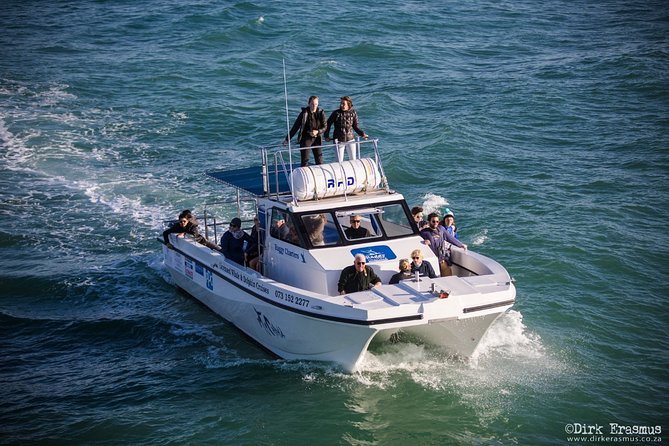
The boat carries no more than 20 people. That is a useful size for wildlife watching. You are less likely to have someone blocking your view, and the crew can respond to questions without shouting across a packed deck. It also gives the trip a calmer feel than a large sightseeing boat.
The catamaran has two engines, and the crew places clear attention on safety. One review describes the skipper handling choppy water well, while another praises the clean boat and careful communication. You should still expect the sea to set the mood. Even a pleasant morning can include spray, wind, or a rolling ride.
More Penguin Tours in South Africa
- Cape Town: Cape of Good Hope & Penguins Day Tour with Pickup
★ 4.7 · 3,362 reviews - Cape Point and Boulder’s Penguins Full Day Tour
★ 5.0 · 3,118 reviews - Cape of Good Hope & Boulder Penguins Full-Day Tour from Cape Town
★ 5.0 · 2,347 reviews
Searching Algoa Bay for humpback whales
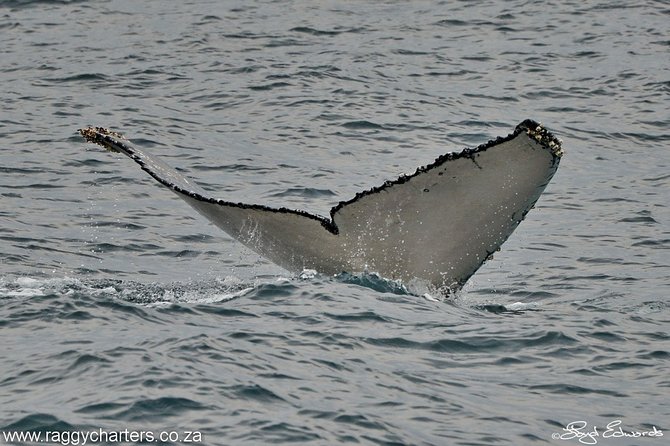
Whale sightings depend heavily on timing. Humpback whales begin appearing in Algoa Bay around June as they move up the eastern coast of Africa toward breeding grounds. They can be seen through early December, with their return journey beginning around October. Later in the season, females may travel with calves.
That seasonal pattern gives you a useful planning guide. If humpbacks are your main goal, June through early December offers the best chance, with October onward bringing the possibility of mothers and young whales. Southern right whales are more often seen close to shore from July to September.
The crew does not promise a whale sighting, and that honesty is important. You are searching open water, not visiting an aquarium with guaranteed viewing. On a lucky morning, you might see a whale close to the boat, as some trips have, or watch a mother and calf moving through the bay. On another day, the dolphins and seabirds may provide most of the action.
The slow pace works well for whale watching. The boat can pause while you scan the surface, and the crew can explain what to look for: a blow, a back, a fin, or a sudden change in the water. Bring patience. A whale may appear for only a few seconds, and the best sightings often reward the person who keeps watching after everyone else has turned away.
Dolphins close to the bow
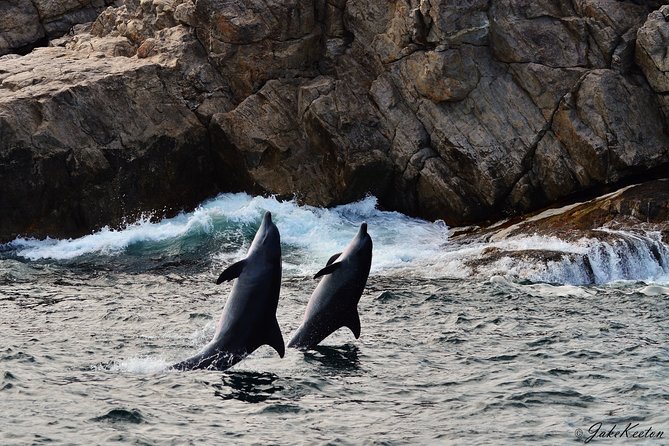
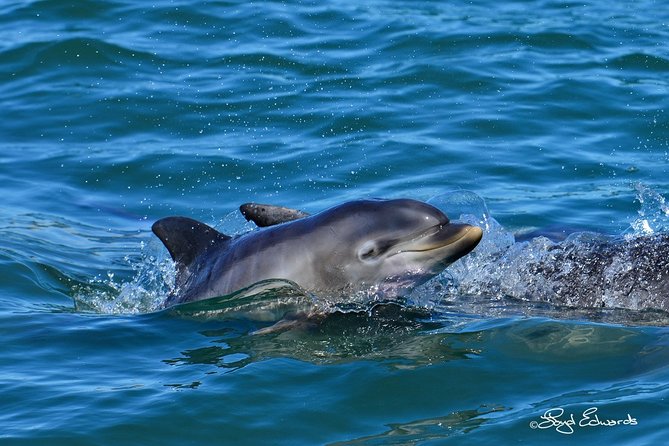
Dolphins are the most dependable part of this outing. Indo-Pacific bottlenose dolphins live in the bay all year, often in groups of 10 to 400. They tend to stay in shallower water near beaches or around St. Croix Island, and they may come close to the boat to ride the bow waves.
This is the kind of sighting that makes a marine cruise feel special without needing a rare animal. You might see a pod moving in formation, then watch individuals accelerate toward the catamaran and surf along its front. The crew can help you tell the difference between relaxed travel, feeding activity, and playful movement.
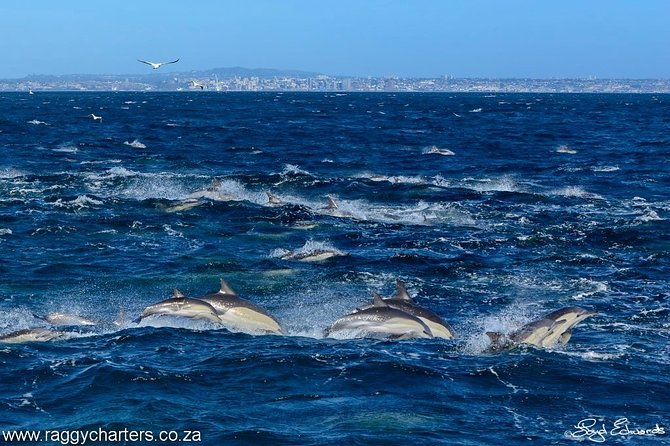
Common dolphins are another possibility. They often gather in much larger groups, sometimes 1,000 to 2,000 animals, and are found farther offshore. Their speed and numbers can be impressive, especially when they follow shoals of baitfish. They are reported throughout the year, with better chances farther out and on trips that reach the bird island areas.
Algoa Bay is also home to humpback dolphins. The supplied tour information does not give a reliable sighting season or frequency for them, so treat them as an added possibility rather than a likely target. The same applies to other marine life. You may spot Cape fur seals, Bryde’s whales, minke whales, or several shark species, but no particular animal is guaranteed.
St. Croix Island and its endangered penguins
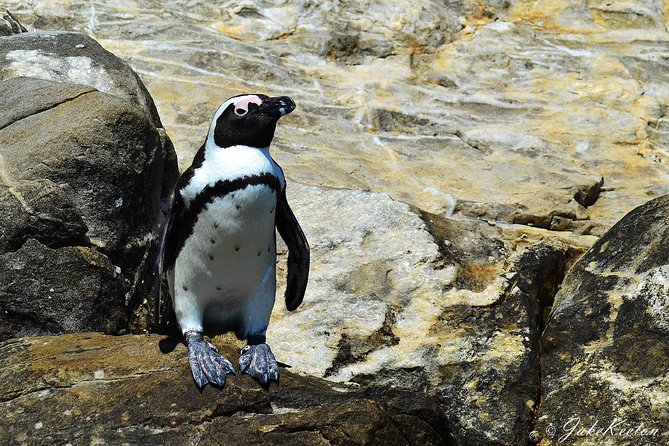
St. Croix Island is the emotional center of the trip. It is home to endangered African penguins, and the island has been described as Africa’s largest breeding colony. The population has suffered a severe decline, with a reported loss of 70 percent over 10 years, so this is not just a cute wildlife stop. It is also a close look at a species under pressure.
You view the penguins from the boat rather than walking ashore. That keeps the visit low-impact and lets the crew explain the birds without disturbing the colony. You might see penguins standing on the rocky island, entering the water, or swimming out to feed.
The breeding season reaches its peak between March and May. During that period, you may be able to see chicks from the boat. Outside those months, the penguins remain worth seeing, but the behavior and number of visible birds can vary.
The island’s population is not as large as its historic reputation suggests. A comment in the supplied material points to overfishing and a decline in penguin numbers, so you should not expect a solid wall of birds at every visit. That is a reason to value the guide’s explanation, not a reason to skip the island. Seeing fewer penguins makes the conservation problem more real.
St. Croix and nearby Brenton Island also support African black oystercatchers, white-breasted cormorants, and Cape cormorants. The St. Croix Island group and Bird Island group are part of Addo Elephant National Park, which allows rangers to patrol the protected areas.
Same place, a different morning in the field:
- Table Mountain, Penguins & Cape Point Small Group Tour Cape Town
★ 4.5 · 1,797 reviews - Cape Town Tour: Table Mountain, Penguins & Cape Point+Pickup
★ 4.7 · 1,671 reviews - Cape Town: Table Mountain, Cape Point, & Penguins Group Tour
★ 4.9 · 1,063 reviews - Cape of Good Hope & Penguins Small Group Tour from Cape Town
★ 5.0 · 1,054 reviews
Seals, seabirds, and surprise sightings
The bay offers more than the headline animals. Cape fur seals may be seen resting or moving through the water, and several shark species are possible. One particularly lucky outing included a hammerhead shark, but you should treat that as an unusual bonus rather than an expected part of the route.
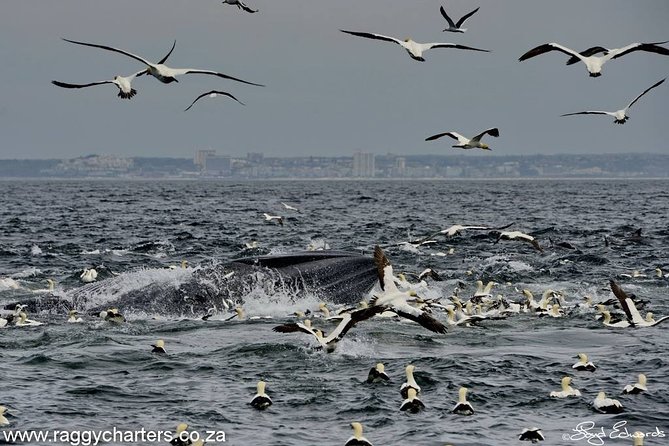
Birdlife adds interest during the quieter stretches. You might spot Cape gannets and pelagic birds such as terns, petrels, skuas, shearwaters, and albatrosses. White-breasted and Cape cormorants are tied closely to the island habitat.
This variety makes the cruise worthwhile even when whales stay out of sight. You are learning to read the bay: a flock of seabirds can point toward baitfish, a sudden rush of dolphins may signal feeding, and seals can mark a productive patch of water. The crew’s role is not just to point and name. It is to explain why the animals are there.
That educational side received especially strong praise. Jake and the crew have been credited with explaining local marine life and animal behavior in a way that turns the trip into more than a sightseeing ride. You get a better experience when you listen between sightings, since the waiting time becomes part of the lesson rather than dead time.
What the small group and slow pace mean
The trip runs once a day and lasts about four hours. That single departure gives the cruise a more focused feel, but it also means you cannot simply choose a later sailing if the 8am start does not fit your plans.
A maximum of 20 people is one of the strongest practical advantages. On a crowded boat, wildlife viewing can become a contest for railing space. Here, you have a better chance of hearing the guide, moving your attention from one side of the boat to the other, and taking photographs without constant obstruction.
The small group also supports the conservation approach. The crew can talk about the animals without relying only on a fixed script, and you can ask about a whale’s movement, a penguin’s behavior, or the condition of the island.
The tradeoff is that a small boat can feel more exposed to the sea. Several accounts describe the crew handling rough or rainy conditions well, but good boat handling cannot make choppy water feel smooth. If you are prone to seasickness or dislike wind and spray, think carefully before booking. The tour asks you to make your own judgment about health and fitness.
People who need assistance boarding can join if family members and crew help them. There is no age restriction, and life jackets are available for all ages. Those details make the trip more flexible for families, though you should still consider your comfort with a moving boat and the need to board at the harbor.
Is the $185.19 price good value?
At $185.19 per person, this is not a bargain boat ride. I would judge the price by what you want from the morning.
You are paying for roughly four hours on the water, a limited group size, a twin-engine catamaran, a dedicated crew, and access to a protected marine area. The value is strongest if you care about careful wildlife viewing and want explanations from people who work with the local ecosystem.
The price also compares favorably with a rushed cruise excursion if you are already in Port Elizabeth. One supplied account notes that booking directly avoided a much higher cruise excursion cost, even though the same boats were used. If you are staying in the area, booking with Raggy Charters gives you a more direct way to join the outing.
The value is weaker if your only goal is a guaranteed whale sighting. No wildlife cruise can promise that, and whale season is limited. Dolphins are a more reliable target, with bottlenose dolphins present all year, but conditions and animal behavior still control the day.
The conservation focus adds substance, but it should not be treated as a substitute for sightings. You should book because you want a thoughtful marine outing with real wildlife possibilities, not because a tree-planting campaign makes the animals appear on schedule.
Practical details before you book
The cruise starts and ends at the Nelson Mandela Bay Yacht Club, at Dom Pedro Jetty in Port Elizabeth Harbour, Gqeberha Central. It is near public transportation, and the activity ends back at the same meeting point.
You receive booking confirmation at the time of purchase, and a mobile ticket is available. The operator offers free cancellation if you cancel at least 24 hours before the 8am start time. Changes or cancellations made within 24 hours are not accepted for a refund.
Weather matters. The operator can cancel if conditions are poor, offering another date or a full refund. The same applies if the minimum number of participants is not reached. Since the trip runs only once a day, leave some flexibility in your schedule if this cruise is a major part of your Port Elizabeth plans.
Bring a charged phone or camera, but keep your attention on the water. A whale may surface away from the perfect camera angle, while dolphins can appear suddenly beside the bow. The crew will help with positioning, but no photograph is worth missing the sight itself.
Who should book this cruise?
I would choose this trip if you want a small-group wildlife outing with a strong local and conservation focus. It suits families, keen photographers, birdwatchers, and anyone who prefers a slower boat ride with time for questions.
It is especially appealing during the whale season from June to early December, during the southern right whale period from July to September, or from March to May if seeing penguin chicks is important to you. Dolphins make the trip worthwhile outside those windows, but your expectations should shift toward year-round marine life rather than whales.
I would hesitate if you need a guaranteed animal sighting, dislike open-water conditions, or cannot manage an early start. I would also avoid packing the rest of your morning too tightly. The cruise lasts about four hours, and sea conditions can shape the pace.
For most people interested in Algoa Bay, I think the combination of penguins, dolphins, possible whales, seabirds, and a small crew justifies the cost. Book it for the quality of the outing and the chance to see wild animals behaving naturally. If you do, arrive ready for spray, patience, and a morning that may be led by dolphins rather than whales.
FAQ
Where does the cruise start?
It starts at the Nelson Mandela Bay Yacht Club, Dom Pedro Jetty, Port Elizabeth Harbour, Gqeberha Central, Gqeberha, 6001, South Africa.
What time does the cruise begin?
The cruise begins at 8am.
How long does the experience last?
The cruise lasts approximately four hours and ends back at the original meeting point.
How many people can join the boat?
The maximum group size is 20 people.
What wildlife might I see?
Possible sightings include humpback whales, southern right whales, Indo-Pacific bottlenose dolphins, common dolphins, humpback dolphins, African penguins, Cape fur seals, sharks, Bryde’s whales, minke whales, cormorants, Cape gannets, terns, petrels, skuas, shearwaters, and albatrosses.
When are humpback whales seen?
Humpback whales can be seen in Algoa Bay from June to early December. They begin their return journey around October, when females may be accompanied by calves.
When are southern right whales seen?
Southern right whales can be seen close to shore most often from July to September.
Can I see penguin chicks?
You may see penguin chicks from the boat during the African penguins’ peak breeding season, which runs from March to May.
What happens if the weather is poor?
If poor weather causes a cancellation, you can be offered another date or a full refund. If the minimum number of participants is not reached, you can also be offered another date or experience, or receive a full refund.
More Dolphin Watching in South Africa
- Maspalomas: Palmitos Park Ticket with Dolphin and Bird Shows
★ 4.8 · 1,507 reviews - Dubai: Dubai Dolphinarium Dolphin, Seal & Bird Show Tickets
★ 4.5 · 1,020 reviews - Marco Island 2 hour Dolphin, Birding and Shelling tour
★ 5.0 · 503 reviews - Dolphin – Whale – Turtle – Bird Watching
★ 5.0 · 350 reviews
More Whale Watching in South Africa
- Hermanus Whale Watching & Penguins Shared Tour from Cape Town
★ 4.0 · 14 reviews - Cape Town: Hermanus Whale Watching Shared Boat & Penguins
★ 3.3 · 6 reviews - Cape Agulhas, Hermanus Whale Watching, Penguins and Wine Tasting
★ 5.0 · 2 reviews - Húsavík: Original Big Whale Safari & Puffins by Speedboat
★ 4.7 · 1,221 reviews
Just added around South Africa
- Port Elizabeth Adventure: Tuk-Tuk, Penguins, & Cape Recife★ 4.5 · 9 reviews
- Birds of Eden Admission Ticket★ 4.5 · 15 reviews
- Hermanus & Overberg Birding★ 5.0 · 3 reviews
- Skip the Line: World of Birds Admission Ticket★ 5.0 · 5 reviews
- World of Birds, Kirstenbosch and Constantia Wine Private Day Tour★ 5.0 · 2 reviews
- Hermanus Whale Watching & Penguins Shared Tour from Cape Town★ 4.0 · 14 reviews
- Private Full Day Tour To Cape Point, Penguins With Table Mountain.★ 5.0 · 6 reviews
- Cape Of Good Hope and Penguins viewing Private Tour★ 5.0 · 3 reviews
South Africa Birdwatching Tours, compared.
Cape of Good Hope & Penguins Day Tour with Pickup
Read our review →
Cape Point and Boulder’s Penguins Full Day Tour
Read our review →
Cape of Good Hope & Boulder Penguins Full-Day Tour from Cape Town
Read our review →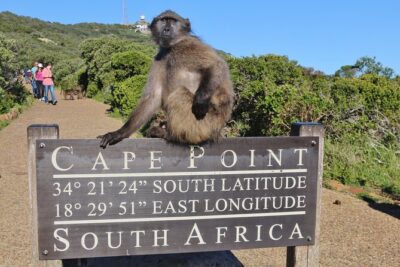
Table Mountain, Penguins & Cape Point Small Group Tour Cape Town
Read our review →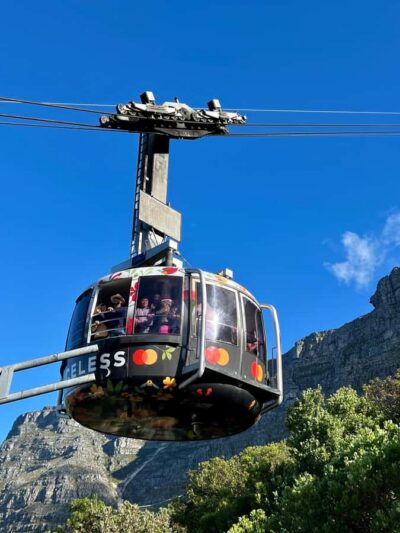
Cape Town Tour: Table Mountain, Penguins & Cape Point+Pickup
Read our review →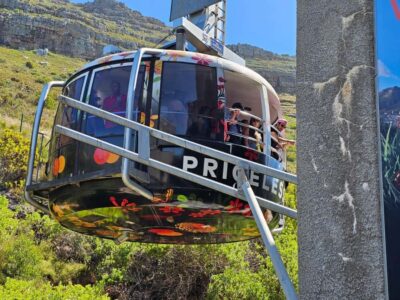
Table Mountain, Cape Point, & Penguins Group Tour
Read our review →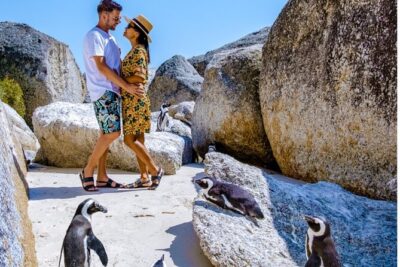
Cape of Good Hope & Penguins Small Group Tour from Cape Town
Read our review →
Penguins & Cape of Good Hope Day Tour with Pickup
Read our review →Browse the lists this tour appears in