
Review · BIRDWATCHING
Spanish Lagoon Mangrove Trail & Bird Watching
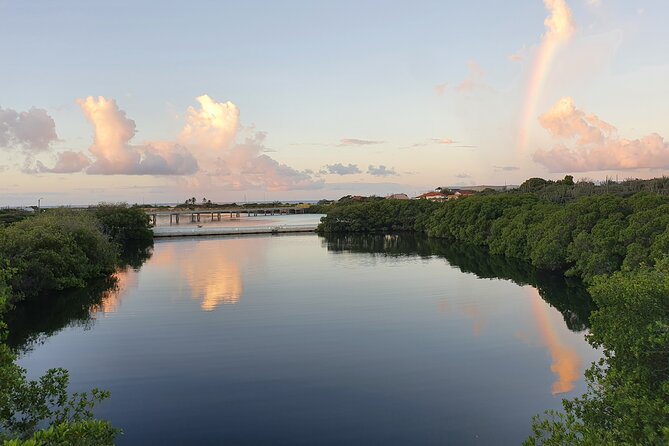
Aruba’s Spanish Lagoon offers a side of the island that many beach days miss: quiet mangrove trails, early birds, and traces of life dating to 1465 BC. The morning walk begins near TeleAruba in Pos Chiquito, then follows the lagoon before finishing at the old Balashi Gold Mill Ruins and nearby Frenchman’s Pass.
I like the small-group format, limited to 10 people, because guides such as Jorge and Rambo can adjust the pace and explain what you are seeing. I also like the mix of nature and archaeology, with a real chance to look for Aruba’s shoco, the local burrowing owl. The main consideration is the hike itself. It is not a flat stroll at every point, so bring comfortable clothes, insect repellent, and binoculars if you have them.
Key points to know before booking
- Early 7:30 am start: The morning timing helps with bird activity and avoids the hottest part of the day.
- A real walking tour: Expect roughly two to three hours, with about 90 minutes on the mangrove trail.
- Nature and archaeology together: Shell middens, an old aloe farm, gold mill ruins, and bird habitat share the route.
- Small private-style setting: The maximum group size is 10, allowing more personal attention from the guide.
- Bring useful gear: Comfortable clothing, bug spray, and binoculars can make the walk easier and more rewarding.
- Lunch is optional: You can add a meal at Ricardo’s Restaurant & Bar overlooking Eagle Beach.
Why Spanish Lagoon is worth your morning
If you have already seen Aruba’s famous beaches, Spanish Lagoon gives you a quieter and more textured picture of the island. The setting shifts from open coastal views to mangroves, old paths, archaeological remains, and industrial ruins.
The tour starts at 7:30 am near the TeleAruba building in Pos Chiquito. That early hour matters. You have a better chance of hearing and seeing birds before the heat builds, and the outing ends early enough to leave much of your day free.
This is not a wildlife safari with guaranteed sightings. The birding is based on patience and the guide’s local awareness. The prized sighting is the shoco, Aruba’s burrowing owl, which uses known nesting areas. You may see one, but the right expectation is a guided search rather than a promise.
The experience also gives you a useful reminder that Aruba is more than sand and resort strips. Shell middens point to human activity dating back to 1465 BC. You are not simply walking through scenery. You are following a route where the natural setting and the island’s past meet in a fairly compact area.
A few more birdwatching trips around the world worth a look
- Penguin Parade, & Wildlife Encounters Eco Tour from Melbourne
★ 5.0 · 3,774 reviews - Cape Town: Cape of Good Hope & Penguins Day Tour with Pickup
★ 4.7 · 3,362 reviews - Cape Point and Boulder’s Penguins Full Day Tour
★ 5.0 · 3,118 reviews
Starting at Pos Chiquito and the old bridge
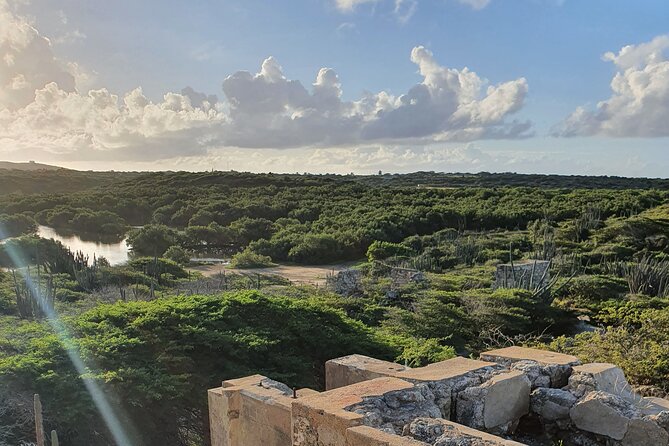
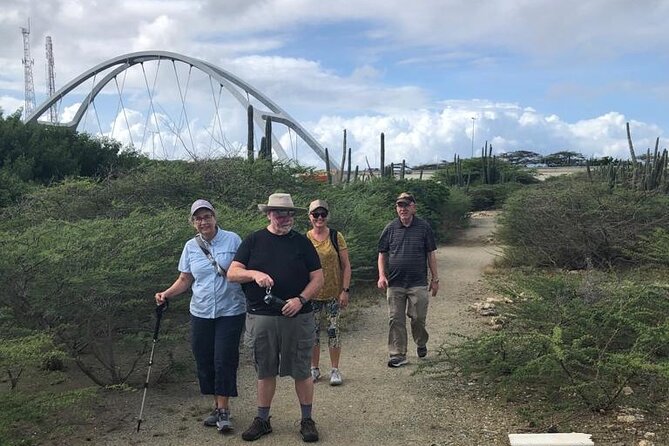
The first section begins at the local TV sender, TeleAruba, in Pos Chiquito. From there, you walk along the Spanish Lagoon and go up toward an old bridge for a view of the lagoon’s beginning.
This opening section takes about 30 minutes. It helps you get your bearings before the longer trail portion, and the elevated viewpoint gives you a sense of how the lagoon opens into the surrounding area.
The walk is free of separate admission charges, but that does not make it a casual sidewalk outing. The route includes changes in level, and one guide described it as an intermediate hike. If you are bringing children, keep that in mind. An 8-year-old managed the route, while a 6-year-old became tired and needed occasional help.
That family experience is useful guidance. The tour can work with children, but you should judge your child’s stamina honestly. The morning length is manageable, yet the walking surface and heat can make the outing feel longer than the clock suggests.
Following the mangrove trail for 90 minutes
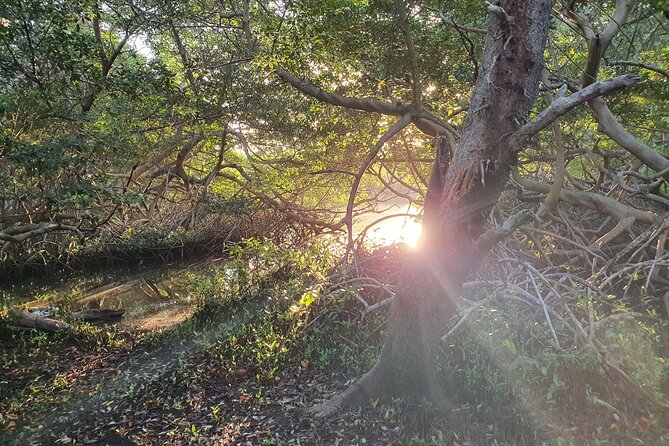
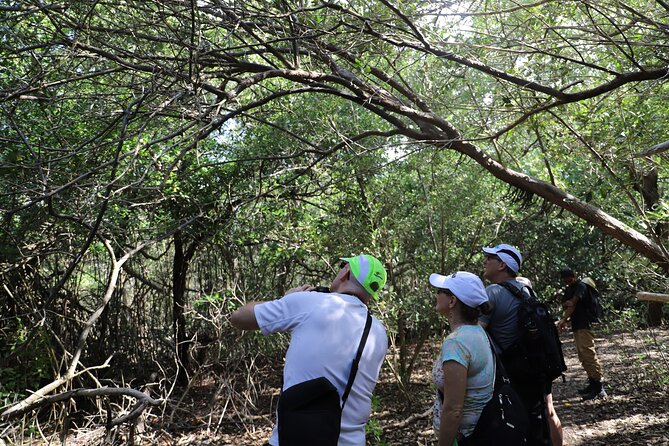
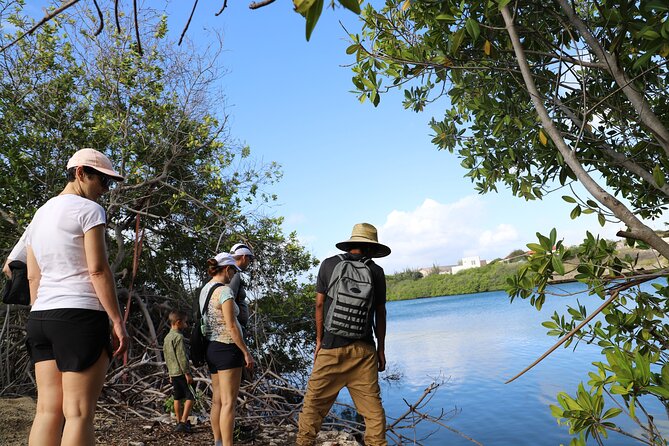
After passing under the new bridge, you continue along the Spanish Lagoon mangrove trail. This is the heart of the outing, lasting about an hour and a half.
Mangroves are valuable because they form a sheltered habitat for birds and other wildlife. Here, the appeal is not a long list of staged attractions. You move through a natural area, listen for birds, and let the guide point out details you could easily miss on your own.
This is where a guide can make the biggest difference. Jorge has been praised for making the walk enjoyable and personal, while Rambo was singled out for helping with the hike and adjusting to the group. The tour’s maximum of 10 people gives the guide room to stop, answer questions, and keep an eye on the pace.
You also pass near one of Aruba’s oldest aloe farms at the top of the route before heading back down to meet the trail again. That detail adds another layer to the walk. Aloe is closely linked with Aruba’s agricultural identity, and the farm helps connect the natural route with the island’s working past.
The bird watching is best approached with modest expectations and a little preparation. Bring binoculars if you own them. They are not listed as included, and distant birds can be difficult to identify with the naked eye. A guide may help you spot an owl or other bird, but even a morning filled with calls and movement can be rewarding without a perfect photograph.
Wear clothes you can walk in comfortably and use insect repellent. The advice is practical, not fussy. You are spending a long stretch beside mangroves, so bug spray can make the difference between enjoying the walk and constantly swatting at yourself.
Shell middens and Aruba’s early human story
One of the most unusual features of this tour is the chance to see shell middens dating to 1465 BC. A shell midden is an accumulation of discarded shells and other remains left by earlier communities. It is a simple physical trace, but it gives the trail a human depth that a standard nature walk lacks.
The guide’s explanation matters here. Without context, shells can look like ordinary debris. With context, they show how people used the lagoon and its resources long before Aruba became a resort destination.
This part of the route is especially valuable for anyone who likes archaeology but does not want to spend an entire day in a museum. You get the remains in their outdoor setting, alongside the plants and waterways that helped make the area useful in the first place.
Do not expect a large archaeological site with extensive signage or reconstructed buildings. The appeal is more subtle. You are learning to notice small clues in the surroundings, with the guide providing the story.
Same place, a different morning in the field:
- Cape of Good Hope & Boulder Penguins Full-Day Tour from Cape Town
★ 5.0 · 2,347 reviews - From Melbourne: Penguin Parade, Koalas & Kangaroos
★ 4.5 · 1,932 reviews - Table Mountain, Penguins & Cape Point Small Group Tour Cape Town
★ 4.5 · 1,797 reviews - Cape Town Tour: Table Mountain, Penguins & Cape Point+Pickup
★ 4.7 · 1,671 reviews
Balashi Gold Mill Ruins and Frenchman’s Pass
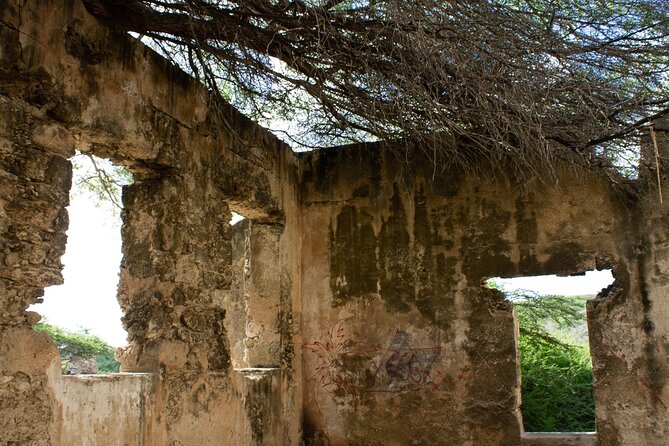
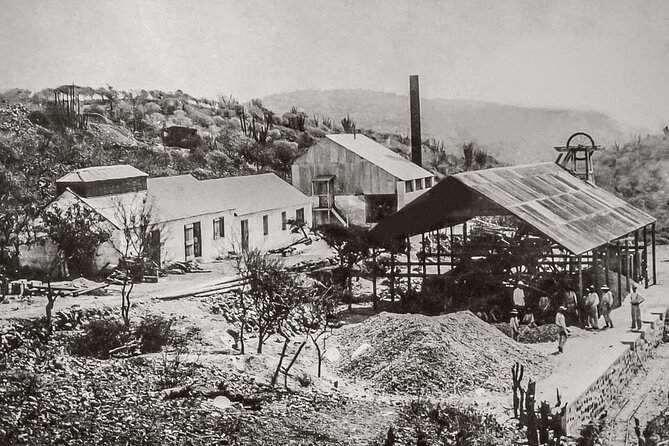
The final major stop is the old Balashi Gold Smelter Ruins, located near Frenchman’s Pass. The visit takes about 30 minutes and shifts the focus from early settlement to Aruba’s industrial past.
The ruins offer a strong contrast with the mangrove trail. After walking through a living habitat and discussing shell middens, you reach the remains of a place built for gold processing. The stone structures also make the stop feel connected to Aruba’s wider history rather than tacked onto a birding excursion.
The guide also tells the story of Frenchman’s Pass, which is described as haunted. That tale gives the stop a bit of local character, though you should see it as storytelling rather than a paranormal attraction. The ruins and the pass are next to the headwaters, so the setting links the story to the surrounding route.
This stop is not a grand monument. It is better suited to travelers who enjoy weathered ruins, local stories, and the chance to picture how a place once worked. If you want polished interpretation, display panels, and a formal museum setting, this may feel spare. If you prefer a guide-led visit where the story comes through conversation, it fits well.
What the $90 price really covers
At $90 per person, this is not the cheapest way to spend a morning in Aruba. The value depends on what you want from the day.
You are paying for a guided nature and history outing, not just access to a trail. The price includes water and fruit, and pickup is offered. The small group size also matters. A group capped at 10 can feel far more personal than a large coach excursion, especially when you are trying to spot birds or asking about archaeological details.
The tour is also efficient. In roughly two to three hours, you cover mangroves, a viewpoint, an aloe farm area, shell middens, gold mill ruins, and Frenchman’s Pass. That makes it useful for a short Aruba stay or a port day when you want something beyond the beach but cannot spare the entire day.
The optional lunch changes the calculation. You can add lunch at Ricardo’s Restaurant & Bar, with views over Eagle Beach. Since lunch is not included in the base price, check the final booking details if you want the meal. The add-on makes sense if you prefer to continue the morning with a sit-down meal rather than arrange your own plans.
I would choose this tour for its guide access and the range of subjects, not for luxury transport or a polished attraction package. It gives you a local route, a small group, and a useful introduction to parts of Aruba that are easy to overlook.
Guides, group size, and the walking pace
The quality of this outing depends heavily on the guide. Jorge received especially warm praise for leading a private morning walk, and Rambo was credited with strong assistance during a more demanding hike. One early morning guide, whose name was spelled uncertainly in the available information, was also described as charming, entertaining, and professional.
That range of comments points to the tour’s main strength: a good guide can turn an ordinary walk into a lesson in birds, history, and local stories. It also suggests why the small group matters. You are not simply following a flag through a crowd.
The experience is listed as private, with a maximum of 10 people. If your party is small, ask how the booking will be arranged, since the supplied details provide the group limit but not a guarantee that every departure is exclusive to your party.
Most people can participate, and service animals are allowed. Still, the intermediate hiking note deserves attention. The route is not presented as a technical climb, but it includes enough walking and uneven sections that comfortable footwear is sensible.
Food, water, and what to bring
Water and fruit are included. That is helpful on a morning walk, but you should still arrive ready for outdoor conditions.
Pack or wear:
- Comfortable walking clothes
- Insect repellent
- Binoculars, if available
- Footwear suited to a hiking trail
- Sun protection suitable for Aruba’s strong light
The tour starts early, so breakfast planning matters. The supplied details do not state whether breakfast is available, and the included food is water and fruit rather than a full meal. If you need a substantial breakfast, arrange it before the 7:30 am start.
The optional lunch at Ricardo’s is a good way to extend the outing toward Eagle Beach. It also gives you a chance to move from a nature trail to an ocean-view restaurant without planning a separate attraction. Just remember that lunch costs extra.
Who will enjoy this tour most
I would choose this for you if you want to see Aruba through nature, local history, and a bit of folklore. It suits curious walkers, bird watchers, couples, and families with children who can manage an intermediate-length hike.
It is also a good match for repeat visitors. If you have already spent time at Eagle Beach, Palm Beach, or the main sightseeing stops, Spanish Lagoon offers a different pace and setting.
Families can make it work, but I would not book it casually with very young children. The outing lasted well for children aged 8 and 6, but the younger child became tired and needed to be carried at times. That is a clear sign to consider your own child’s walking ability.
You may want to skip it if you dislike heat, insects, uneven walking, or the uncertainty of wildlife watching. This is not the right choice if you want guaranteed owl sightings or a completely effortless excursion.
Booking, cancellation, and practical timing
The experience is commonly reserved well in advance, with an average booking time of 44 days. That does not guarantee every date will sell out, but it suggests that early planning is wise, especially if your schedule depends on the optional pickup or lunch.
Confirmation is provided at booking. The start time is 7:30 am, and the total duration is about two to three hours.
Free cancellation is available up to 24 hours before the start time for a full refund. Cancellations or changes made less than 24 hours before the start are not accepted for a refund, and the cutoff uses local Aruba time.
Should you book Spanish Lagoon Mangrove Trail and Bird Watching?
Book it if you want a small, active morning that combines bird watching, shell middens, aloe farming, gold mill ruins, and local stories. The best reasons are the early start, the personal guide attention, and the unusual mix of nature and archaeology.
I would be especially inclined to book if Jorge or another well-regarded guide is available, though guide assignments can vary. Bring bug spray and binoculars, and treat the shoco sighting as a possibility rather than a guarantee.
Skip it if your ideal Aruba day means staying on a beach or avoiding a hike. For everyone else, the $90 price is fair when you value a guided route and want more substance than a quick photo stop. The result is a compact, informative morning that leaves time for lunch, the beach, or another island plan.
FAQ
Where does the tour begin?
The tour begins near the TeleAruba local TV sender in Pos Chiquito.
What time does the tour start?
The listed start time is 7:30 am.
How long does the experience last?
The outing lasts approximately two to three hours, with about 30 minutes at Pos Chiquito, 90 minutes on the Spanish Lagoon trail, and 30 minutes at the Balashi Gold Mill Ruins.
Is transportation available?
Pickup is offered, but the supplied details do not specify the pickup areas or exact transportation arrangements.
Is lunch included?
No. Water and fruit are included, while lunch at Ricardo’s Restaurant & Bar overlooking Eagle Beach is an optional addition.
What should I bring?
Comfortable walking clothes and insect repellent are important. Binoculars may also be helpful for bird watching.
What is the cancellation policy?
You can cancel at least 24 hours before the start time for a full refund. Cancellations or changes made less than 24 hours before the start time are not accepted for a refund.
Just added around the world
- Walvis Bay: Pelican Point Seal and Sandwich Harbour Tour★ 4.8 · 15 reviews
- Walvis Bay Shore Excursion: Flamingos, Dune 7, Swakopmund★ 5.0 · 3 reviews
- Victoria Falls: Private Birdwatching Safari near the town★ 5.0 · 2 reviews
- Vila Franca do Campo: Marine Life & Bird Watching & Islet Tour★ 4.4 · 9 reviews
- VIP falconry taster session★ 5.0 · 2 reviews
- Victoria Falls: Private Zambezi River Birdwatching Safari★ 4.7 · 14 reviews
- Vestmannaeyjar: Puffin, Island, and Volcano Boat Tour★ 4.4 · 7 reviews
- Ushuaia: Gable Island and Penguin Colony with Lunch★ 4.8 · 2 reviews